

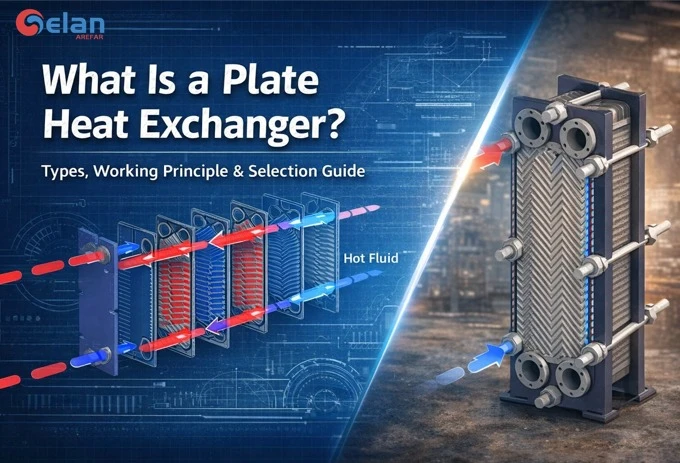
What is a plate heat exchanger, and why do so many industrial plants use it?
In this guide, I will share insights from more than ten years of real project experience. Based on this experience, I will explain plate heat exchanger design, structure, and plate heat exchanger types in simple terms.
After reading this guide, you will quickly understand whether this equipment is suitable for your project and how to choose the right one.
CONTENT:
- What Is a Plate Heat Exchanger? Structure, Diagram and Working Principle
- What Are the Main Plate Type Heat Exchangers and When Are They Used?
- How to Choose the Right Plate Heat Exchanger for Your Application
- Is a Plate Heat Exchanger Better Than a Shell and Tube Heat Exchanger?
- FAQs About Plate Heat Exchangers
- Conclusion
What Is a Plate Heat Exchanger? Structure, Diagram and Working Principle
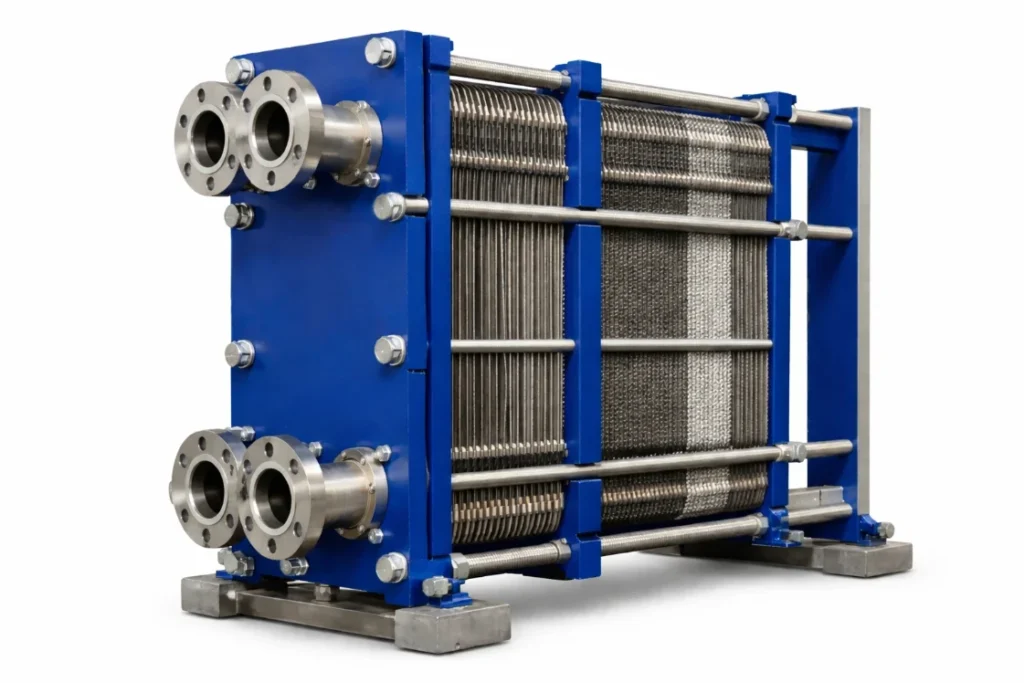
A plate heat exchanger is a device used to transfer heat between two fluids. The fluids do not mix. Heat moves through thin metal plates that separate the flow channels.
In many industrial projects I have worked on, engineers choose a plate heat exchanger when they need efficient heat transfer in a compact space. The design can deliver high performance while using much less space than traditional equipment.
Because of this advantage, plate heat exchangers are widely used in chemical plants, HVAC systems, food processing, and energy recovery systems.
Heat Exchanger Overview
How Does a Plate Heat Exchanger Fit into the Broader Heat Exchanger Family?
See how plate heat exchangers compare with other common exchanger types and which process conditions usually guide heat exchanger selection.
Explore Heat Exchanger Types & Selection →Plate Heat Exchanger Structure
To understand how a plate heat exchanger works, it helps to first look at its basic structure. In many projects I work on, buyers are often surprised that the equipment is built from a relatively simple set of components.
A typical plate heat exchanger design includes the following main parts:
| Component | Function |
|---|---|
| Heat transfer plates | Thin metal plates where heat transfers between the hot and cold fluids |
| Frame plates | Strong plates that hold the plate pack together and support the structure |
| Gaskets or weld joints | Seals that prevent the two fluids from mixing and guide the flow channels |
| Tightening bolts | Bolts that compress the plates and keep the exchanger sealed |
| Inlet and outlet connections | Nozzles where the hot and cold fluids enter and leave the exchanger |
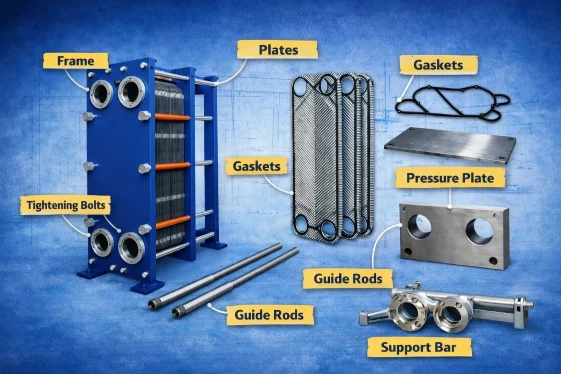
The heat transfer plates are the most important part. Each plate has a corrugated pattern. This pattern increases surface area and improves heat transfer.
In most industrial systems, dozens or even hundreds of plates are stacked together. This creates a large heat transfer area in a compact unit.
How Does a Plate Heat Exchanger Work?
Inside a plate heat exchanger, the flow path is created by a stack of thin metal plates. These plates form narrow channels between them.
Hot fluid flows through one channel. Cold fluid flows through the next channel. The two fluids never mix. They are separated by a thin metal plate.
In simple terms, you can think of it like two lanes of traffic. One lane carries hot fluid. The other lane carries cold fluid. The metal plate between them acts like a wall. Heat can pass through the wall, but the fluids stay separate.
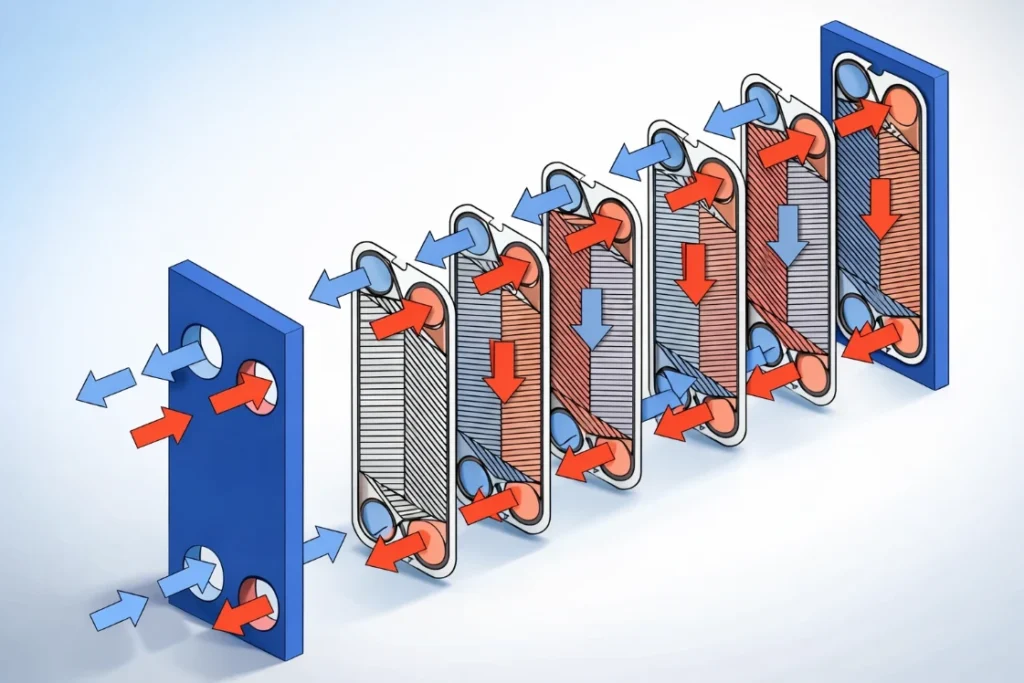
Most plate heat exchanger designs use a counter-flow arrangement. This means the hot fluid and cold fluid move in opposite directions. This flow pattern keeps a strong temperature difference along the plates.
Because the channels are narrow and the plates provide a large surface area, heat transfer happens very quickly. This is one reason why a plate heat exchanger can achieve very high heat transfer efficiency.
Advantages of Plate Heat Exchangers
Why do so many plants choose a plate heat exchanger? From my project experience, the answer usually comes down to efficiency, size, and maintenance.
Here are some key advantages of plate heat exchanger designs:
- Higher heat transfer efficiency
The thin plates and turbulent flow allow heat to transfer very quickly between the two fluids. - Compact equipment size
A plate heat exchanger can provide a large heat transfer area while occupying much less space than many traditional exchangers. - Easy maintenance
In gasketed designs, the plates can be opened and cleaned. This makes inspection and maintenance easier in many applications. - Flexible capacity expansion
If the process requires more heat transfer in the future, additional plates can often be added to increase capacity.
For this reason, many industries use plate heat exchangers in daily operations. However, plate heat exchangers are not the best choice for every situation. In the next section, we will look at the main plate type heat exchanger designs and when each type is used.
Also Read: Plate and Frame Heat Exchanger: Structure, Working Principle, Types and Comparisons
What Are the Main Plate Type Heat Exchangers and When Are They Used?
When buyers first look for a plate type heat exchanger, they often see several different designs. These designs may look similar from the outside. However, their internal structure and operating limits can be very different. Each design has its own advantages and typical applications.
Main Plate Heat Exchanger Types
There are four plate heat exchanger types commonly used in industrial systems. Each design has a different structure and features.
The table below shows a simple comparison of the main plate type heat exchanger designs:
| Type | Pressure Resistance | Diagram | Structure | Typical Features |
|---|---|---|---|---|
| Gasketed plate heat exchanger | Medium | 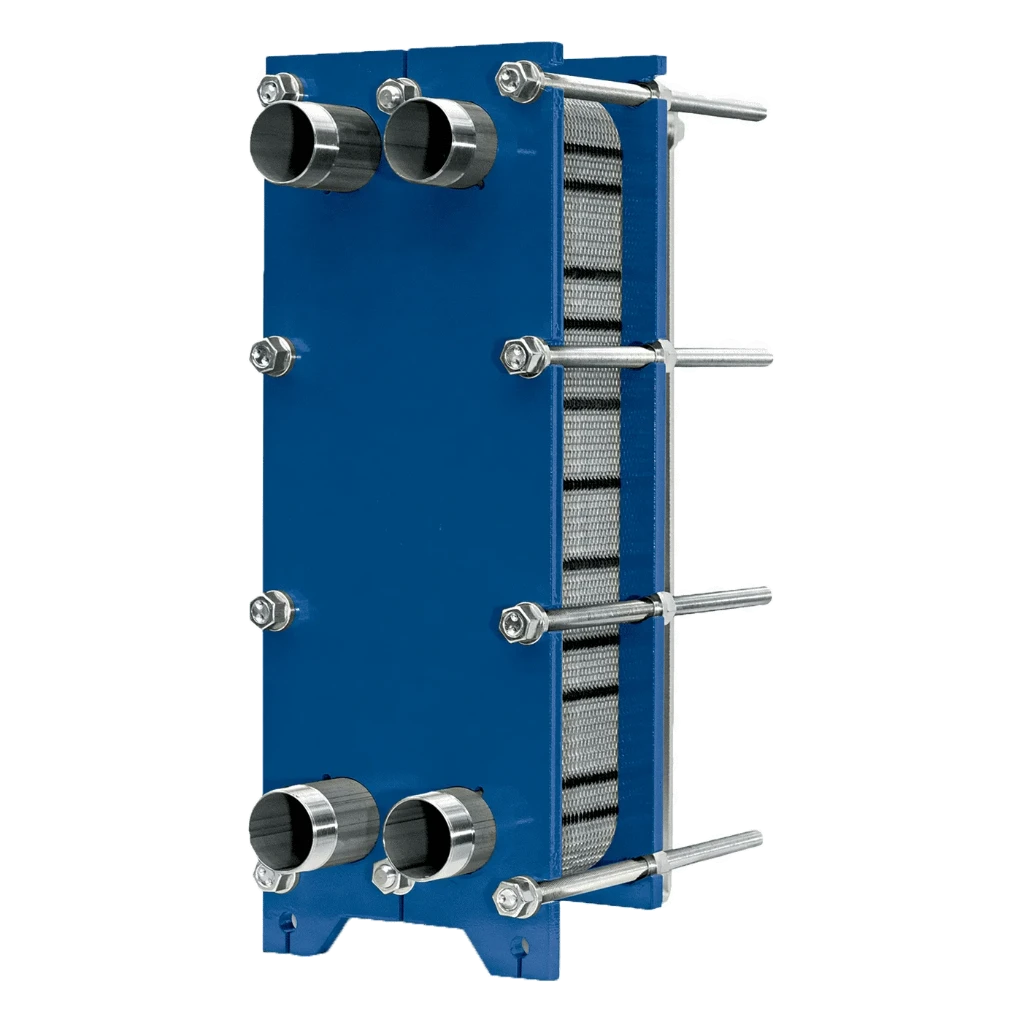 | Plates are sealed with gaskets and compressed in a frame | Easy to open, inspect, and clean |
| Brazed plate heat exchanger | Medium | 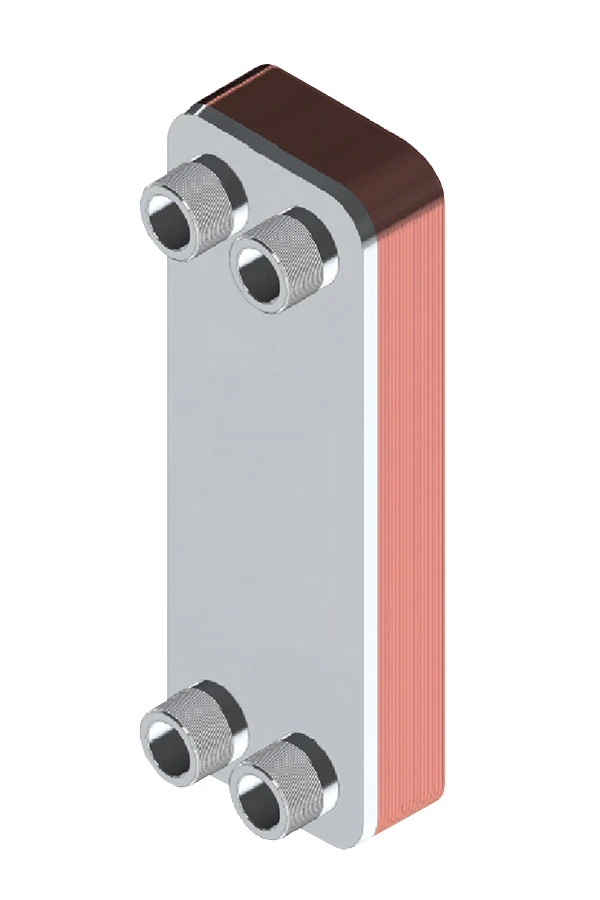 | Plates are brazed together using copper or nickel | Compact design and fully sealed |
| Welded plate heat exchanger | High | 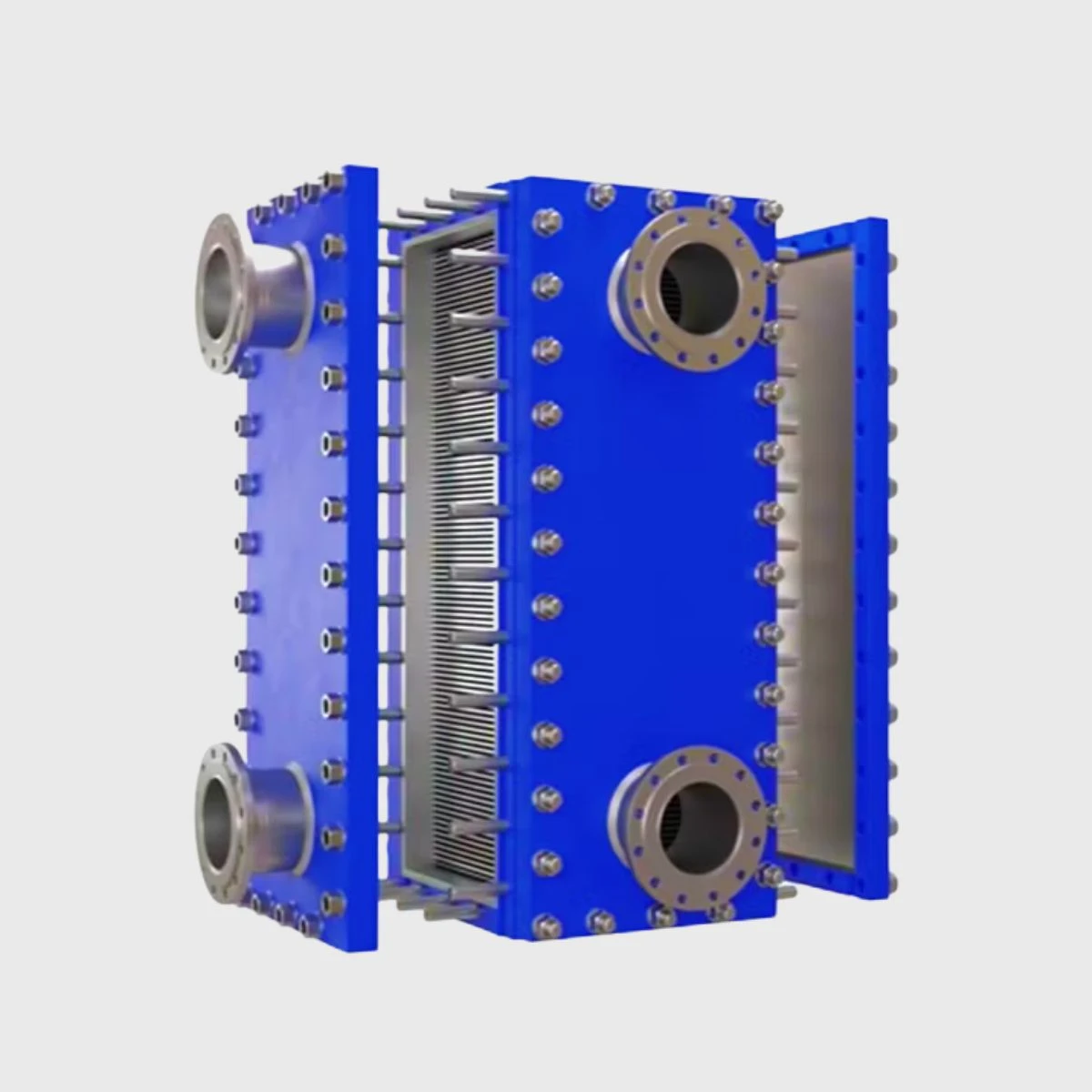 | Plates are fully welded together | Suitable for high pressure and aggressive fluids |
| Semi-welded plate heat exchanger | Medium to high | 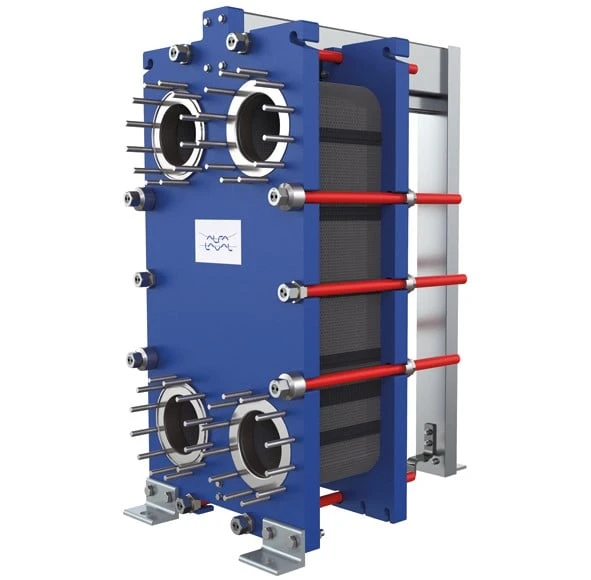 | Combination of welded and gasketed plates | Often used in chemical or refrigeration processes |
In many industrial projects, gasketed plate heat exchangers are preferred when plate heat exchanger cleaning and routine maintenance are important.. These exchangers can be opened, and the plates can be inspected or replaced.
Brazed plate heat exchangers are often chosen for compact systems. They are smaller and fully sealed, but they cannot be opened for cleaning.
For higher pressure or more aggressive fluids, engineers may choose welded or semi-welded plate heat exchangers. These designs provide stronger sealing and better resistance to harsh process conditions.
Comparison of Plate Heat Exchanger Types
Each plate heat exchanger type has its own strengths and limitations. In real projects, engineers often compare the advantages and disadvantages before selecting the most suitable design.
| Type | Advantages | Disadvantages | Typical Applications |
|---|---|---|---|
| Gasketed plate heat exchanger |
|
|
|
| Brazed plate heat exchanger |
|
|
|
| Welded plate heat exchanger |
|
|
|
| Semi-welded plate heat exchanger |
|
|
|
This comparison can give you a general idea of which design may fit your system. However, choosing the right plate heat exchanger usually requires a closer look at the actual operating conditions.
In the next section, I will explain how engineers quickly identify the right plate heat exchanger design for a specific project.
How to Choose the Right Plate Heat Exchanger for Your Application
In real projects, a plate heat exchanger is rarely a standard product. Engineers usually select or design the exchanger based on the actual process conditions. Even two systems that look similar may require different designs.
From my experience working on industrial heat transfer projects, several key factors such as pressure, temperature, fluid properties, and heat duty can all affect the final selection.
The table below shows the main parameters engineers consider during plate heat exchanger sizing and selection.
| Type | Typical Pressure Range | Typical Temperature Range | Suitable Fluids | Maintenance | Typical Industrial Applications |
|---|---|---|---|---|---|
| Gasketed plate heat exchanger | 6–25 bar | -10°C to 160°C | Water, glycol, food fluids, low-corrosion chemicals | Easy to open and clean | Chemical plants, district heating, food processing, HVAC |
| Brazed plate heat exchanger | 10–30 bar (some models higher) | -50°C to 200°C | Refrigerants, oils, clean water circuits | Not serviceable | HVAC systems, refrigeration units, heat pumps |
| Welded plate heat exchanger | Up to 40 bar | -50°C to 350°C | Corrosive chemicals, hydrocarbons, process gases | Limited maintenance | Petrochemical plants, refinery heat recovery |
| Semi-welded plate heat exchanger | 16–30 bar | -40°C to 250°C | Ammonia, aggressive refrigerants, chemicals | Partial maintenance possible | Chemical processes, ammonia refrigeration |
(Data Source: ScienceDirect, IntechOpen)
For example:
- If the system operates below 25 bar and below 160°C, engineers often choose a gasketed plate heat exchanger because it can be opened and cleaned easily.
- If the system requires compact size and sealed construction, a brazed plate heat exchanger is often used. Many units can handle pressures around 30 bar and temperatures up to 185–230°C.
- For high-temperature or aggressive chemical processes, engineers typically select welded plate heat exchangers, which can operate up to 350°C and around 40 bar.
Understanding these operating ranges helps engineers quickly narrow down the most suitable plate heat exchanger for a specific process system.
Is a Plate Heat Exchanger Better Than a Shell and Tube Heat Exchanger?
Both types are widely used for heat transfer. The difference is that they are designed for different operating conditions.
The table below shows a simple comparison.
| Feature | Plate Heat Exchanger | Shell and Tube Heat Exchanger |
|---|---|---|
| Heat transfer efficiency | High due to thin plates and turbulence | Moderate |
| Equipment size | Compact | Larger |
| Pressure tolerance | Moderate pressure range | Very high pressure capability |
| Maintenance | Easy for gasketed designs | Tube cleaning required |
| Typical applications | HVAC, food processing, district heating | Petrochemical plants, refineries, high-temperature processes |
- In general, plate heat exchangers are preferred when the system requires compact size and high heat transfer efficiency.
- Shell and tube heat exchangers are often used when the process involves very high pressure, high temperature, or heavy fouling fluids. In refinery and petrochemical applications, project specifications may also include API 660 requirements together with ASME codes and TEMA mechanical standards.
FAQs About Plate Heat Exchangers
What is a plate heat exchanger used for?
A plate heat exchanger is used to transfer heat between two fluids without mixing them.
It is commonly used for:
- Cooling industrial process fluids
- Heating water or chemicals
- Heat recovery in energy systems
- HVAC heating and cooling loops
- Food and beverage temperature control
Because the plates provide a large heat transfer area, plate heat exchangers can achieve high efficiency in a compact space.
How does a plate heat exchanger work?
A plate heat exchanger works by passing hot and cold fluids through alternating channels between metal plates.
The working process is simple:
- Hot fluid flows through one channel
- Cold fluid flows through the adjacent channel
- Heat transfers through the thin metal plate
- The fluids remain separated but exchange heat
Corrugated plates create turbulence, which improves heat transfer efficiency.
What is the difference between plate heat exchanger and plate and frame heat exchanger?
In many cases, the terms plate heat exchanger and plate and frame heat exchanger refer to the same equipment.
However, a plate and frame heat exchanger usually describes the gasketed design where plates are clamped in a frame.
Other plate heat exchanger types include:
- Brazed plate heat exchangers
- Welded plate heat exchangers
- Semi-welded plate heat exchangers
These designs use different sealing methods depending on operating pressure and fluid conditions.
When should you use a plate heat exchanger instead of shell and tube?
Engineers usually choose a plate heat exchanger when the system requires:
- High heat transfer efficiency
- Compact equipment size
- Small temperature approach
- Easy cleaning and maintenance
However, shell and tube heat exchangers are often preferred when the process involves:
- Very high pressure
- High temperature
- Heavy fouling fluids
What are the main types of plate heat exchangers?
The most common plate heat exchanger types are:
- Gasketed plate heat exchanger
- Brazed plate heat exchanger
- Welded plate heat exchanger
- Semi-welded plate heat exchanger
Each type is designed for different pressure ranges, maintenance needs, and process fluids.
How do you size a plate heat exchanger?
Plate heat exchanger sizing depends on several process parameters:
- Heat duty required
- Flow rate of both fluids
- Inlet and outlet temperatures
- Allowable pressure drop
In many industrial systems, plate heat exchangers typically handle 10 kW to over 20 MW of heat transfer. The final exchanger size is then determined by the number of plates installed in the unit.
How to clean a plate heat exchanger?
Plate heat exchanger cleaning can be done in two main ways:
- Chemical cleaning (CIP)
Cleaning chemicals circulate through the exchanger to remove deposits. - Manual plate cleaning
The exchanger is opened and plates are cleaned individually.
Regular cleaning helps maintain heat transfer efficiency.
What causes fouling in plate heat exchangers?
Fouling in plate heat exchangers occurs when deposits build up on the plate surfaces.
Common causes include:
- Mineral scale
- Biological growth
- Corrosion products
- Suspended solids
Fouling reduces heat transfer efficiency and increases pressure drop.
What are plate-and-shell and plate-fin heat exchangers?
Plate-and-shell heat exchangers combine plate technology with a pressure-resistant shell. They are used for higher pressure applications.
Plate-fin heat exchangers use fins between plates to increase heat transfer area. They are often used in cryogenic and gas processing systems.
Conclusion
A plate heat exchanger is a compact and efficient solution for transferring heat between two fluids. In this guide, we explained what it is, how it works, the main types, and how engineers choose the right design.
Understanding these basics helps you quickly decide whether a plate heat exchanger is suitable for your system.
In real projects, manufacturers like Gelan design and fabricate heat exchangers based on actual process conditions and EPC specifications. If you are evaluating heat exchanger options or planning a new project, feel free to contact the Gelan team to discuss suitable configurations and manufacturing solutions.