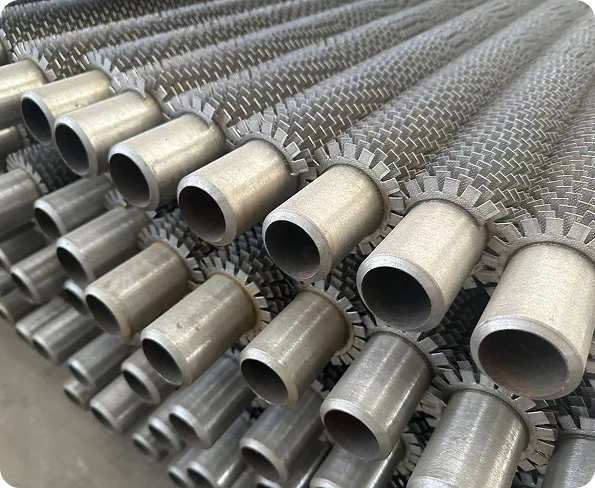
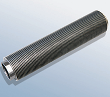
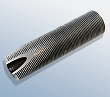
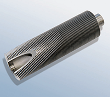
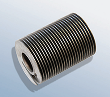
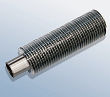
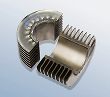
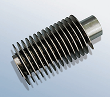
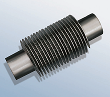
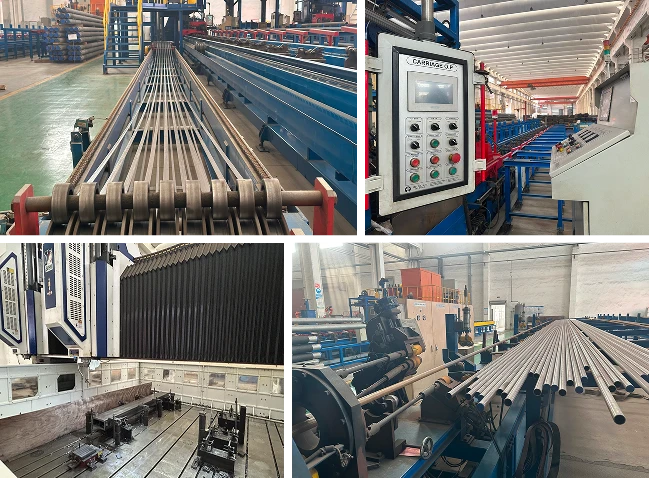
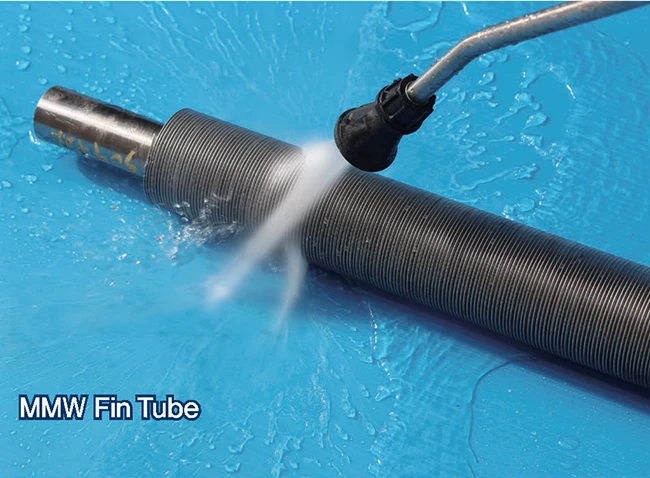
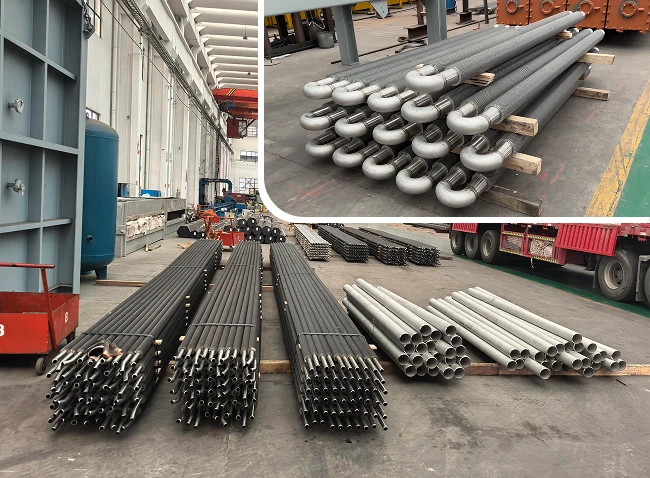
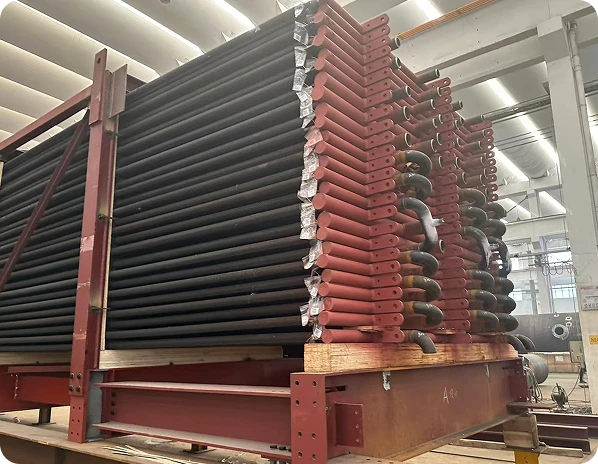
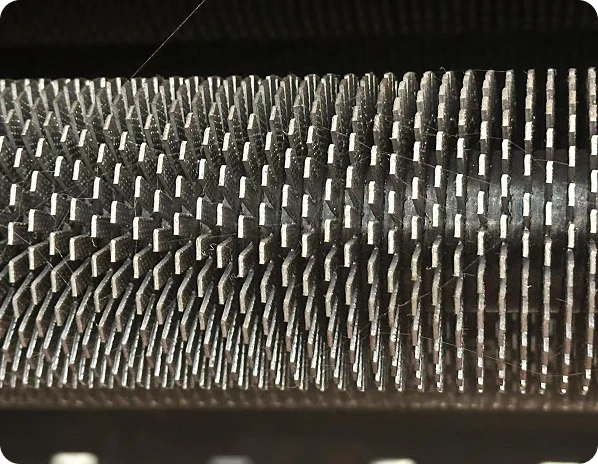
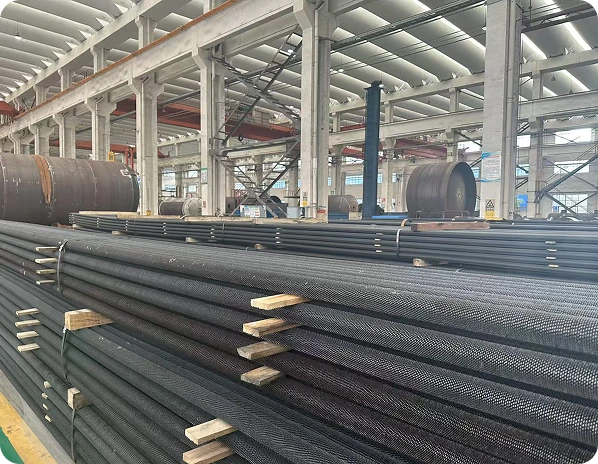
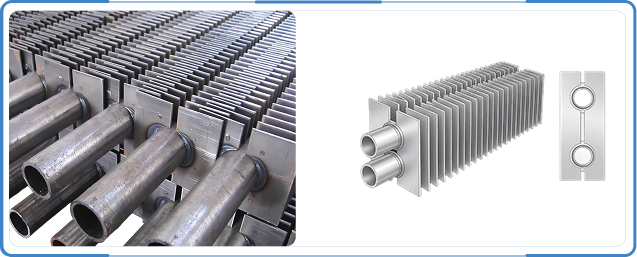
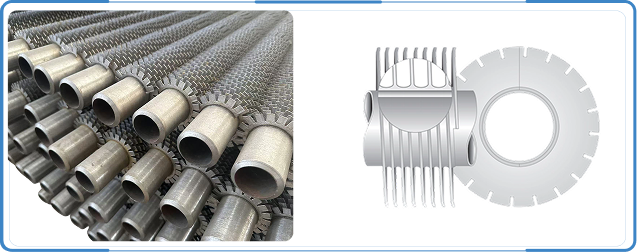
Gelan manufactures custom finned tubes for industrial heat transfer equipment. Our finned tubes help increase surface area, improve fin-to-tube bonding, and meet project material requirements.
We support fin type, tube material, fin material, fin spacing, tube size, and welding method based on your equipment duty and operating condition.
Different finned tube types work for different temperatures, gas conditions, bonding strength, fouling risks, and equipment duties.
Gelan helps you choose the right structure based on your heat transfer project, not only by product name.
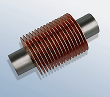
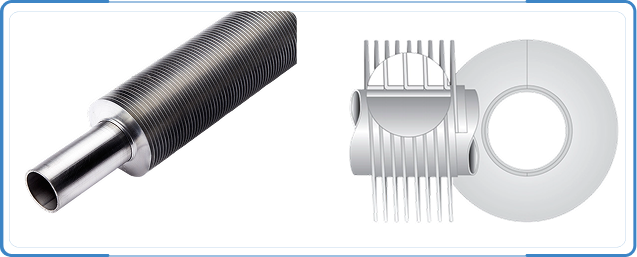
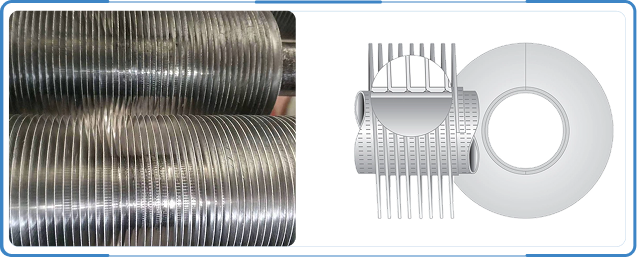
L-foot finned tube uses an L-shaped fin foot wrapped around the base tube. It is a cost-effective option for air cooling and lower-to-medium temperature service.
LL-foot finned tube uses overlapped fin feet to give better tube surface coverage. It is suitable for air-side heat transfer where extra base tube protection is needed.
KL-foot finned tube uses a knurled tube surface to improve fin grip. It offers better bonding strength than standard L-foot fin tubes in suitable applications.
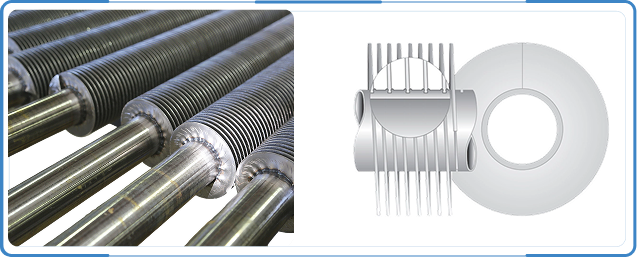
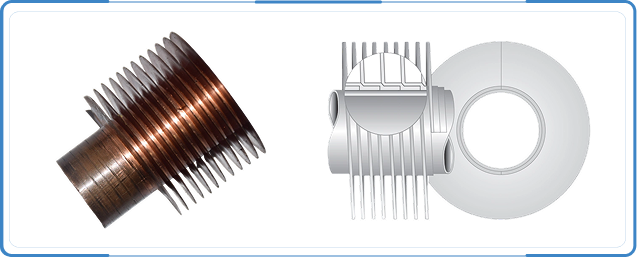
G-fin, also called embedded finned tube, locks the fin into a groove on the tube surface. It is used when stronger mechanical bonding and fin stability are required.
Extruded fin tube is formed from an outer sleeve around the base tube. It provides good surface protection for air cooler and corrosion-sensitive service.
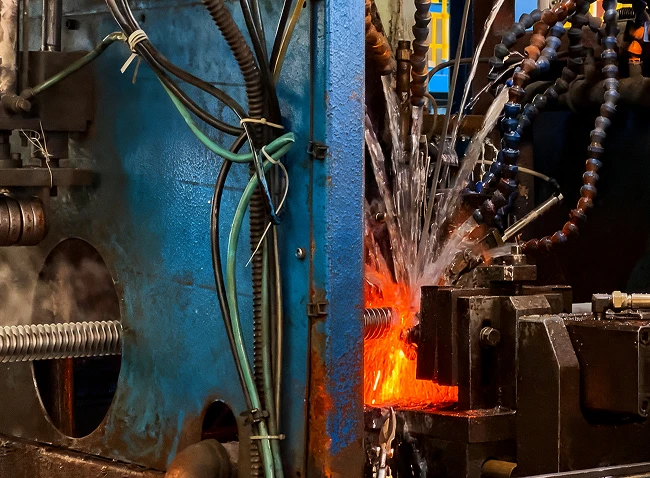
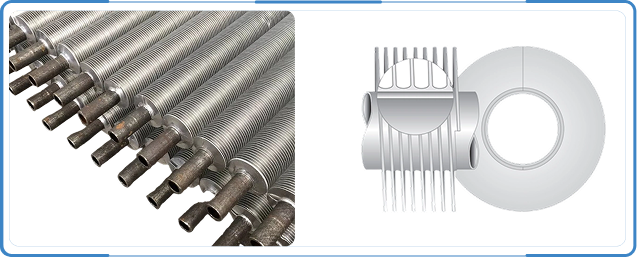
Welded finned tube has fins welded to the tube surface for strong contact. Gelan can also support multi-material welded fin tube options for higher heat transfer, corrosion resistance, and project-based material selection.
H-fin tube uses an H-shaped fin structure for flue gas heat recovery. It is often used in boilers, economizers, and dusty gas service where cleaning space matters.
G-fin, also called embedded finned tube, locks the fin into a groove on the tube surface. It is used when stronger mechanical bonding and fin stability are required.
Share your heat duty, temperature, gas condition, material requirement, and equipment use. Gelan can help match the right finned tube structure for your project.
Different finned tube types work for different temperatures, gas conditions, bonding strength, fouling risks, and equipment duties.
Gelan helps you choose the right structure based on your heat transfer project, not only by product name.
L-foot finned tube uses an L-shaped fin foot wrapped around the base tube. It is a cost-effective option for air cooling and lower-to-medium temperature service.
LL-foot finned tube uses overlapped fin feet to give better tube surface coverage. It is suitable for air-side heat transfer where extra base tube protection is needed.
KL-foot finned tube uses a knurled tube surface to improve fin grip. It offers better bonding strength than standard L-foot fin tubes in suitable applications.
G-fin, also called embedded finned tube, locks the fin into a groove on the tube surface. It is used when stronger mechanical bonding and fin stability are required.
Extruded fin tube is formed from an outer sleeve around the base tube. It provides good surface protection for air cooler and corrosion-sensitive service.
Welded finned tube has fins welded to the tube surface for strong contact. Gelan can also support multi-material welded fin tube options for higher heat transfer, corrosion resistance, and project-based material selection.
H-fin tube uses an H-shaped fin structure for flue gas heat recovery. It is often used in boilers, economizers, and dusty gas service where cleaning space matters.
G-fin, also called embedded finned tube, locks the fin into a groove on the tube surface. It is used when stronger mechanical bonding and fin stability are required.
Share your heat duty, temperature, gas condition, material requirement, and equipment use. Gelan can help match the right finned tube structure for your project.
Different finned tube types work for different temperatures, gas conditions, bonding strength, fouling risks, and equipment duties.
Gelan helps you choose the right structure based on your heat transfer project, not only by product name.
Air cooler fin tubes help release heat from process fluid to ambient air. They are commonly used when water cooling is limited, expensive, or not preferred.
Finned tubes can be used in heater convection sections to recover flue gas heat before it leaves the stack. This helps improve heat recovery in fired heater systems.
Preheater finned tubes help transfer heat from flue gas, hot air, or process gas to the target medium. They are used in air preheaters, gas preheaters, and process preheating service.
HRSG finned tubes and waste heat recovery fin tubes are used in convection heat transfer sections. They help recover heat from turbine exhaust, furnace flue gas, or process waste heat.
Finned tubes can be used in heat pipe heat exchangers, and finned tube heat exchanger modules. They help add heat transfer area within limited equipment space.
Dryer finned tubes are used when hot air or process gas needs better heat transfer. Gelan can review fin type and material based on gas condition and operating temperature.
Share your heat duty, temperature, gas condition, material requirement, and equipment use. Gelan can help match the right finned tube structure for your project.
Custom finned tubes should match the equipment drawing, tube bundle layout, heat duty, and installation space.
Gelan can review tube size, fin height, fin pitch, tube length, and manufacturing method based on your project requirement.
| Item | Typical Options |
|---|---|
| Heat Source | Fired heater flue gas, SMR / reformer exhaust, incinerator / TO exhaust, process gas, gas turbine exhaust |
| Main Duty | Steam generation, steam superheating, gas cooling, waste heat recovery |
| Gas Condition | High-temperature gas, dusty gas, corrosive gas, sulfur-bearing gas |
| Structure Type | Shell and tube, flue gas type, modular box-type |
| Tube / Heating Surface | Water tube, fire tube, coil tube, finned tube |
| Main Sections | Steam drum, evaporator, superheater, economizer, duct section |
| Delivery Form | Modular fabrication, segmented transport, site assembly |
*These design ranges are not fixed. In real projects, the final waste heat boiler configuration depends on heat source, gas condition, steam duty, layout, and transport requirement.
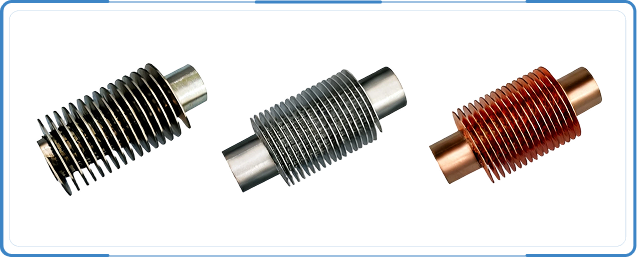
Tube material and fin material should be selected together.
Gelan helps match the material combination to your operating temperature, medium, corrosion risk, and service life requirement.
| Item | SS Tube + AL Fin | CU Tube + CU Fin | SS304 Tube + CU Fin | AL Tube + AL Fin | CS Tube + AL Fin | SS Tube + AL Fin | Inconel Tube + SS316L Fin | SS Tube + SS Fin | SS Tube + SS409 Fin | Titanium Tube + Titanium Fin | Titanium Tube + Aluminum Fin | Titanium Tube + Copper Fin |
|---|---|---|---|---|---|---|---|---|---|---|---|---|
| Product Image | ![]() |
![]() |
![]() |
![]() |
![]() |
![]() |
![]() |
![]() |
![]() |
![]() |
![]() |
![]() |
| Specification Reference | O.D φ25.4 × 2.11; AL Fin t0.45 × H15.875 × 10 F/IN | O.D φ25.4 × 2.11; CU Fin t0.4 × H12.7 × 9 F/IN | O.D φ25.4 × 2.11; CU Fin t0.4 × H15.875 × 10 F/IN | O.D φ25.4 × 2.11; AL Fin t0.45 × H15.875 × 10 F/IN | O.D φ25.4 × 2.11; AL Fin t0.45 × H15.875 × 10 F/IN | O.D φ25.4 × 2.11; AL Fin t0.8 × H13.9 × 10 F/IN | O.D φ34.5 × t3.5; SS316L Fin t1.0 × H13.9 × 7.5 F/IN | O.D φ34.1 × t3.4; SS Fin t1.0 × H13.9 × 6 F/IN | O.D φ34.3 × t3.4; SS409 Fin t1.0 × H13.9 × 6 F/IN | φ1" × t1.25; Ti Fin t1.25 × H10 × 5 F/IN | φ1" × t1.25; AL Fin t0.45 × H8 × 8 F/IN | φ1" × t1.25; CU Fin t0.4 × H12.7 × 7 F/IN |
| Temperature Reference | Up to 400°C | Up to 600°C | Up to 600°C | Up to 250°C | Up to 400°C | Up to 400°C | Up to 900°C | Up to 850°C | Up to 850°C | Up to 600°C | Up to 400°C | Up to 600°C |
| Best For | Good balance between corrosion resistance, weight, heat transfer, and cost. | Strong thermal conductivity when both tube-side and fin-side materials need fast heat transfer. | Stainless steel tube supports corrosion resistance from tube side; Copper fin ensures excellent heat transfer. | Lightweight and highly economical, suitable for low-temperature, non-corrosive air heating/cooling. | Cost-effective and handles higher pressure from tube side; Aluminum fin provides good external heat dissipation. | Corrosion-resistant inner tube combined with standard aluminum fin performance, optimal cost-efficiency. | Extreme high-temperature exhaust gas or corrosive chemical environments (Oil & Gas, Petrochemical). | High temperature & severe corrosion on both tube and fin side. Long service life in aggressive environments. | High-temperature flue gas recovery, alternative to SS304/316 where cost reduction is preferred. | Highly aggressive environments (Sea water, chlorine, strong acids) where other metals fail quickly. | Excellent external cooling in light corrosive conditions combined with premium internal corrosion resistance. | Premium internal chemical resistance paired with ultimate external heat transfer performance. |

*Temperature values are reference ranges based on Gelan’s material combination data. Final selection should be reviewed based on actual operating temperature, tube-side medium, outside gas condition, pressure drop, fouling risk, and equipment design.
A finned tube may look simple, but wrong material, fin spacing, bonding method, or dimensions can affect heat transfer, service life, cleaning, and installation.
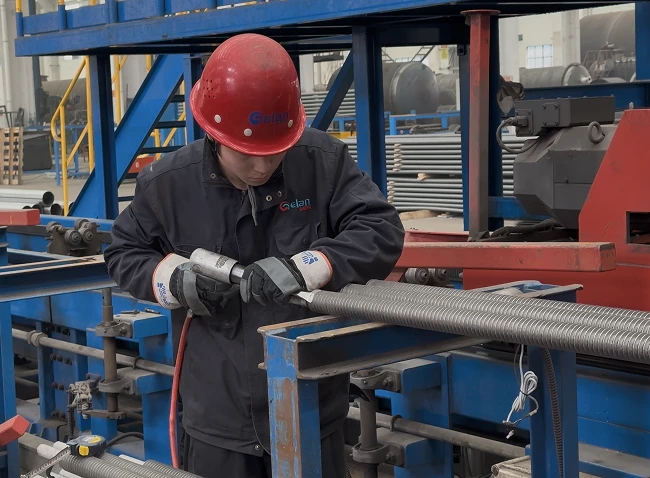
Gelan supports custom finned tubes from material review to manufacturing, inspection, and delivery.
If the finned tube does not match your heat duty, the final equipment may fail to reach the expected cooling, preheating, or heat recovery result.
Gelan approach:
If tube and fin materials are not matched with the medium, temperature, and corrosion risk, service life may become shorter than expected.
Gelan approach:
If flue gas temperature is high, standard material combinations may deform, lose performance, or become unsuitable for long-term waste heat recovery service.
Gelan support:
if the fin-to-tube bonding is weak, the fin may loosen over time and reduce heat transfer performance.
Gelan approach:
If the gas contains dust, ash, soot, or oil contamination, the wrong fin design may increase pressure drop and make cleaning harder.
Gelan support:
if tube size or length is wrong, the finned tubes may not fit the tube bundle, replacement space, or site installation requirement.
Gelan approach:
Gelan supplies custom finned tubes for industries that need cooling, preheating, flue gas heat recovery, and compact heat transfer.
Each industry has different requirements for material, fin type, welding method, inspection, and delivery.
Used in refinery systems to recover heat from fired heater flue gas or process tail gas and turn it into steam, helping reduce energy use and steam cost
Used in cracking, reforming, and other reaction systems where high-temperature process heat can be recovered for steam generation
Used after SMR and similar hydrogen production systems to recover high-temperature exhaust heat and improve the use of process heat and steam together
Used after incinerators, DTO, and similar systems to recover heat from high-temperature exhaust gas before discharge
Used in gas turbine exhaust recovery systems, where HRSG is one of the most common waste heat boiler applications in power and combined cycle service.
Project characteristics
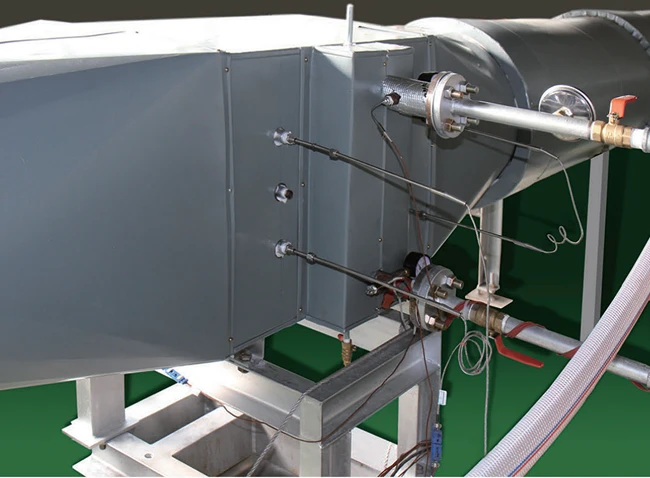
Gelan supported custom finning requirements for a hot water heater project in Abu Dhabi.
The finned tubes were used in the heater convection section for extended surface heat transfer under strict project specifications.
Gelan support:
Project Background:
Gelan support:
Finned tubes are used to increase heat transfer area in heat transfer equipment. They are commonly used in air coolers, economizers, heaters, HRSG units, waste heat boilers, preheaters, dryers, and heat exchanger tube bundles.
For industrial projects, Gelan can customize finned tubes based on equipment duty, gas condition, temperature, material, and installation space.
Yes. Gelan manufactures custom finned tubes based on project drawings and working conditions. We can customize tube size, tube length, fin type, fin height, fin thickness, fin pitch, material combination, and welding method.
Gelan’s available options include multiple tube and fin materials, such as aluminum, copper, carbon steel, stainless steel, Inconel, and titanium. The standard maximum length can reach 15 m, and longer lengths can be reviewed by project requirement.
The right finned tube type depends on temperature, gas condition, fouling risk, bonding strength, and equipment duty.
For example:
Tube and fin materials should be selected together. Gelan can review material combinations based on temperature, medium, corrosion risk, heat transfer duty, and cost target.
Common options include:
Titanium tube options can follow ASME SB338 Gr.2 material specification when required by the project.
Yes. Finned tubes are widely used in air coolers. An air cooler fin tube helps transfer heat from process fluid inside the tube to ambient air outside the tube.
For air cooler projects, Gelan can customize tube material, fin material, fin pitch, fin height, tube length, and tube bundle layout based on your equipment drawing.
Yes. Gelan can support economizer fin tubes, boiler finned tubes, and HRSG finned tubes. These finned tubes are used in gas-side heat recovery areas where flue gas, exhaust gas, or process waste heat needs to be recovered.
For these applications, Gelan reviews:
Gelan can support project-required inspection and documentation. For strict international projects, required documents may include WPS, PQR, QCP, ITP, NDT procedures, material certificates, inspection reports, packing lists, and English documentation.
In one Abu Dhabi hot water heater project, the finning requirement included high frequency resistance continuous welding, EN 10204 Type 3.2 material certificates for pressure parts, inspection control, packing control, and English documents.
Tell us your equipment type, finning specification, material standard, inspection requirement, and delivery plan. Gelan can review your custom finned tube needs before production.