Crude Distillation Unit
for Refinery Projects
Gelan supports crude distillation unit projects where fuel use, heat recovery, product yield, pressure drop, fouling, and continuous operation directly affect refinery profit.
We help refinery owners and EPC teams build, revamp, or replace CDU equipment packages with better heat transfer, reliable fabrication, interface control, and project documentation.
- Energy efficiency for lower fired heater fuel demand
- Heat recovery through crude preheat train and waste heat equipment
- Yield stability for naphtha, kerosene, diesel, gas oil, and residue cuts
- Lower fouling and pressure drop for longer runs and lower turnaround cost
What Is a Crude Distillation Unit and How Does the CDU Process Work
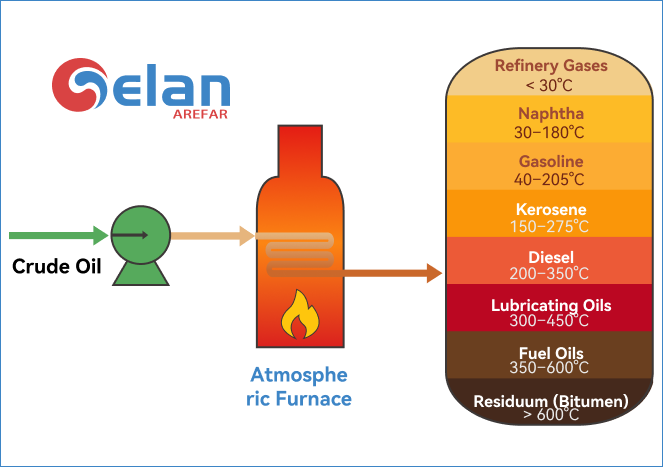
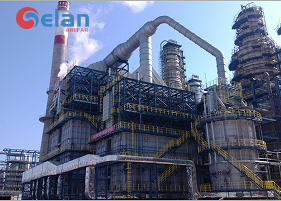
A crude distillation unit is the first major separation unit in a refinery. It heats desalted crude oil and separates it into different product cuts by boiling range.
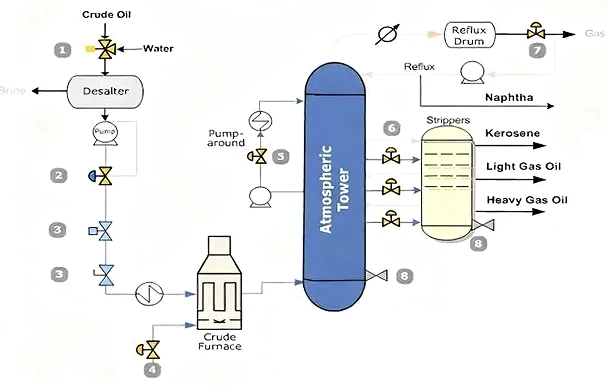
Crude Distillation Unit Process Flow
In a typical CDU unit, crude oil is preheated, heated in an atmospheric furnace, then sent to the distillation column for separation.
Crude Distillation Unit Project Challenges Gelan Helps Reduce
A crude distillation unit must control fuel use, heat recovery, product yield, pressure drop, fouling, and run length. Gelan helps reduce these risks through equipment packages, fabrication control, interface support, and project documentation.
Reduce Fired Heater Fuel Demand
High fuel use often starts from poor crude preheating, exchanger fouling, or weak heat recovery before the furnace.
How Gelan helps:
- Improve heat recovery before final furnace heating
- Support stable crude heating across the CDU system
- Reduce extra fired heater duty caused by poor heat transfer
- Balance fuel demand, heat transfer, and operating stability
Recover More Heat Before Final Heating
CDU energy performance depends on how much heat is recovered before crude enters the atmospheric furnace.
How Gelan helps:
- Recover more heat from product and pump-around streams
- Increase crude temperature before furnace heating
- Reduce extra fired heater duty
- Balance heat transfer with pressure drop
Keep Product Cuts More Stable
Unstable heating and separation can affect naphtha, kerosene, diesel, gas oil, and residue cuts.
How Gelan helps:
- Maintain stable heat input across the CDU
- Balance heat transfer from furnace to column and condensers
- Control cooling and reflux for consistent product separation
- Support revamp projects to meet target yields and product specifications
Lower Pressure Drop and Fouling Risk
High pressure drop, fouling, and coking can shorten run length and increase turnaround cost.
How Gelan helps:
- Lower pressure drop across the CDU to maintain stable operation
- Reduce fouling and coking risk for longer continuous runs
- Support predictable turnaround cycles to minimize unplanned shutdowns
- Optimize revamp and replacement projects to maintain efficiency and reliability
Reduce Shutdown and Turnaround Pressure
CDU shutdown windows are limited. Late equipment, poor fit-up, or missing documents can increase site cost.
How Gelan helps:
- Support on-time equipment delivery to match shutdown schedules
- Minimize installation and interface risks between furnace, column, and exchangers
- Provide complete documentation including inspection reports and data books
- Enable predictable turnaround with prefabrication, modular units, and revamp planning
CDU Project Scenarios Gelan Supports
CDU Revamp Support for 80,000 BPD Refinery Upgrade
Project Background:
Equipment upgrade support for a refinery crude distillation unit handling medium to heavy crude.
Key requirement:
Improve CDU energy efficiency, heat recovery, and operation stability within the existing unit layout.
Gelan Support:
- Supported CDU equipment package planning for revamp conditions
- Improved integration between preheating, furnace heating, and distillation sections
- Coordinated equipment interfaces, inspection records, and delivery documents
Result:
- Improved thermal efficiency, up to 90%+
- More stable CDU operation after upgrade
- Reduced fuel consumption and lower turnaround pressure compared with the original system
Gelan Capabilities Behind Your CDU Project
Industrial cooling projects often need more than equipment supply. Gelan supports engineering, modular fabrication, revamp work, and custom system design to help your cooling water system fit the real site and operating conditions.
EPC Solutions
For projects that need CDU engineering coordination, documentation, and site interface planning.
Modularization & Skid-Mounted Units
For customers who want prefabricated CDU modules to reduce site work and simplify installation.
Plant Revamp & Modernization
For refineries upgrading CDU units to improve heat recovery, product yield, and efficiency.
Custom Engineering & Prototyping
For special CDU layouts, unique process conditions, or limited space, requiring tailored engineering support.
Crude Distillation Unit Equipment Gelan Can Supply
For refinery CDU projects, Gelan provides key equipment packages to support new build, revamp, and replacement projects, ensuring stable operation, higher efficiency, and controlled turnaround.
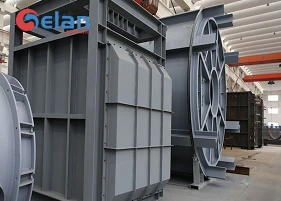
Atmospheric Furnace
Used for final crude heating before the atmospheric distillation column.
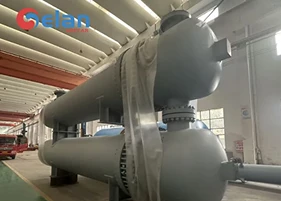
Shell & Tube Heat Exchanger
Used in crude preheat trains, product cooling, and heat recovery service.
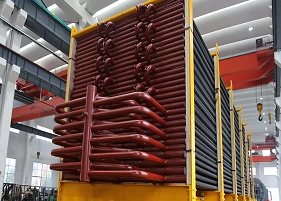
Waste Heat Boiler
Used when flue gas or hot process streams can support heat recovery in refinery units.
Related Solutions Supported by Gelan
Explore other refinery, energy, and process solutions that Gelan supports to improve efficiency, reliability, and project delivery.
Vacuum Distillation Unit (VDU)
For high-boiling fraction separation and downstream processing.
Industrial Closed-Loop Cooling Water System
For stable cooling of heaters, exchangers, and auxiliary equipment.
SOFC Power Generation System
For distributed power, CHP, and low-emission energy supply in refinery and industrial sites.
FAQ About Crude Distillation Units
1. How can a crude distillation unit reduce fuel consumption?
A CDU can reduce fuel use by improving crude preheating, heat recovery, fired heater efficiency, and fouling control. Better heat recovery before final heating can lower fired heater duty.
2. What causes low heat recovery in a crude distillation unit?
Low heat recovery often comes from exchanger fouling, poor heat transfer, aging tube bundles, pressure drop limits, or weak heat integration between hot product streams and cold crude feed.
3. How does fouling affect CDU operation?
Fouling reduces heat transfer and raises pressure drop. It can lower crude preheat temperature, increase fired heater fuel demand, shorten run length, and increase turnaround cost.
4. Can Gelan support crude distillation unit revamp projects?
Yes. Gelan supports CDU revamp, capacity upgrade, replacement, and shutdown maintenance projects with equipment packages, modular fabrication, interface control, inspection records, and project documentation.
5. How can a CDU revamp improve product yield?
A CDU revamp can improve yield stability by improving heat balance, separation control, reflux cooling, and product cooling. This helps maintain more stable naphtha, kerosene, diesel, gas oil, and residue cuts.
6. What should be considered before a crude unit revamp?
Key factors include target capacity, crude slate, heat recovery, fired heater duty, pressure drop, fouling history, available plot space, shutdown window, tie-in points, and required documentation.
7. Can Gelan support CDU equipment packages instead of only single equipment?
Yes. Gelan can support CDU projects with fired heaters, heat exchangers, columns, air coolers, vessels, tanks, steel structures, modular units, and related project documentation.
8. What information should I send for a CDU equipment inquiry?
You can send the equipment list, process data, drawings, design pressure and temperature, material requirements, inspection standards, site limits, revamp schedule, and delivery requirements.
Get Your CDU Equipment Package Reviewed
Share your crude distillation unit project data with Gelan, and we will help review the equipment scope, revamp needs, and delivery plan.