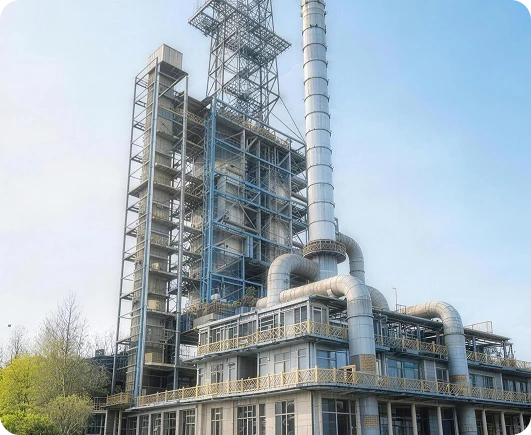
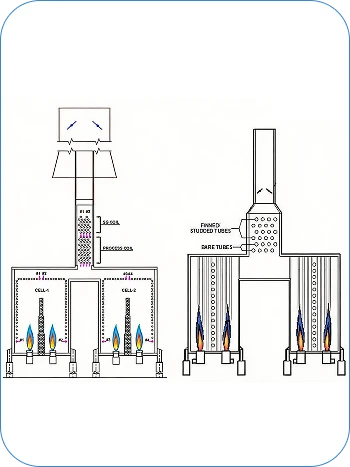
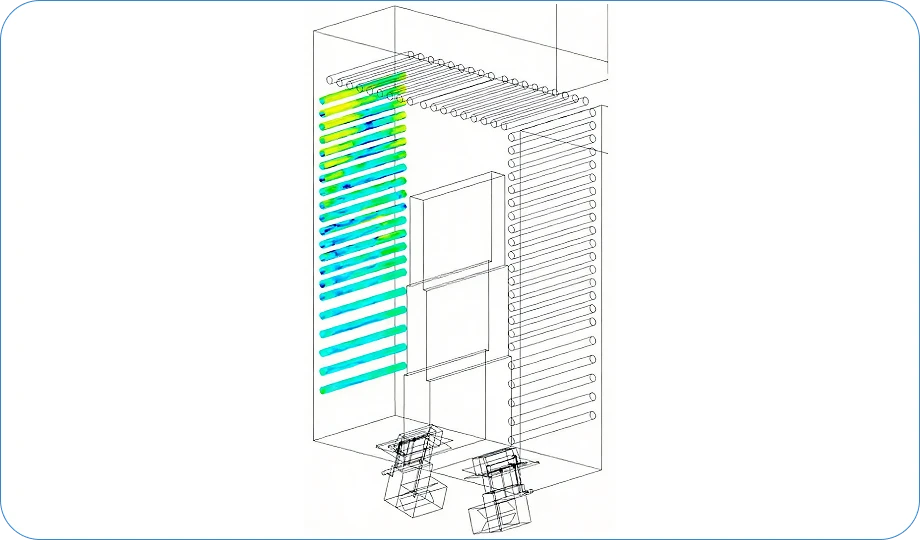
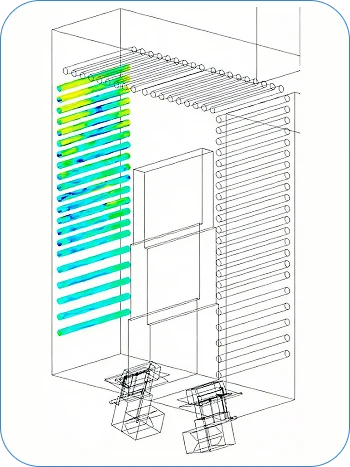
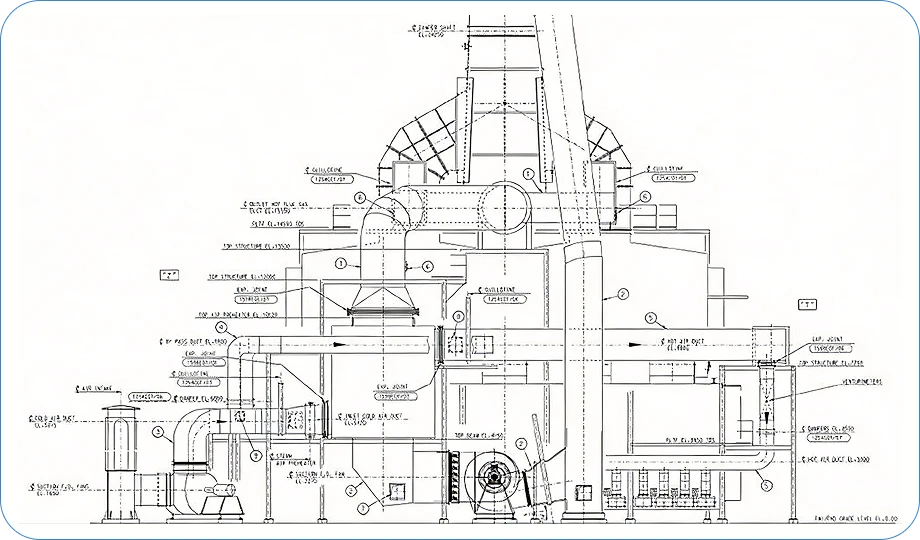
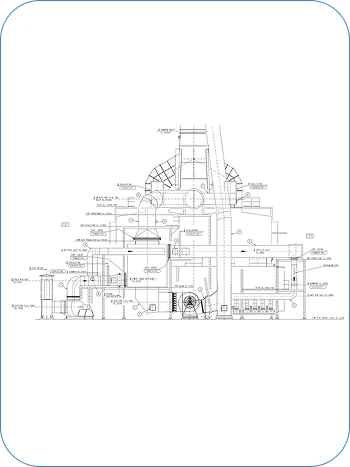
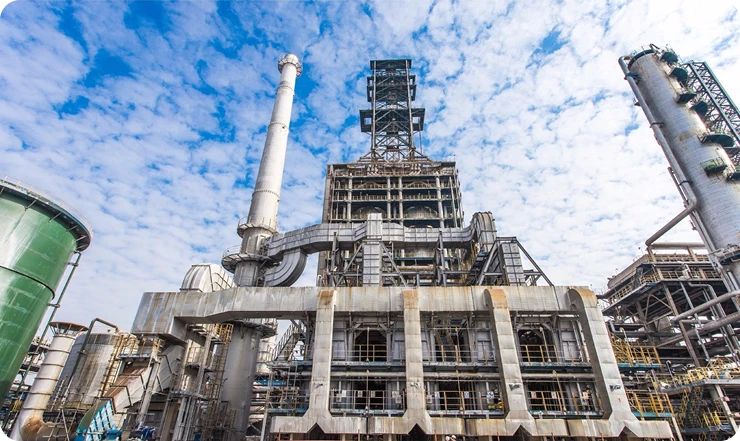
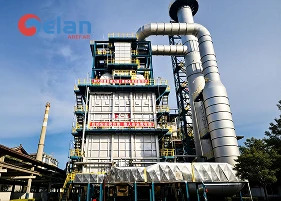
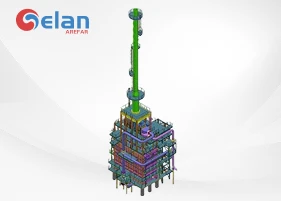
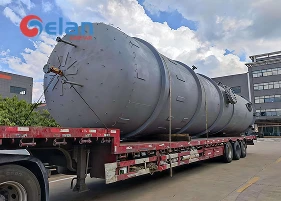
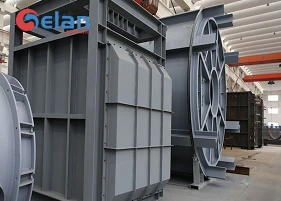
A coking furnace is crucial for refinery heavy oil upgrading. It is designed to heat heavy oil and vacuum residue to the required temperature before the coking process.
At Gelan, we design and manufacture refinery coking furnaces to improve heat distribution, reduce premature cracking inside the furnace, and support longer run length under severe operating conditions.
≤ ±10–15°C tube wall temperature deviation
Up to 6–12 months continuous run length
Optimized heat flux distribution for improved temperature uniformity
Designed and fabricated to ASME and API 560 standards
What Does a Coking Furnace Do in Heavy Oil Processing
In a refinery, crude oil is first separated through atmospheric and vacuum distillation. The remaining heavy residue cannot be economically upgraded by distillation alone.
A coking furnace heats this residue to the required temperature before the coking stage, helping convert it into lighter, higher-value products such as gas, naphtha, and diesel.
Convert low-value residue into higher-value saleable products
Improve overall yield from the same crude input
Reduce heavy residue sent to low-margin fuel use
Support more efficient downstream residue upgrading
Where the Coking Furnace Fits in the Refinery Process
After atmospheric and vacuum distillation, heavy residue is routed to the coking section for further upgrading. The coking furnace is positioned before the coking drums. It heats the residue to the required temperature so it can enter the coking stage under stable conditions.
Typical Technical Specifications of a Coking Furnace
Parameter
Gelan Typical Range
Importance
Operating Temperature
480–520°C
Affects cracking conditions and material selection
Feedstock
Vacuum residue / heavy oil
Determines fouling tendency and furnace design complexity
Tube Wall Temperature Deviation
≤ ±10–15°C
Lower deviation helps reduce hotspot risk
Continuous Run Length
6–12 months
Longer cycles mean fewer shutdowns
Heat Flux
Customized by design
Impacts heat distribution and cracking stability
Tube Material
Alloy steel (e.g. HK, HP)
Selected based on temperature and corrosion resistance
Design Standard
ASME / API 560
Can be supplemented to meet project specifications and client requirements
*These parameters are not fixed. In real projects, furnace design must be adjusted based on feed quality, fouling tendency, and required operating cycle.
How Gelan Coking Furnace Design Solves Heavy Oil Challenges
01
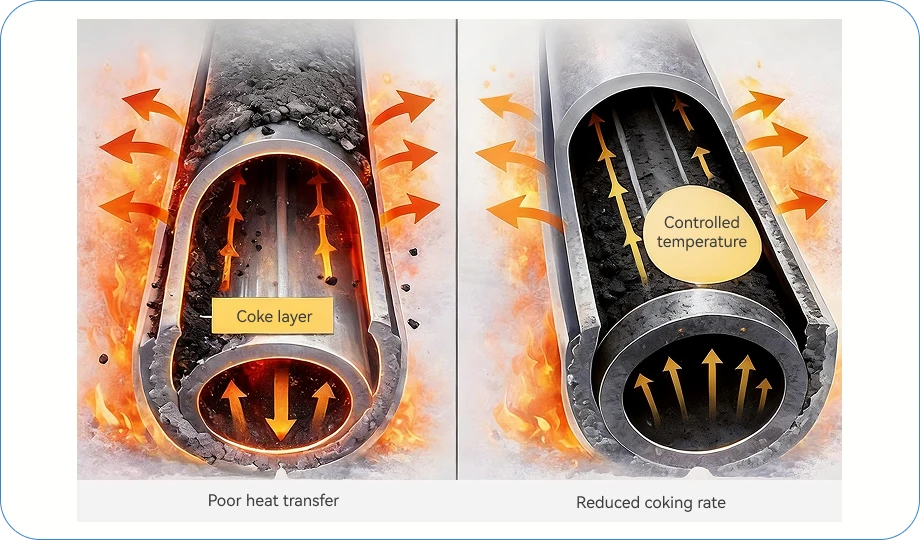
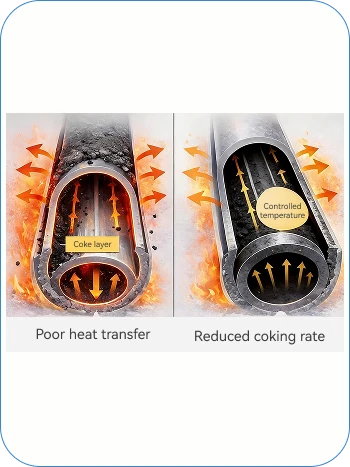
Reducing Coke Build-Up in Heavy Residue Service
Heavy residue feeds tend to form coke rapidly on tube surfaces. Once coke builds up, heat transfer drops and the furnace needs to be shut down for decoking.
Gelan approach:
Heat flux distribution designed to avoid local high-temperature zones
Tube surface temperature controlled to slow down coke formation
Typical performance:
Lower coking rate under heavy residue conditions
Longer decoking interval depending on feed quality
02
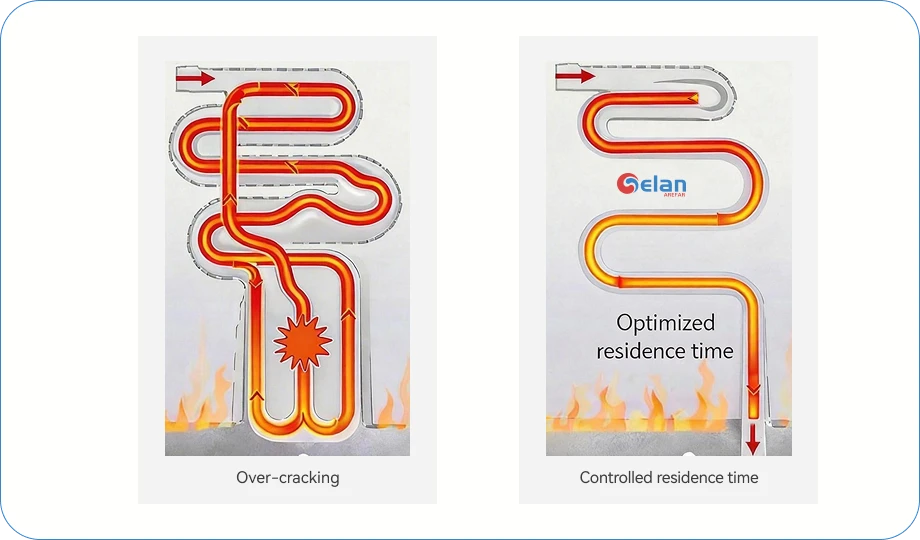
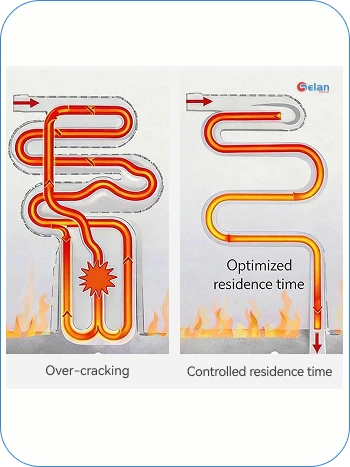
Residence Time Control to Prevent Early Cracking
If the feed stays too long in the furnace tubes, cracking can start inside the furnace instead of in the coking stage, leading to unstable operation.
Gelan approach:
Tube length and flow path designed to control residence time
Heat input balanced to avoid overexposure of feed inside tubes
Typical performance:
Reduced risk of premature cracking inside furnace tubes
More stable feed condition entering the coking stage
03
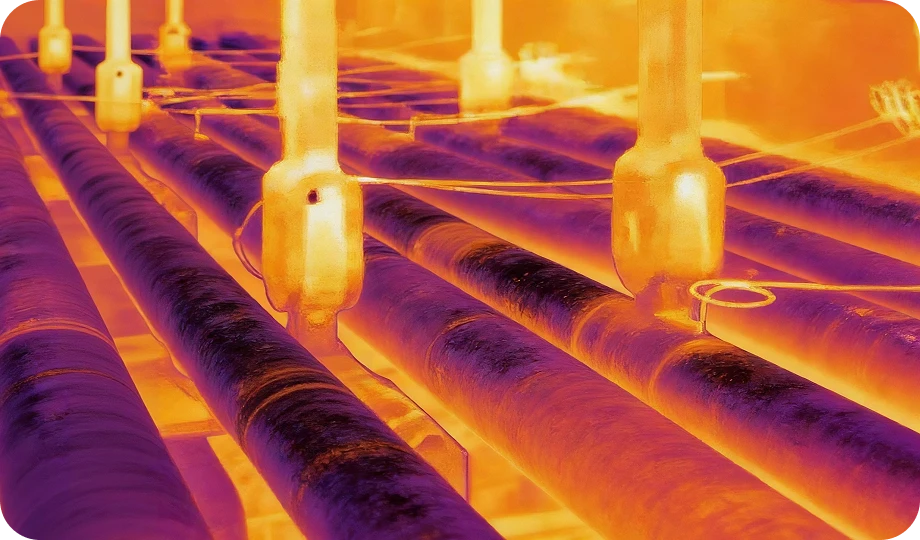
Stable and Uniform Temperature Control
Uneven temperature distribution can create hotspots, damage tubes, and accelerate coke formation.
Gelan approach:
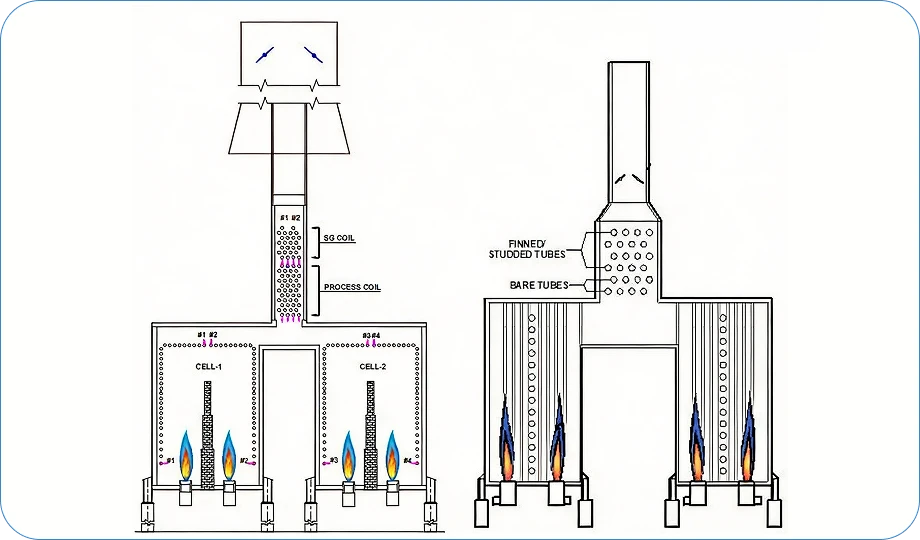
Burner layout optimized for even radiant heat distribution
Tube arrangement designed to improve temperature uniformity
Typical performance:
≤ ±10–15°C tube wall temperature deviation
Reduced local overheating risk
04
Heat Load Distribution and Energy Efficiency
Poor heat load distribution not only affects operation stability but also increases fuel consumption.
Gelan approach:
Heat duty and heat intensity balanced across the furnace
Combustion system designed for stable and efficient operation
Typical performance:
More efficient fuel utilization under stable operation
Reduced energy loss caused by uneven heating
05
Tube Life Under High Temperature and Fouling Conditions
Furnace tubes operate under high temperature and fouling conditions, which directly affect maintenance cost and shutdown frequency.
Gelan approach:
Tube material selected based on temperature and corrosion conditions
Design optimized to reduce thermal stress and local overheating
Typical performance:
Extended tube service life under severe operating conditions
Lower risk of premature tube failure
06
Processing Capacity and Operational Stability
For large-scale refinery projects, the furnace must handle required throughput without sacrificing stability.
Gelan approach:
Furnace size and configuration designed based on project capacity
Flow distribution optimized to maintain stable operation at scale
Typical performance:
Stable operation at design capacity
Reduced operational fluctuation under varying load
Where Delayed Coking Furnaces Are Used
Typically used in industries where heavy oil and residue require further upgrading.
Applied in crude oil refining to process heavy fractions and improve overall product value from residual feedstock
Oil Refining
Used in large-scale processing environments where stable handling of heavy hydrocarbons is required
Petrochemical Industry
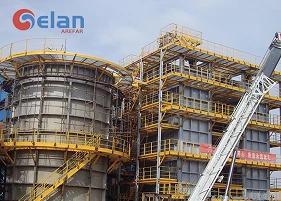
Residue Coking Furnace Projects Delivered by Gelan
Residue Coking Furnace for 1.6 Million TPA Delayed Coking Unit
Project Background:
Coking furnace supplied for a 1.6 million TPA delayed coking unit. The project handled vacuum residue with high fouling tendency.
Key requirement:
Keep the unit running at design capacity with fewer fouling problems and fewer shutdowns.
Gelan support:
Customized furnace design for heavy residue service
Heat load adjusted to reduce local over-firing
Tube layout optimized to better control residence time
Result:
Supported stable operation of the 1.6 million TPA unit
Reduced the impact of tube fouling on throughput
Helped the unit run more steadily with fewer interruptions
Improved reliability during continuous operation
Related Equipment in the Delayed Coking Process
A coking furnace works together with other key equipment to support stable residue processing and product conversion.
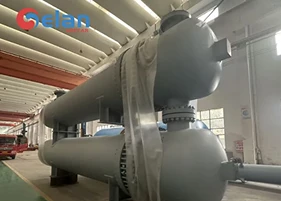
Shell & Tube Heat Exchangers
Recovers heat from process streams around the furnace. Supports temperature control and improves heat efficiency.
A coking furnace is used to heat heavy residue to the required temperature before the coking stage. It prepares the feed for further cracking and helps convert low-value residue into lighter products and petroleum coke.
What feedstock is typically processed in a coking furnace?
Most coking furnaces process vacuum residue or heavy atmospheric residue. These feeds usually contain high asphaltene content and have a strong tendency to form coke during heating.
What are the main operating challenges of a coking furnace?
Common challenges include:
Coke formation inside furnace tubes
Uneven heat distribution and local hotspots
Premature cracking before the coking stage
Short run length due to fouling
These issues directly affect stability, maintenance frequency, and operating cost.
Why is residence time important in a coking furnace?
Residence time controls when cracking starts. If the feed stays too long in the furnace, cracking may begin too early, leading to fouling and unstable operation.
What determines the run length of a coking furnace?
Run length mainly depends on:
Feed quality and fouling tendency
Heat distribution inside the furnace
Tube temperature control
In most cases, coke buildup inside the tubes is the main limiting factor.
What temperature does a coking furnace operate at?
Typical operating temperatures are around 480–510°C, depending on feedstock and process conditions.
How can coke formation inside furnace tubes be reduced?
Coke formation can be reduced by:
Controlling tube wall temperature
Improving heat distribution
Managing residence time
Optimizing feed conditions
These measures help extend operating cycles and reduce shutdown frequency.
How do I choose the right coking furnace for my project?
The right furnace depends on your feed characteristics, fouling tendency, operating cycle, and required throughput. For projects with heavy residue or severe operating conditions, working with an experienced manufacturer like Gelan can help you better match furnace design with your actual process requirements.
How does coking furnace performance affect refinery operation?
Furnace performance directly impacts:
Unit run length
Throughput stability
Frequency of shutdowns
Overall refinery profitability
Even small improvements in operation stability can significantly affect long-term performance.
Get a Coking Furnace Designed for Your Project
Talk to our engineers to discuss your process and get a coking furnace solution tailored to your project.
Send Your Requirements
Share your project needs, drawings, or specifications. Our team will review your request and reply within 8 hours.