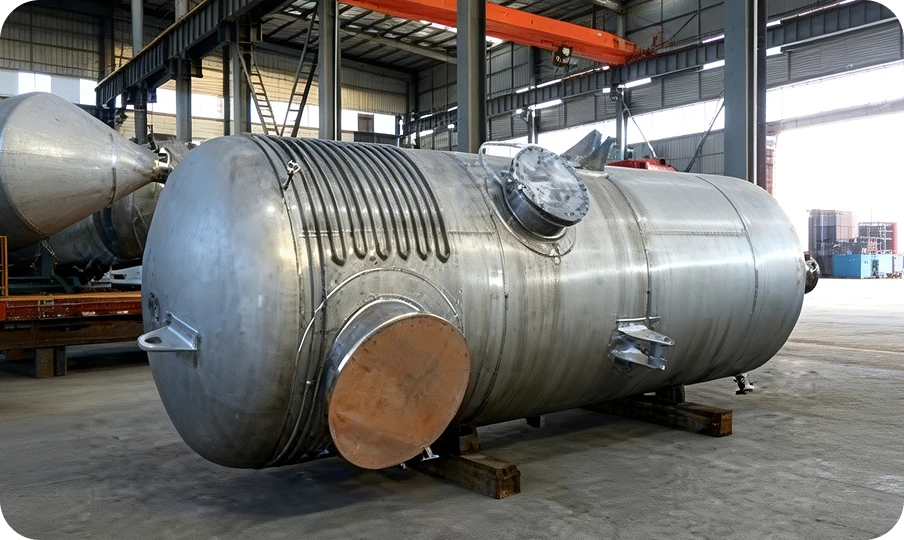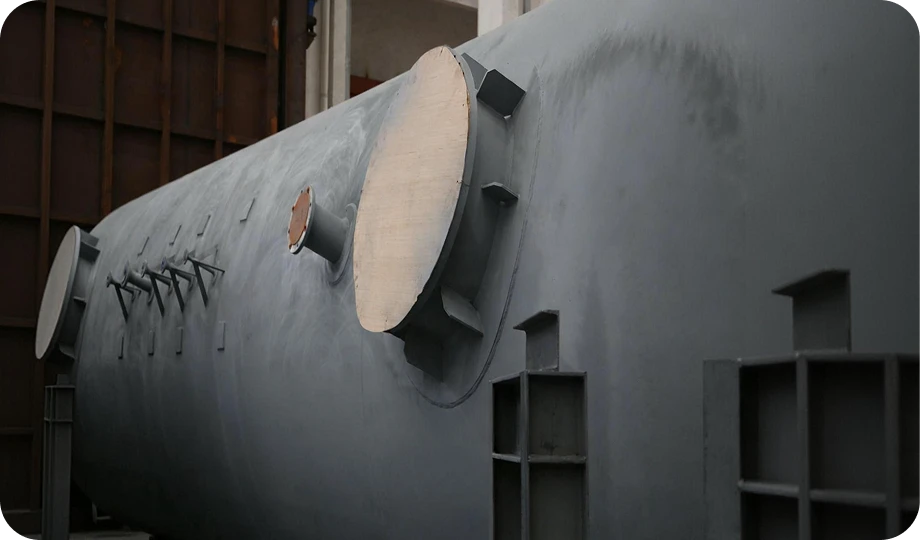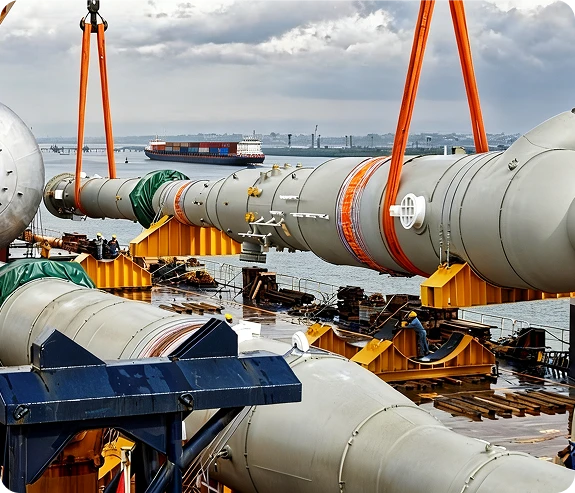
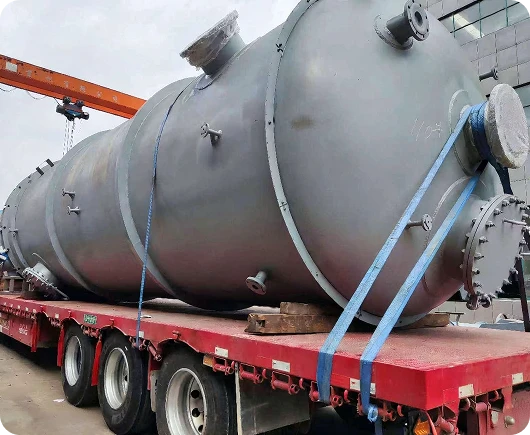

Reactor Pressure Vessel Manufacturer
for High-Pressure Process Projects
- ASME U / Section VIII support for reactor pressure vessels
- ISO 9001 controlled manufacturing and documentation
- PED / CE support for EU projects if required
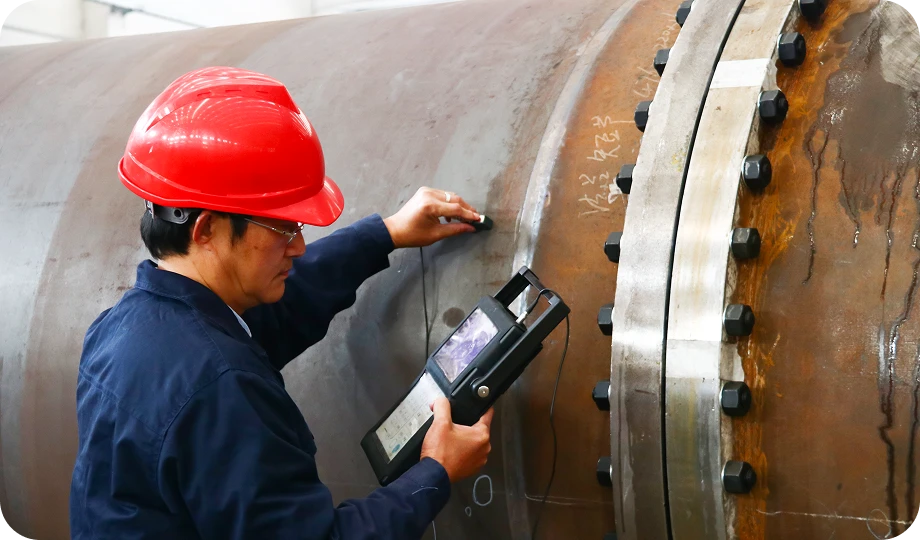
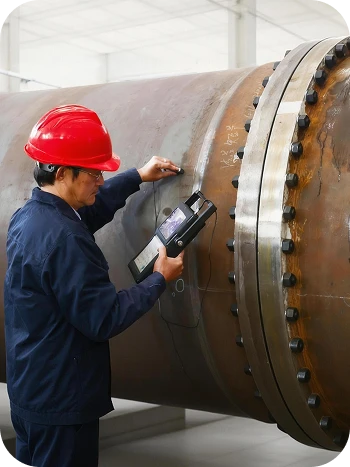
- NDT, hydrotest, MTC, and final data book for project review
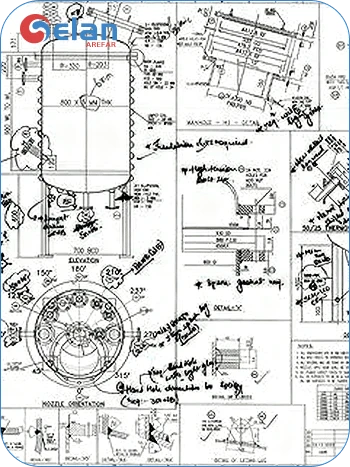
- Custom fabrication based on your datasheet and drawings
Reactor Vessels Built for Your Reaction Process
Your reactor vessel may serve different process duties in a refinery, petrochemical plant, or chemical unit. Gelan supports the common reactor vessel types shown below.
Catalytic Reactor
Catalytic Reactor Vessel
A catalytic reactor vessel is used when the reaction depends on catalyst contact.


Typical Use
Often used when feedstock must pass through or contact a catalyst under controlled conditions.
Reactor Role in the Project
Holds the catalyst reaction zone inside a pressure vessel. Helps feedstock contact the catalyst evenly before cooling, separation, or further treatment.
Key Design Focus
We help the vessel match your catalyst bed, flow direction, inspection needs, and maintenance plan.
Common Applications
Hydrogenation Reactor
Hydrogenation Reactor Vessel
Custom hydrogenation reactor vessel for high-pressure hydrogen reaction service.
Typical Use
Used when hydrogen reacts with feedstock under pressure. Common in chemical, petrochemical, oil upgrading, and catalytic hydrogenation reactor projects.
Reactor Role in the Project
Helps feedstock, hydrogen, and catalyst react before cooling and separation.
Key Design Focus
We can support welding control, PWHT when required, NDT, hydrotest, and final document delivery.
Common Applications
Hydroprocessing Reactor
Hydroprocessing Reactor Vessel
Custom hydroprocessing reactor vessel for refinery upgrading and hydrotreating service.
Typical Use
Common in diesel hydrotreating and other refinery upgrading projects.
Reactor Role in the Project
Helps improve product quality before high-pressure separation and downstream treatment.
Key Design Focus
We focus on thick-wall fabrication, catalyst bed interface, and inspection records for EPC review.
Common Applications
Ammonia Synthesis Reactor
Custom reactor pressure vessel for ammonia synthesis and high-pressure chemical reaction service.
Typical Use
Common in projects where gas reaction, pressure control, and temperature stability are critical.
Reactor Role in the Project
Supports stable reaction before cooling, separation, and ammonia recovery.
Key Design Focus
We focus on pressure strength, temperature stability, and inspection records for project review.
Common Applications
Styrene Reactor
Styrene Reactor Vessel
A styrene reactor vessel is used in petrochemical production where reaction and downstream separation must work together.
Typical Use
Common when the reaction outlet needs cooling, separation, distillation, and product storage.
Reactor Role in the Project
Supports the main reaction stage before product recovery. Connects upstream feed preparation with downstream cooling, separator, distillation column, and storage tank.
Gelan Support
We focus on nozzle orientation, downstream connection, material fit, and inspection support.
Common Applications


Catalytic Reactor Vessel
A catalytic reactor vessel is used when the reaction depends on catalyst contact.
Typical Use
Used in catalytic conversion, refinery upgrading, petrochemical reaction, and specialty chemical production. Often used when feedstock must pass through or contact a catalyst under controlled conditions.
Reactor Role in the Project
Holds the catalyst reaction zone inside a pressure vessel. Helps feedstock contact the catalyst evenly before cooling, separation, or further treatment.
Gelan Support
Gelan can manufacture catalytic reactor vessels with proper nozzle layout, catalyst support interface, manway access, and internals connection. We help the vessel match your catalyst bed, flow direction, inspection needs, and maintenance plan.
Typical Process Flow
Hydrogenation Reactor Vessel
A catalytic reactor vessel is used when the reaction depends on catalyst contact.
Typical Use
Used when hydrogen reacts with feedstock under pressure. Common in chemical, petrochemical, oil upgrading, and catalytic hydrogenation reactor projects.
Reactor Role in the Project
Helps feedstock, hydrogen, and catalyst react before cooling and separation.
Gelan Support
We can support welding control, PWHT when required, NDT, hydrotest, and final document delivery.
Typical Process Flow
Hydroprocessing Reactor Vessel
Custom hydroprocessing reactor vessel for refinery upgrading and hydrotreating service.
Typical Use
Common in diesel hydrotreating and other refinery upgrading projects.
Reactor Role in the Project
Helps improve product quality before high-pressure separation and downstream treatment.
Gelan Support
We focus on thick-wall fabrication, catalyst bed interface, and inspection records for EPC review.
Typical Process Flow
Ammonia Synthesis Reactor Vessel
Custom reactor pressure vessel for ammonia synthesis and high-pressure chemical reaction service.
Typical Use
Common in projects where gas reaction, pressure control, and temperature stability are critical.
Reactor Role in the Project
Supports stable reaction before cooling, separation, and ammonia recovery.
Gelan Support
We focus on pressure strength, temperature stability, and inspection records for project review.
Typical Process Flow
Styrene Reactor Vessel
A styrene reactor vessel is used in petrochemical production where reaction and downstream separation must work together.
Typical Use
Common when the reaction outlet needs cooling, separation, distillation, and product storage.
Reactor Role in the Project
Supports the main reaction stage before product recovery. Connects upstream feed preparation with downstream cooling, separator, distillation column, and storage tank.
Gelan Support
We focus on nozzle orientation, downstream connection, material fit, and inspection support.
Typical Process Flow
Fixed Bed Reactor Vessel and Other Custom Reactor Configurations
Reactor vessels can be customized by internal structure, catalyst bed layout, and process flow path. Gelan builds each vessel based on your datasheet, drawings, and project standards.
Internal Reactor Structures Gelan Can CustomizeBy Internal Structure / Catalyst Bed Layout |
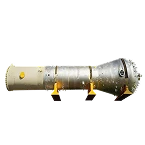
Fixed Bed Reactor Vessel
|
Fluidized Bed Reactor Vessel
|
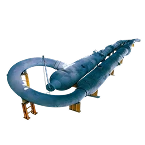
Loop Reactor Vessel
|
| Main Purpose | Hydrogenation, hydroprocessing, ammonia synthesis, styrene dehydrogenation | Gas-phase polymerization, catalytic cracking, gas-solid reaction processes | Polyethylene and polypropylene polymerization |
| Configuration Focus | Fixed catalyst bed design, flow distribution, pressure drop control, and catalyst support structure | Gas-solid contact, particle suspension, distributor design, and stable fluidization | Loop circulation, slurry flow stability, heat removal, and polymerization residence time |
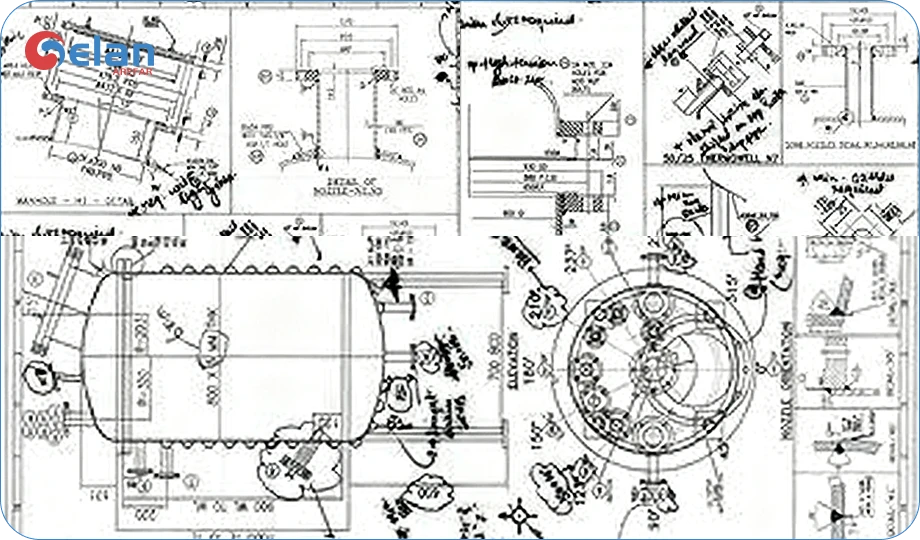
Need a different reactor configuration? Gelan can customize it based on your datasheet and drawings
Technical Specifications of Industrial Reactor Vessels
Check the key reactor vessel data before sending your inquiry.
| Item | What Buyers Usually Need to Confirm |
|---|---|
| Reactor Service | Catalytic, hydrogenation, hydroprocessing, ammonia synthesis, styrene, or other process duty |
| Design Pressure | Operating pressure, design pressure, pressure fluctuation, safety margin. Gelan supports >100 MPa projects |
| Design Temperature | Operating temperature, design temperature, start-up, shutdown, and upset case |
| Process Medium | Hydrogen, hydrocarbon, synthesis gas, corrosive chemical, or mixed process fluid |
| Material Selection | Carbon steel, stainless steel, alloy steel, clad plate, or specified material |
| Corrosion Allowance | Corrosion risk, service life, medium, and project standard |
| Catalyst Bed / Internals | Catalyst support, distributor, collector, grid, screen, baffle, and thermowell |
| Nozzle Layout | Feed inlet, outlet, gas inlet, vent, drain, manway, instrument nozzle, safety valve |
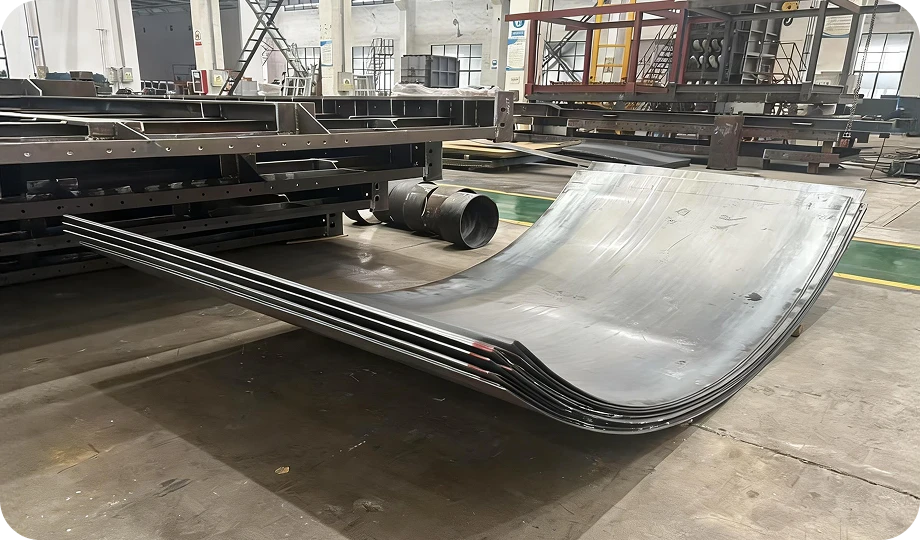
| Wall Thickness | Thick-wall shell, forming, welding, lifting, and transport. Gelan supports >120 mm wall thickness |
| Hot Forming | Thick plate forming control. Gelan supports steel heating above 700°C when required |
| Welding / PWHT | WPS / PQR, weld quality, PWHT, hydrogen service, and code review |
| Inspection & Testing | RT, UT, PT, MT, hydrotest, dimensional check, MTC, and third-party inspection |
| Design Code | ASME Section VIII, PED / CE, EAC, client standard, or project code |
| Delivery Documents | Drawings, MTC, welding records, NDT reports, hydrotest report, final data book |
*Need a custom high pressure reactor vessel? Send Gelan your datasheet or drawings for review.
What Project Teams Check Before Reactor Pressure Vessel Fabrication
Gelan helps review these points before fabrication, so your vessel is easier to approve, install, and hand over.
Match the Vessel to the Real Reaction Service
If the pressure reactor vessel does not match the actual reaction duty, later changes can be costly. Problems may come from wrong pressure margin, wrong nozzle layout, missing catalyst support details, or material that does not fit the medium.
Gelan approach:
- Review process datasheet, drawings, medium, pressure, temperature, and reaction type before fabrication
- Match vessel design with catalytic, hydrogenation, hydroprocessing, or chemical reaction service
- Confirm nozzle layout, manway, internals interface, and inspection access early
Control High-Pressure and Thick-Wall Fabrication Risk
Gelan approach:
- Support high-pressure reactor vessel projects above 100 MPa when required
- Support thick-wall fabrication above 120 mm
- Support hot forming with steel heating above 700°C when required
- Plan forming, welding sequence, lifting, and transport before production starts
Select Material for Hydrogen, Corrosion, and Heat
Material choice can decide whether the vessel can serve safely in hydrogen, corrosive, or high-temperature conditions. A wrong material choice may lead to corrosion risk, inspection failure, or shorter service life.
Gelan approach:
- Support carbon steel, stainless steel, alloy steel, clad plate, or project-specified material
- Match material with hydrogen service, corrosive media, high-temperature operation, and catalyst-related duty
- Review corrosion allowance, material certificates, and project standards before procurement
Make the Catalyst Bed and Internals Fit the Vessel
For a fixed bed reactor vessel or catalytic reactor vessel, the shell is only one part of the equipment. Catalyst support, distributor, collector, grid, thermowell, manway, and nozzles must fit the process layout.
Gelan approach:
- Coordinate catalyst bed arrangement, support interface, and internals connection
- Check feed inlet, outlet, vent, drain, instrument nozzle, and safety valve locations
- Support fixed bed, multi-bed, and custom internal structure requirements based on drawings
Prepare Inspection Records for EPC and Third-Party Review
Even when the vessel is well fabricated, missing inspection records can slow down project review and handover. EPC teams need clear proof for material, welding, NDT, pressure test, and dimensions.
Gelan approach:
- Support RT, UT, PT, MT, hydrotest, dimensional check, and third-party inspection
- Provide MTC, welding records, NDT reports, hydrotest report, and final data book
- Support ASME Section VIII, PED / CE, EAC, client standard, or project-specific code requirements
Reduce Delivery Risk Before the Vessel Leaves the Shop
A large industrial reactor vessel can affect transport, lifting, site installation, and project schedule. If these points are checked too late, the project may face avoidable delays.
Gelan approach:
- Review vessel size, wall thickness, lifting points, support form, and transport limits
- Plan packing, shipment, and handover documents before delivery
- Support project follow-up from fabrication to final delivery
Where Our Reactor Pressure Vessels Are Used
Industrial reactor vessels are used in projects where pressure, temperature, reaction medium, catalyst service, and inspection requirements directly affect equipment design and fabrication.
Used in refinery projects for hydroprocessing, hydrotreating, catalytic reaction, oil upgrading, and sulfur removal service where high pressure and hydrogen service are common
Refining
Used in petrochemical projects for polymerization, catalytic conversion, hydrogenation, styrene production, and other process reaction duties
Petrochemical
Used in chemical plants where reaction pressure, corrosive media, catalyst system, and material compatibility directly affect reactor vessel design
Chemical Processing
Used in hydrogenation, ammonia synthesis, and hydrogen-related chemical reaction projects where high-pressure gas service and inspection control are critical
Hydrogen Production
Used in energy and industrial process units that require custom high pressure reactor vessels, corrosion-resistant materials, or project-specific fabrication standards
Energy and Fuel Processing
Pressure Reactor Vessel Projects Supported by Gelan
Gas-Phase Reactor for 200,000 t/y Polypropylene Unit
Project Background:
Gelan support:
- Gas-phase reactor pressure vessel fabrication for polypropylene production
- Fabrication support based on licensed process design and project drawings
- Welding quality control and dimensional control for large reactor vessel structure
- Inspection support, delivery documents, and final handover records for project review
Project snapshot:
- Unit capacity: 200,000 t/y polypropylene unit
- Reactor type: Gas-phase reactor
- Process technology: DOW UNIPOL
- Application: Petrochemical polypropylene production
- Key focus: process fit, fabrication accuracy, inspection records, and project documentation
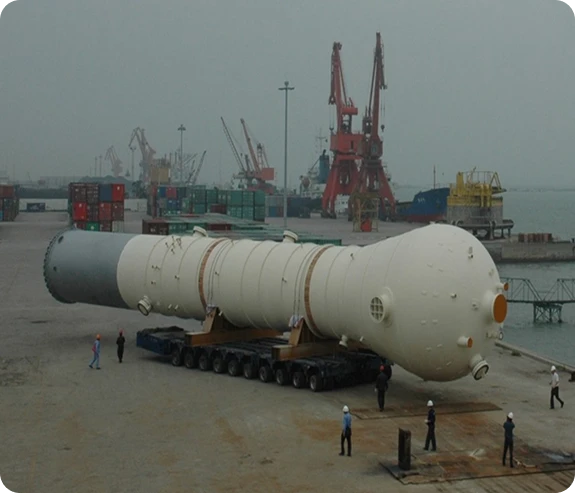
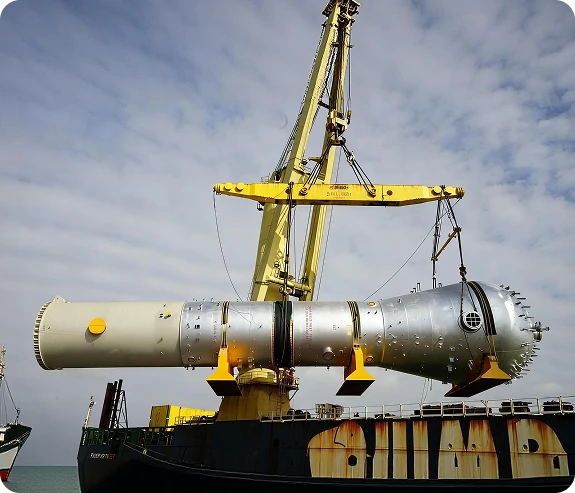
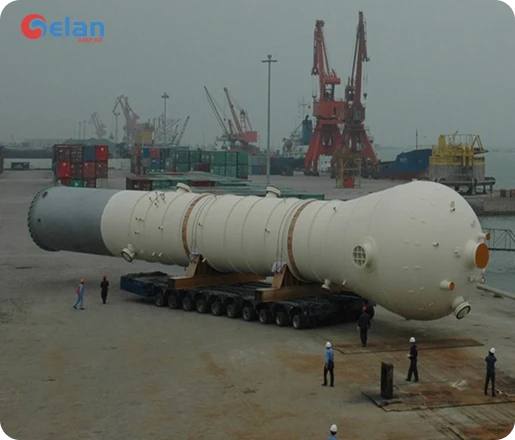
500-Ton Gas-Phase Reactor Exported to Oman
Project background:
Gelan support:
- Custom industrial reactor vessel fabrication for large gas-phase reaction service
- Large-size structure control for 500-ton class equipment
- Fabrication support for Ø9.4 m × 44 m reactor vessel size
- Welding quality control, dimensional inspection, and delivery document preparation
- Export coordination for overseas petrochemical project delivery
Project value:
- Destination: Oman
- Reactor type: Gas-phase reactor
- Unit weight: about 500 tons per reactor
- Diameter: 9.4 m
- Length: 44 m
- Application: Overseas petrochemical gas-phase reaction project
- Key focus: large-size fabrication, dimensional control, lifting, transport, and export delivery
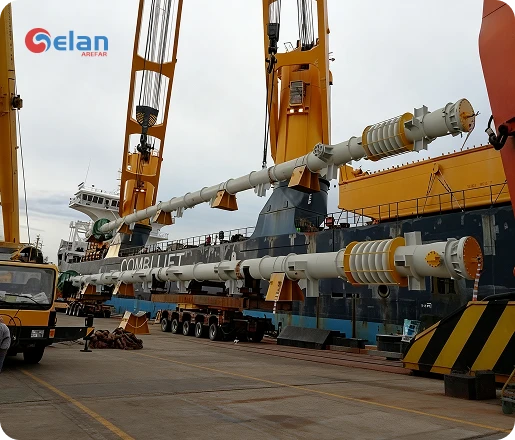
Multi-Zone Circulating Reactor Exported to PETRONAS
Project background:
The reactor was used in an overseas petrochemical project related to plant construction, expansion, or process unit development.
Gelan support:
- Custom reactor pressure vessel fabrication for multi-zone circulating reaction service
- Vessel geometry and nozzle layout control based on project drawings
- Welding quality control, inspection records, and export handover documents
- Delivery support for overseas project requirements
Project value:
- Year: 2017
- End user: PETRONAS
- Destination: Malaysia
- Reactor type: Multi-zone circulating reactor
- Project type: Overseas petrochemical plant construction / expansion support
- Key focus: special reactor structure, dimensional control, nozzle layout, inspection, and export delivery
Where Our Reactor Pressure Vessels Are Used
Industrial reactor vessels are used in projects where pressure, temperature, reaction medium, catalyst service, and inspection requirements directly affect equipment design and fabrication.
Shell & Tube Heat Exchangers
Often used for feed heating, reactor effluent cooling, heat recovery, or temperature control around the reactor system.
Air Cooler
Often used to cool reactor effluent before separation, downstream treatment, or product handling.
Separator Vessel / Drum
Often used after the reactor to separate gas, liquid, or mixed reaction products before further processing.
Distillation Column / Tower
Often used after reaction and separation to purify, fractionate, or recover target products.
Storage Tank
Often used to store feedstock, intermediate streams, or final products before or after the reaction process.
Preheater
Often used to preheat feedstock before entering the reactor, helping the reaction reach required inlet conditions.
FAQ About Reactor Pressure Vessels
What information is needed to quote a reactor pressure vessel?
To quote a reactor pressure vessel, Gelan usually needs your process datasheet, drawings, design pressure, design temperature, medium, material requirement, vessel size, nozzle layout, inspection standard, and delivery location. If you only have basic operating data, you can still send it to Gelan for an initial review.
Can Gelan manufacture high pressure reactor vessels?
What is the difference between a reactor vessel and a pressure vessel?
A pressure vessel holds gas or liquid under pressure. A reactor vessel is a pressure vessel used for chemical reaction service. It may also need catalyst support, internals, special nozzle layout, corrosion allowance, and stricter inspection control.
What materials are used for industrial reactor vessels?
Common materials include carbon steel, stainless steel, alloy steel, and clad plate. The right choice depends on pressure, temperature, hydrogen service, corrosion risk, process medium, and project code. Gelan can support stainless steel reactor vessels, clad reactor vessels, and project-specified materials.
Can Gelan support fixed bed reactor vessel fabrication?
Yes. Gelan can support fixed bed reactor vessel fabrication for catalytic reaction, hydrogenation, hydroprocessing, and refinery upgrading service. Key points include catalyst support, distributor interface, pressure drop, manway access, nozzle layout, and inspection access.
Does Gelan manufacture hydrogenation or hydroprocessing reactor vessels?
Yes. Gelan can manufacture hydrogenation reactor vessels and hydroprocessing reactor vessels for high-pressure hydrogen service, refinery hydrotreating, sulfur removal, and oil upgrading projects. These vessels often require material review, welding control, PWHT when required, NDT, hydrotest, and complete inspection records.
Can reactor pressure vessels be built according to ASME requirements?
Yes. Gelan can support ASME reactor vessel projects based on ASME Section VIII and project specifications. For EU or overseas projects, PED / CE, EAC, client standards, and third-party inspection requirements can also be considered when required.
What documents should come with a reactor pressure vessel?
Common documents include drawings, material certificates, welding records, NDT reports, hydrotest reports, dimensional inspection reports, and final data book. These records help EPC teams, plant owners, and inspectors review the reactor pressure vessel fabrication process before handover.
Need a Custom Reactor Pressure Vessel?
Send Gelan your datasheet, drawings, or basic operating conditions. We can review your high pressure reactor vessel requirements and provide a custom fabrication proposal.