

TL;DR
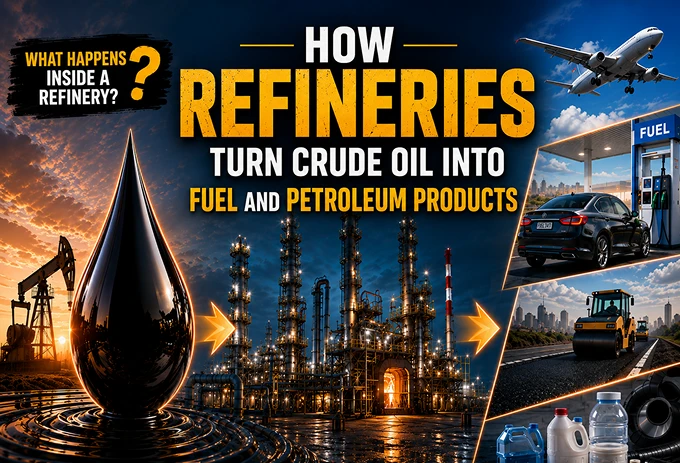
- • The oil refining process turns crude oil into fuels, byproducts, and petrochemical feedstocks.
- • Main steps include purification, distillation, conversion, treatment, and blending.
- • Refineries produce gasoline, diesel, jet fuel, LPG, bunker oil, asphalt, lubricants, and other refined petroleum products.
- • The final product mix depends on crude oil quality, refinery configuration, and equipment performance.
- • For refinery projects, better process design and equipment support can improve product yield, energy use, and long-term operation.
A crude refinery does not simply “make gasoline”. It separates, converts, treats, and blends crude oil into many usable product streams. In real oil refining projects, equipment design also affects yield, energy efficiency, corrosion control, and long-term operation.
In this guide, we will walk through the petroleum refining process, main refinery process steps, common refined petroleum products, byproducts, and where Gelan can support oil refining projects with custom static equipment and engineered fabrication.
CONTENT:
- What Is a Crude Refinery?
- How Does the Petroleum Refining Process Work?
- What Are the Main Refinery Process Steps?
- What Refined Petroleum Products Come From Crude Oil?
- What Are Bunker Oil, Refinery Gas, and Other Byproducts?
- Where Does Gelan Fit in Oil Refining Project Support?
- FAQ About the Petroleum Refinery Process
- Conclusion
What Is a Crude Refinery?
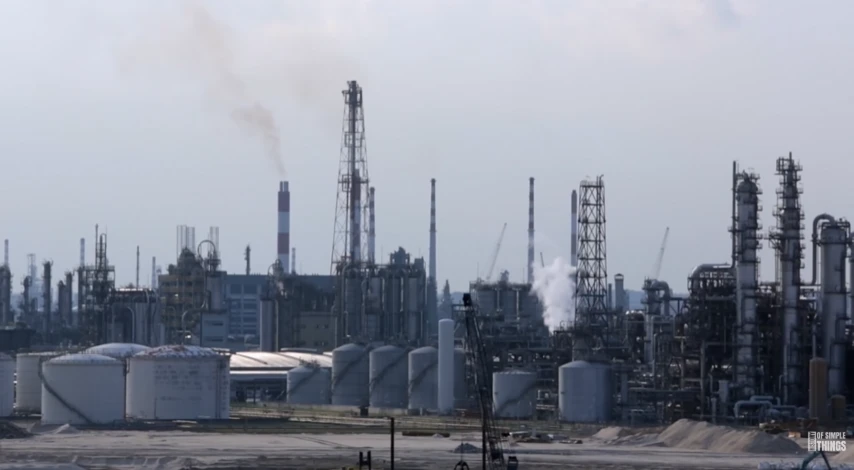
A crude refinery is an industrial plant that converts crude oil into fuels, chemical feedstocks, and other petroleum products.
Crude oil cannot be used directly in most engines or industrial systems. In real refinery work, it must be separated, converted, and treated before it becomes gasoline, diesel, jet fuel, LPG, asphalt, or petrochemical feedstock.
Then these products can be used for transportation, heating, road paving, electricity generation, and chemical production.
How Does the Petroleum Refining Process Work?
The petroleum refining process follows a clear route: crude oil is prepared, separated, converted, treated, blended, and stored as finished products.
In the first stage, crude oil is prepared for processing. Water, salts, sand, and other impurities are removed before the oil enters high-temperature units. This helps reduce corrosion, fouling, and catalyst damage in later refinery process units.
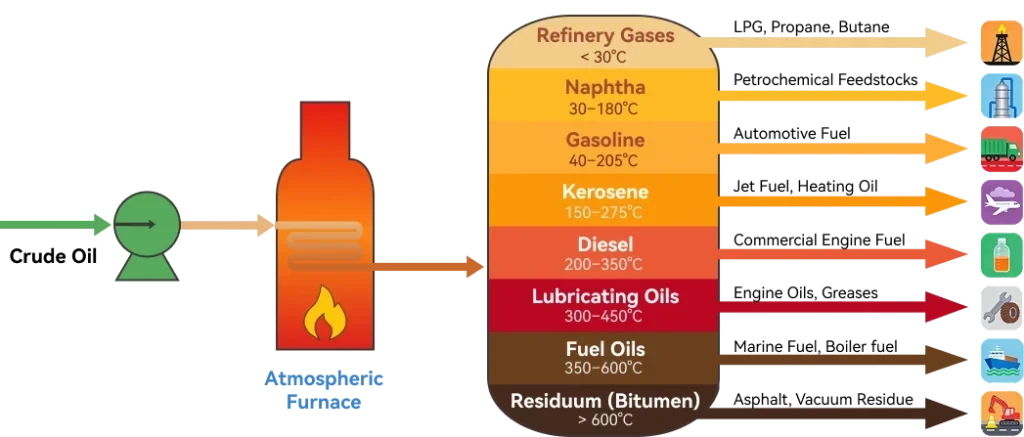
Next, the crude oil is heated and sent to distillation units. In separation, liquids and vapors are divided into fractions according to their boiling points. Light fractions rise higher in the tower, while heavier fractions stay lower or settle at the bottom.
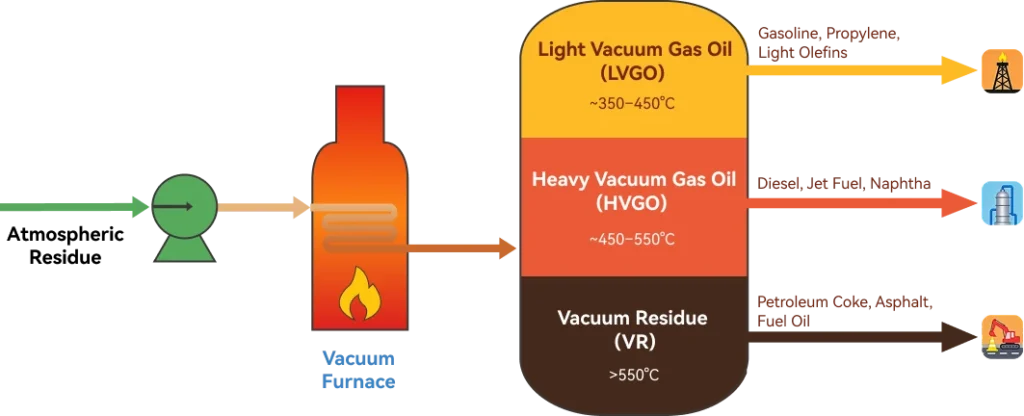
After separation, some heavy fractions still have low value. They are sent to conversion units, where large hydrocarbon molecules are changed into lighter and more useful streams.
The final stages are treatment and blending. Treatment removes unwanted compounds such as sulfur. Blending combines different product streams to meet fuel specifications such as octane, vapor pressure, and product quality.
What Are the Main Refinery Process Steps?
The route above can be grouped into four practical refinery process steps. They follow the same order used in most refinery units: prepare the crude, separate it, convert heavy streams, and finish fuel-grade products.
| Step | Process Role |
|---|---|
| Feed Preparation | Prepare crude oil before high-temperature processing |
| Separation | Split crude oil into different boiling-range fractions |
| Conversion | Upgrade heavy fractions into lighter, higher-value streams |
| Treatment & Blending | Remove impurities and blend intermediate streams into usable fuels |
How Does the Crude Oil Purification Process Prepare Feedstock?
Before crude oil enters high-temperature units, the crude oil purification process removes water, salts, solids, and other impurities. This is usually done through desalting and preheating.
In a desalter, crude oil is mixed with wash water. Salts dissolve into the water, and the water is then separated from the oil. A typical desalting flow includes crude preheating, wash water injection, mixing, electrostatic separation, and wastewater removal.
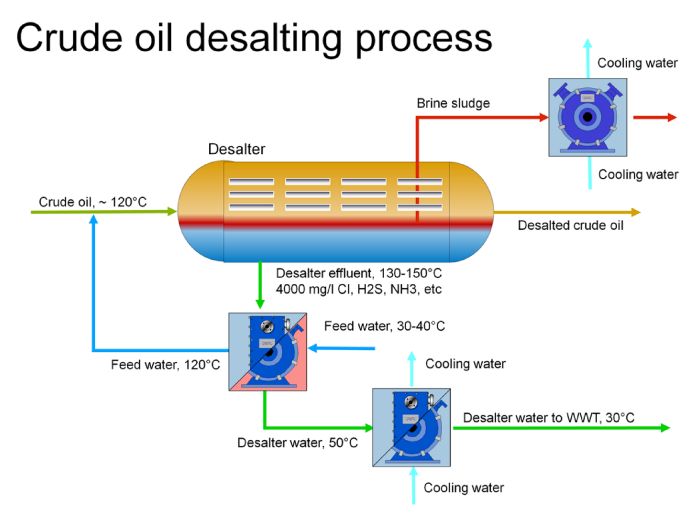
Sources from Alfalaval
This step is important because salts and water can cause corrosion, fouling, and unstable operation. For refinery equipment buyers, this is also where early-stage equipment such as crude pumps, heat exchangers, desalters, and preheat train components begin to affect the full petroleum refinery process.
How Does Crude Oil Distillation Separate Oil Fractions?
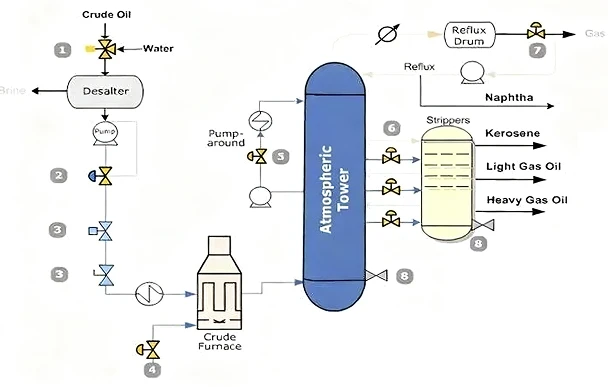
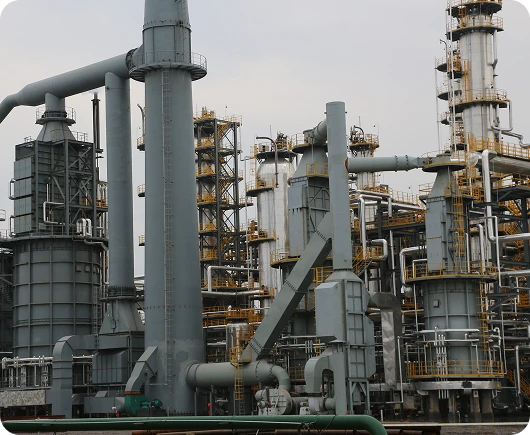
After preparation, crude oil is heated and sent to distillation units. Crude oil distillation separates the oil into fractions by boiling point. As the heated stream enters the tower, lighter components vaporize and rise upward, while heavier components stay lower or settle near the bottom.
This separation step does not make finished fuels by itself. It creates intermediate streams for later processing.
- Light gases and naphtha are collected from the upper sections.
- Kerosene, diesel, and gas oils come from the middle and lower sections.
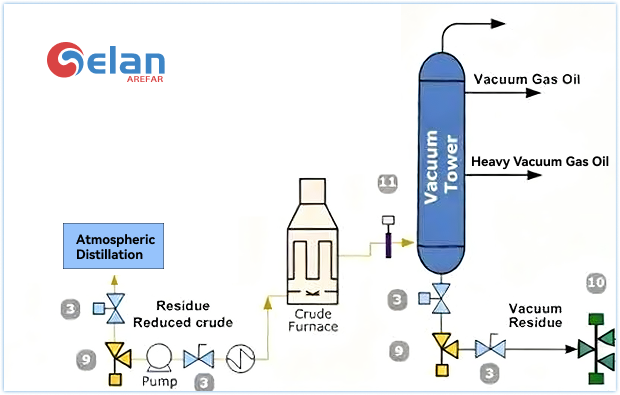
- Heavy residue remains near the bottom and usually needs further conversion or treatment.
How Does Cracking Crude Oil Support Fuel Production?
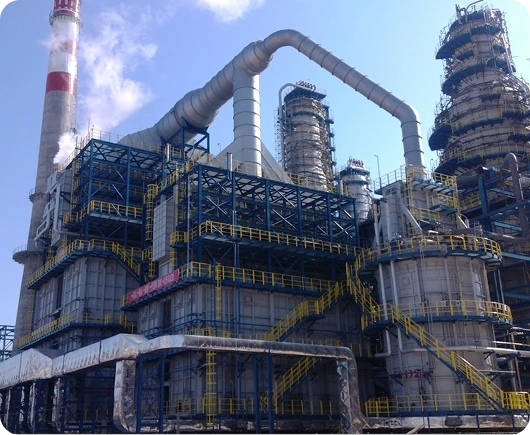
After distillation, some heavy streams still have limited value. Cracking crude oil helps break large hydrocarbon molecules into smaller and lighter molecules. This makes the refinery process more useful because it increases the yield of gasoline-range, diesel-range, and other fuel streams.
Cracking can use heat, pressure, catalysts, and sometimes hydrogen. Common refinery units include fluid catalytic cracking units and hydrocrackers.
- Fluid catalytic cracking is often used to upgrade heavy gas oils into gasoline-range products.
- Hydrocracking uses hydrogen under high pressure, so it can produce cleaner diesel, jet fuel, and other high-quality streams.
This step is important because crude oil does not naturally contain enough light fuel components to meet modern demand. Distillation separates what is already in the crude. Conversion units change heavier fractions into more useful products.
How Do Treatment and Blending Complete Oil to Gasoline Finishing?
After conversion, refinery streams still need treatment and blending before they become finished fuels. Gasoline-range, diesel-range, and jet fuel streams may still contain sulfur, light gases, or unstable compounds. Treatment removes these unwanted materials.
For gasoline, oil to gasoline conversion is not one direct machine or one single reaction. It is a product route. Naphtha, cracked gasoline, reformate, isomerate, and other blending components are treated and combined to meet finished gasoline specifications.
Blending controls key product properties such as octane, vapor pressure, sulfur level, stability, and seasonal performance. This is why finished gasoline, diesel, and jet fuel are not simply distilled from crude oil. They are made from several refinery streams and adjusted to meet market and regulatory requirements.
What Refined Petroleum Products Come From Crude Oil?
Crude oil is used because refineries can turn it into many refined petroleum products, not only gasoline. These products support transportation, heating, road construction, power generation, and chemical production.
| Product Stream | Common Products | Main Uses |
|---|---|---|
| Light gases | LPG, propane, butane | Cooking fuel, heating, petrochemical feedstock |
| Naphtha | Light naphtha, heavy naphtha | Gasoline blending, petrochemical feedstock |
| Gasoline-range streams | Finished gasoline | Cars and light vehicles |
| Middle distillates | Diesel, heating oil | Trucks, machinery, heating systems |
| Kerosene range | Jet fuel, kerosene | Aviation and industrial fuel |
| Heavy streams | Fuel oil, bunker fuel components | Marine fuel, industrial heating |
| Residue | Asphalt, road oil | Road paving and roofing |
| Specialty products | Lubricants, waxes, petrochemical feedstocks | Machinery, chemicals, plastics, synthetic materials |
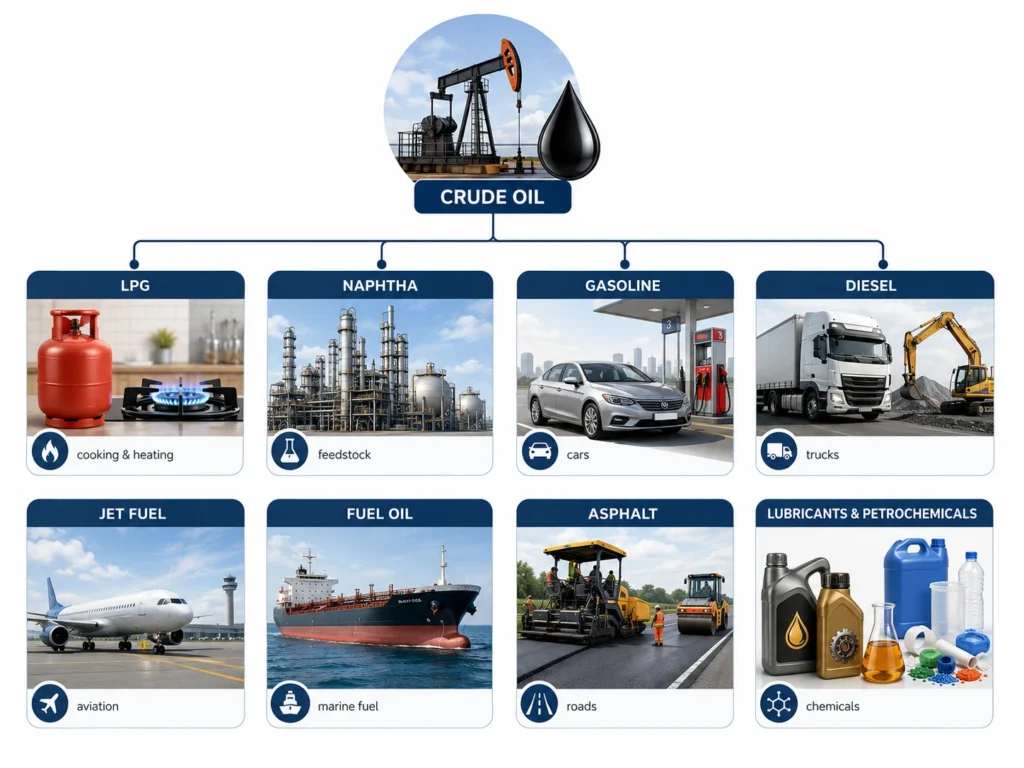
The final product mix depends on the crude oil quality and the refinery configuration. Lighter crude can produce more high-value fuels through simpler separation, while heavier crude often needs more conversion units to produce gasoline, diesel, and jet fuel.
This is why the uses of crude oil are much wider than fuel alone. After refining, crude oil can become transportation fuels, fuel oils, asphalt, lubricants, and feedstocks for chemicals, plastics, and synthetic materials.
What Are Bunker Oil, Refinery Gas, and Other Byproducts?
Not every refinery stream becomes gasoline, diesel, or jet fuel. Some heavier or lighter streams become bunker oil, refinery gas, asphalt, petroleum coke, sulfur, or petrochemical feedstock.
Bunker oil usually comes from heavy fuel oil or residual streams. These streams are much heavier than gasoline or diesel and are often linked to marine fuel, industrial heating, or further refinery processing. After distillation, the heaviest residue may also be processed into asphalt, road materials, or other industrial products.
Refinery gas comes from the lightest hydrocarbon streams in the refinery. It may include gases such as methane, ethane, propane, and butane, depending on the unit and recovery system. Some refinery gas can be recovered as LPG or used as fuel inside the refinery.
A byproduct of oil refining is not always waste. Many byproducts still have value when they are recovered, treated, or reused in the right system.
| Stream | Typical Refinery Source | Common Use |
|---|---|---|
| Bunker oil / heavy fuel oil | Heavy refinery fractions or residue | Marine fuel, industrial fuel, further processing |
| Refinery gas | Light gas streams from distillation and conversion units | LPG recovery, refinery fuel gas |
| Sulfur | Hydrotreating and gas treating systems | Chemical and fertilizer industries |
| Petroleum coke | Coking of heavy residue | Industrial fuel, carbon products |
| Asphalt / bitumen | Bottom residue from heavy fractions | Road paving, roofing, construction materials |
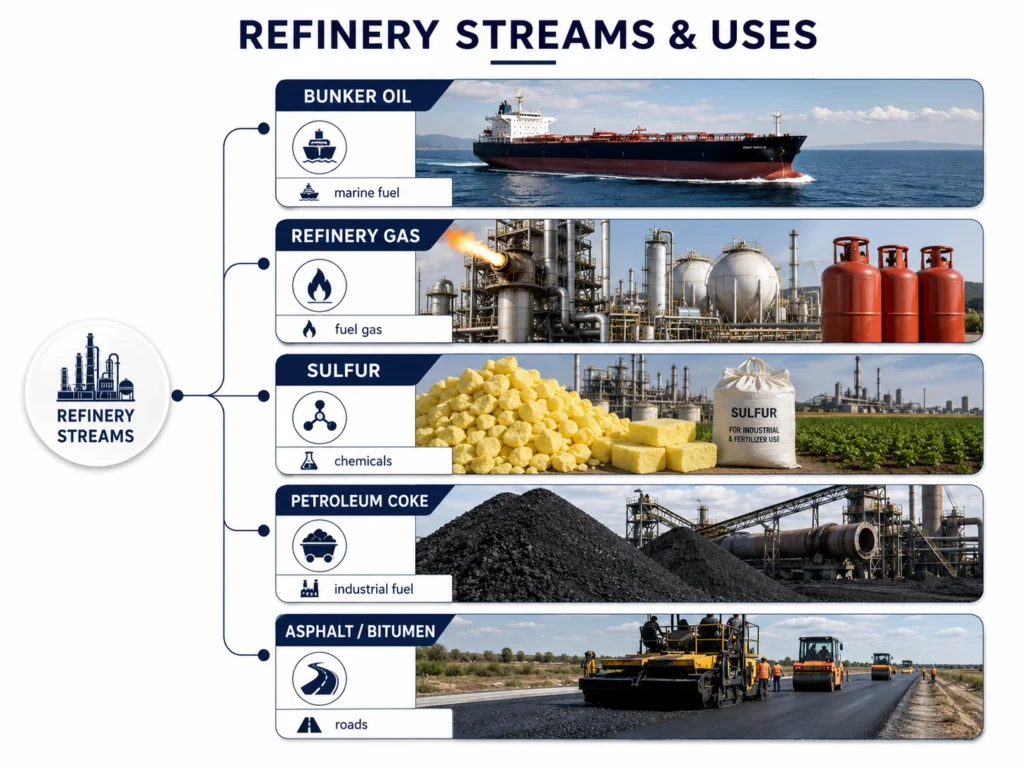
For refinery projects, these streams matter because they affect equipment design. Heavy residue can require high-temperature handling, special materials, and fouling control. Refinery gas, VOC exhaust, and sulfur-bearing streams may also need safe pressure handling, gas treatment, combustion, and RTO-based emission control before stack discharge.
Where Does Gelan Fit in Oil Refining Project Support?
Understanding the oil refining process is the first step. Building a refinery system that delivers high product yield, stable operation, and lower energy consumption requires much more than following the process flow.
A successful oil refining project should consider:
- Crude oil quality and product targets
- Process unit configuration
- Heat integration and energy efficiency
- Equipment material selection
- Corrosion and fouling risks
- Equipment layout and modularization
- Inspection, documentation, and international standards
- Installation schedule and future maintenance
Instead of evaluating each piece of equipment separately, it is often more effective to review the refinery as a complete process system. This helps ensure that heating, separation, conversion, treatment, and heat recovery equipment work together throughout the project lifecycle.
With decades of industry experience and successful refinery projects worldwide, Gelan supports customers beyond equipment manufacturing. We help review process conditions, drawings, and datasheets, then translate them into practical equipment solutions through engineering design, custom fabrication, documentation, and project delivery.
FAQ About the Petroleum Refinery Process
What should an oil refinery diagram include before equipment selection?
A useful oil refinery diagram should show the main process route, stream direction, heating points, cooling points, pressure levels, major equipment, and product outlets. This helps project teams understand where heaters, heat exchangers, columns, vessels, tanks, and heat recovery equipment may be needed.
How does crude oil quality affect refinery equipment design?
Crude oil quality affects heating duty, corrosion risk, fouling tendency, material selection, and conversion needs. For example, heavier crude may require stronger heating, more residue handling, and more conversion equipment. So equipment should be designed around real process conditions, not only by equipment name.
How does refinery technology affect the equipment scope?
Different refinery technology requires different equipment. A simple refinery may focus on distillation. A more complex refinery may need vacuum distillation, cracking, hydrotreating, sulfur recovery, and waste heat recovery systems. The required types of industrial boilers depend on the plant steam demand, available fuels, and recoverable heat sources. That is why equipment scope should be reviewed together with the full refinery process route.
What refinery equipment should be reviewed first in a revamp project?
In a revamp project, the first items to review are usually the equipment that limits capacity, safety, energy efficiency, or product quality. This may include fired heaters, heat exchangers, distillation columns, pressure vessels, reactors, waste heat recovery equipment, and gas treatment systems. Layout, nozzle position, foundation limits, shutdown time, and documentation also need early review.
When does a refinery project need a system solution instead of a single equipment quote?
A single equipment quote works when the design is fixed and the scope is clear. A system solution is better when several equipment items are connected by process conditions, heat balance, layout limits, or delivery schedule. This is common in CDU / VDU revamp, crude preheating, heavy stream handling, waste heat recovery, and modular refinery projects.
Is the petrochemical refining process the same as oil refining?
No. Oil refining mainly turns crude oil into fuels and petroleum products. The petrochemical refining process is closely related, but it focuses more on chemical feedstocks such as naphtha, LPG, aromatics, and other streams used to make plastics, fibers, solvents, and chemicals. For project teams, both types of projects often need similar equipment support: heating, heat transfer, separation, pressure handling, heat recovery, and emission control.
Conclusion
The oil refining process shows how crude oil becomes fuel, byproducts, and chemical feedstocks.
For refinery projects, the right equipment design, heat recovery, materials, and delivery support are key to stable operation.
Gelan helps customers turn process conditions into practical equipment solutions for efficient oil refining and refined petroleum products production. If you are reviewing a refinery project, revamp scope, residue handling system, or heat recovery plan, contact Gelan to discuss the equipment requirements.