

TL;DR
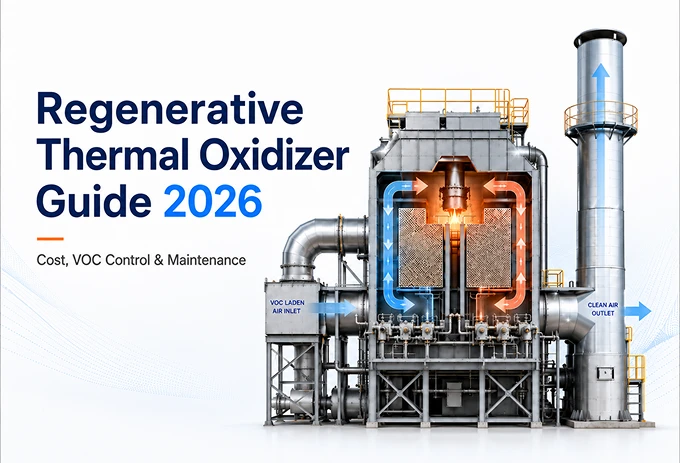
- • A regenerative thermal oxidizer is a thermal oxidizer used to destroy VOCs in industrial exhaust gas.
- • It works through five steps: intake, preheating, oxidation, heat recovery, and airflow reversal.
- • RTO systems are most suitable for continuous exhaust streams with large airflow and low-to-medium VOC concentration.
- • Under proper design, an RTO can support 95–99% VOC control efficiency, and heat recovery can reach high levels depending on media, sealing, and operating conditions.
- • The main design risks are poor airflow distribution, media fouling, valve leakage, high pressure drop, and weak maintenance access.
- • Typical industrial regenerative thermal oxidizer cost can vary widely, depending on airflow, VOC data, materials, controls, and installation scope.
Industrial plants use a thermal oxidizer to treat VOC emissions, odors, and hazardous organic compounds before exhaust gas reaches the stack. A regenerative thermal oxidizer, or RTO oxidizer, destroys VOCs at high temperature and recovers heat inside the system.
This makes it a practical choice for continuous exhaust streams in chemical, petrochemical, coating, pharmaceutical, printing, and downstream oil and gas facilities.
Poor RTO selection can lead to high fuel use, unstable emissions, pressure-drop problems, and frequent maintenance. A reliable RTO system must match the exhaust flow rate, VOC concentration, destruction efficiency target, fuel plan, maintenance access, and site layout.
With more than 14 years of experience in global oil, gas, and petrochemical projects, I have seen many emission-control problems start from weak process data and poor equipment selection.
In this guide, I’ll explain how a regenerative thermal oxidizer works, where it is used, what affects cost and maintenance, and how to evaluate an RTO unit before choosing a supplier.
CONTENT:
- What Is a Regenerative Thermal Oxidizer?
- How Does a Regenerative Thermal Oxidizer Work?
- What Are the Main Parts of an RTO System?
- Why Are RTO Systems Used for VOC Emission Control?
- RTO vs Other Thermal Oxidizer Types: Which One Fits Your Process?
- Where Are Regenerative Thermal Oxidizers Used?
- How Much Does a Regenerative Thermal Oxidizer Cost in 2026?
- How Do You Maintain or Repair a Regenerative Thermal Oxidizer?
- FAQ About Regenerative Thermal Oxidizers
What Is a Regenerative Thermal Oxidizer?
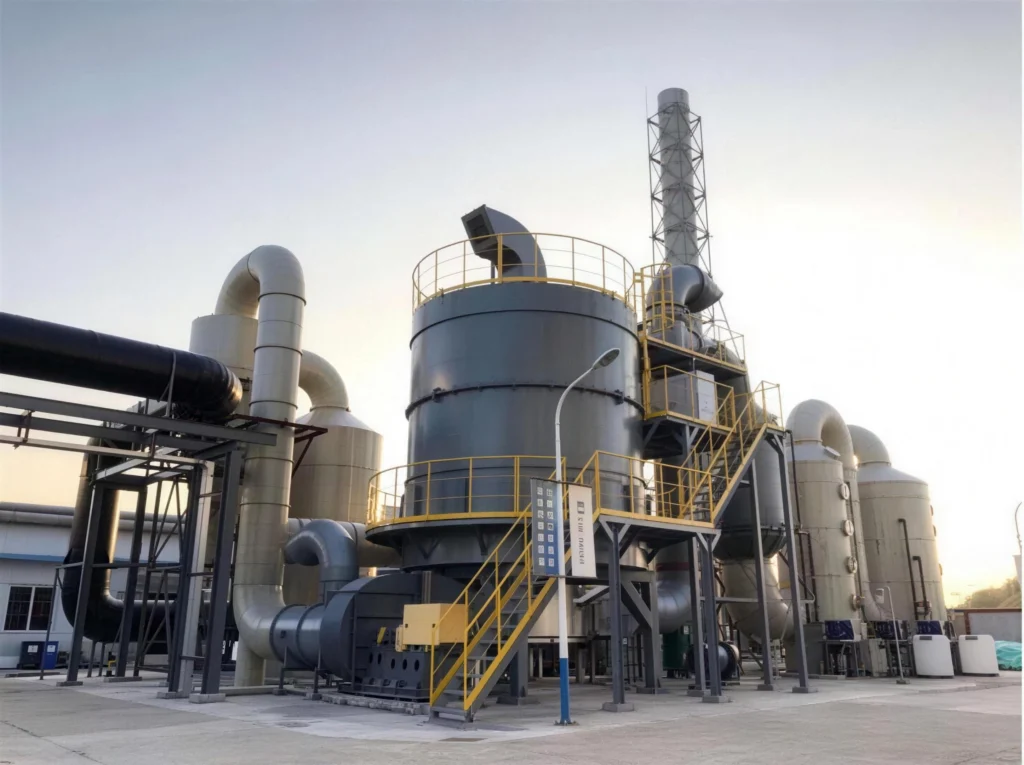
A regenerative thermal oxidizer is a type of thermal oxidizer used to destroy VOCs in industrial exhaust gas. It uses heat, oxygen, residence time, and mixing to oxidize organic pollutants. Inside the combustion chamber, VOCs break down mainly into carbon dioxide and water vapor.
Think of an RTO as a heat-recovery furnace for polluted air. It burns VOCs, stores heat from the clean exhaust, and uses that heat to preheat the next stream of incoming exhaust gas.
At a basic level, an RTO performs three jobs:
- It collects VOC-laden process exhaust.
- It heats the exhaust to the required oxidation condition.
- It recovers heat before the treated gas leaves the system.
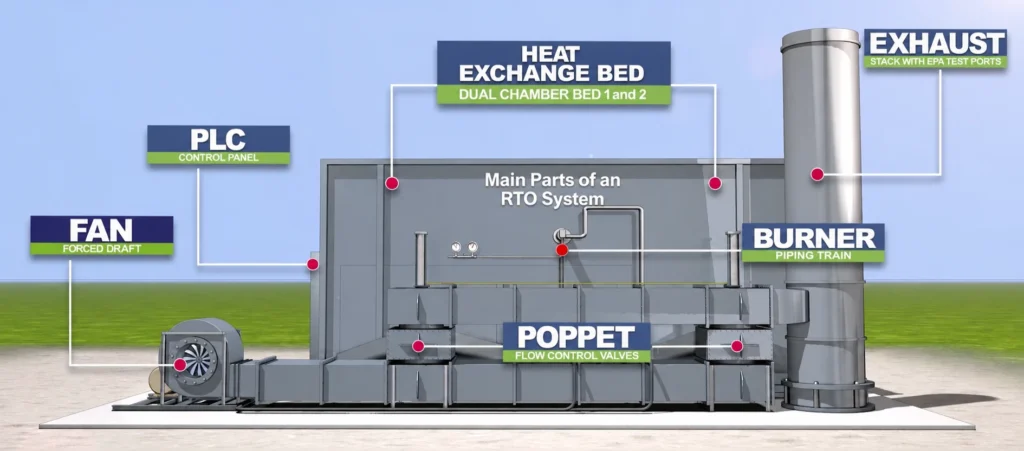
An RTO system includes ceramic media, a combustion chamber, burners, fans, valves, controls, ducting, insulation, and an exhaust stack. These parts will be explained step by step in the next sections.
For plants with continuous VOC exhaust, regenerative thermal oxidation can reduce emissions and lower long-term fuel demand.
How Does a Regenerative Thermal Oxidizer Work?
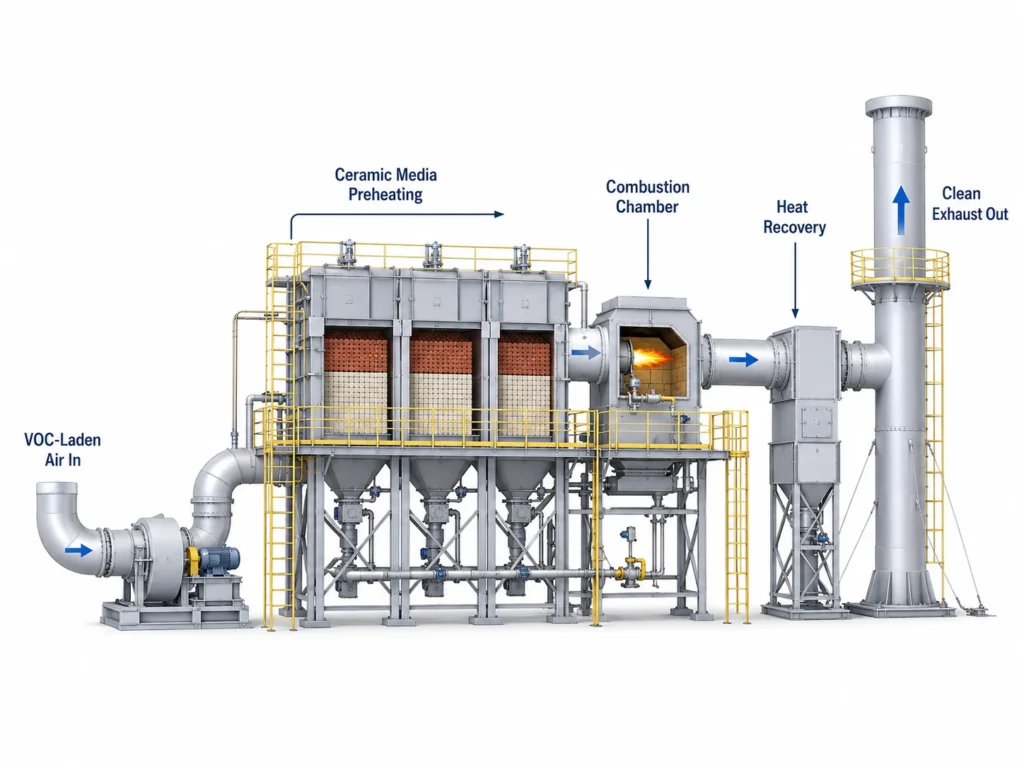
A regenerative thermal oxidizer works through five steps: intake, preheating, oxidation, heat recovery, and airflow reversal.
Simple process flow:
VOC-laden exhaust → inlet ducting and fan → ceramic media → combustion chamber → second ceramic media bed → exhaust stack → airflow reversal
Step 1: Air Intake
VOC-laden process exhaust enters the RTO system through inlet ducting.
The purpose of this step is to move the exhaust gas into the oxidizer at a controlled flow rate. The RTO fan must match the airflow rate, VOC concentration, moisture, particulate load, and system pressure drop.
If the inlet flow is uneven, the system may face high fan load, unstable temperature, or weak VOC destruction.
Step 2: Gas Preheating
The exhaust gas passes through hot ceramic media before it reaches the combustion chamber.
The purpose of this step is to reuse stored heat. The ceramic media transfers heat to the incoming gas, so the burner needs less fuel to reach oxidation temperature.
Media type, bed depth, fouling risk, and pressure drop can affect heat recovery and regenerative thermal oxidizer maintenance. Under suitable conditions, RTO heat recovery can reach high levels, but the final value depends on design and real operating data.
Step 3: VOC Oxidation
The preheated gas enters the combustion chamber.
The purpose of this step is to destroy VOCs. The burner adds heat when recovered heat is not enough. VOCs oxidize at the required temperature and break down mainly into carbon dioxide and water vapor.
Typical RTO chamber temperatures are often around 1,400°F to 1,600°F. The final set point depends on VOC type, VOC concentration, oxygen level, residence time, mixing, and required destruction efficiency.
Step 4: Heat Recovery
After oxidation, clean hot gas passes through another ceramic media bed before reaching the exhaust stack.
The purpose of this step is to store heat for the next cycle. The outlet gas gives heat back to the media, so less heat leaves the system.
This is the main energy advantage of an RTO unit. With proper airflow design, ceramic media selection, and sealing control, a Gelan regenerative thermal oxidizer can be designed for high heat recovery efficiency, depending on operating conditions.
When the treated exhaust still carries sufficient recoverable heat after the regenerative section, the downstream system may also include an economizer or waste heat boiler for steam generation. This arrangement belongs to the waste heat category within the broader classification of boiler types .
Step 5: Airflow Reversal
Switching valves reverse the airflow direction.
The purpose of this step is to keep the heat-recovery cycle continuous. One media bed preheats incoming gas while another bed stores heat from treated gas. After the cycle switches, the beds change roles.
This keeps the RTO equipment operating continuously. Valve sealing is important because leakage can allow untreated gas to bypass the oxidation zone.
What Are the Main Parts of an RTO System?
The five-step process above depends on a few core parts. Each part of an RTO system affects VOC destruction, fuel use, pressure drop, and maintenance access.
| RTO Part | Image Example | Function | Design Focus |
|---|---|---|---|
| Combustion chamber | 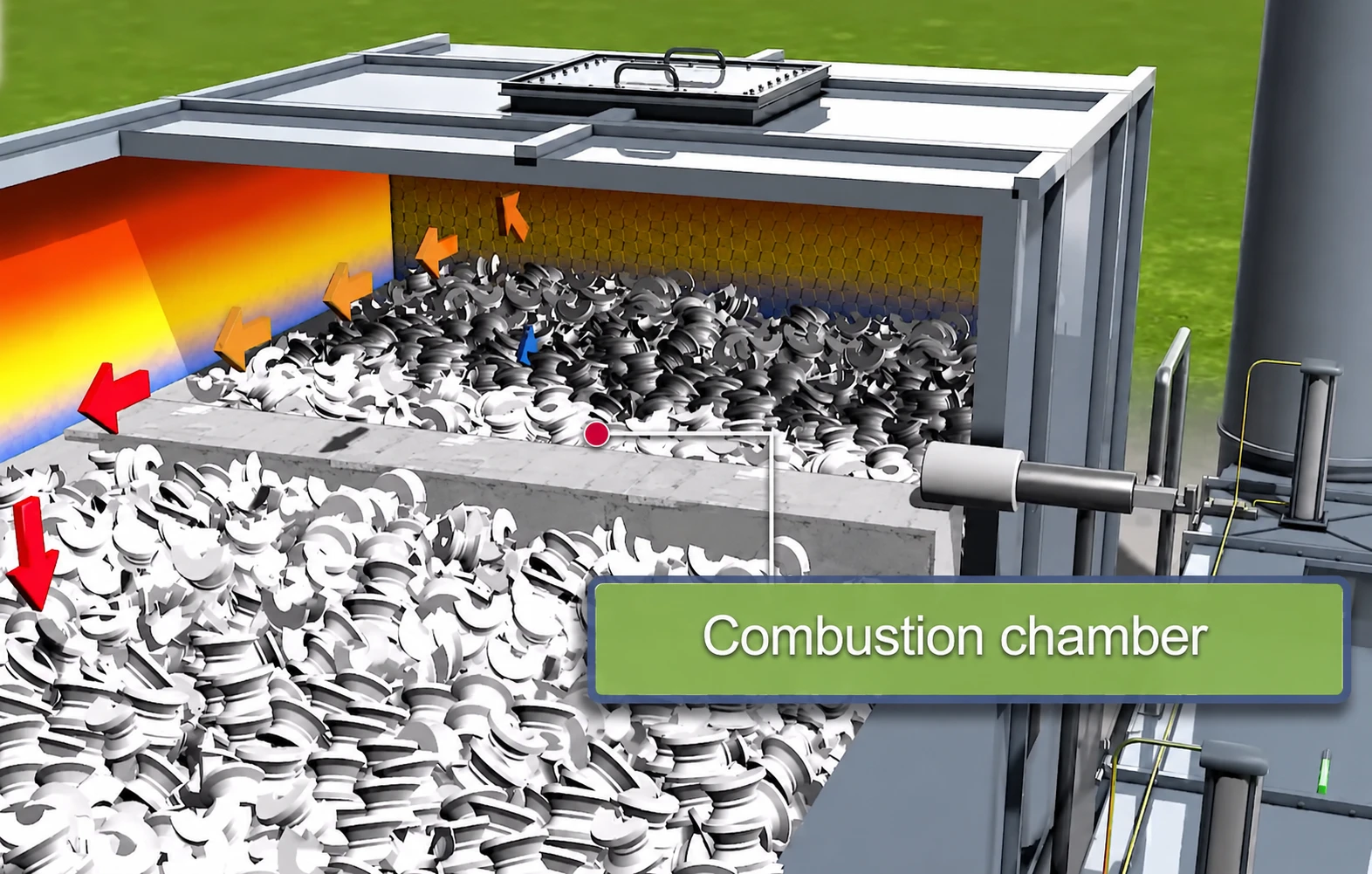 | Oxidizes VOCs at high temperature | Temperature uniformity, residence time, refractory quality |
| RTO media | 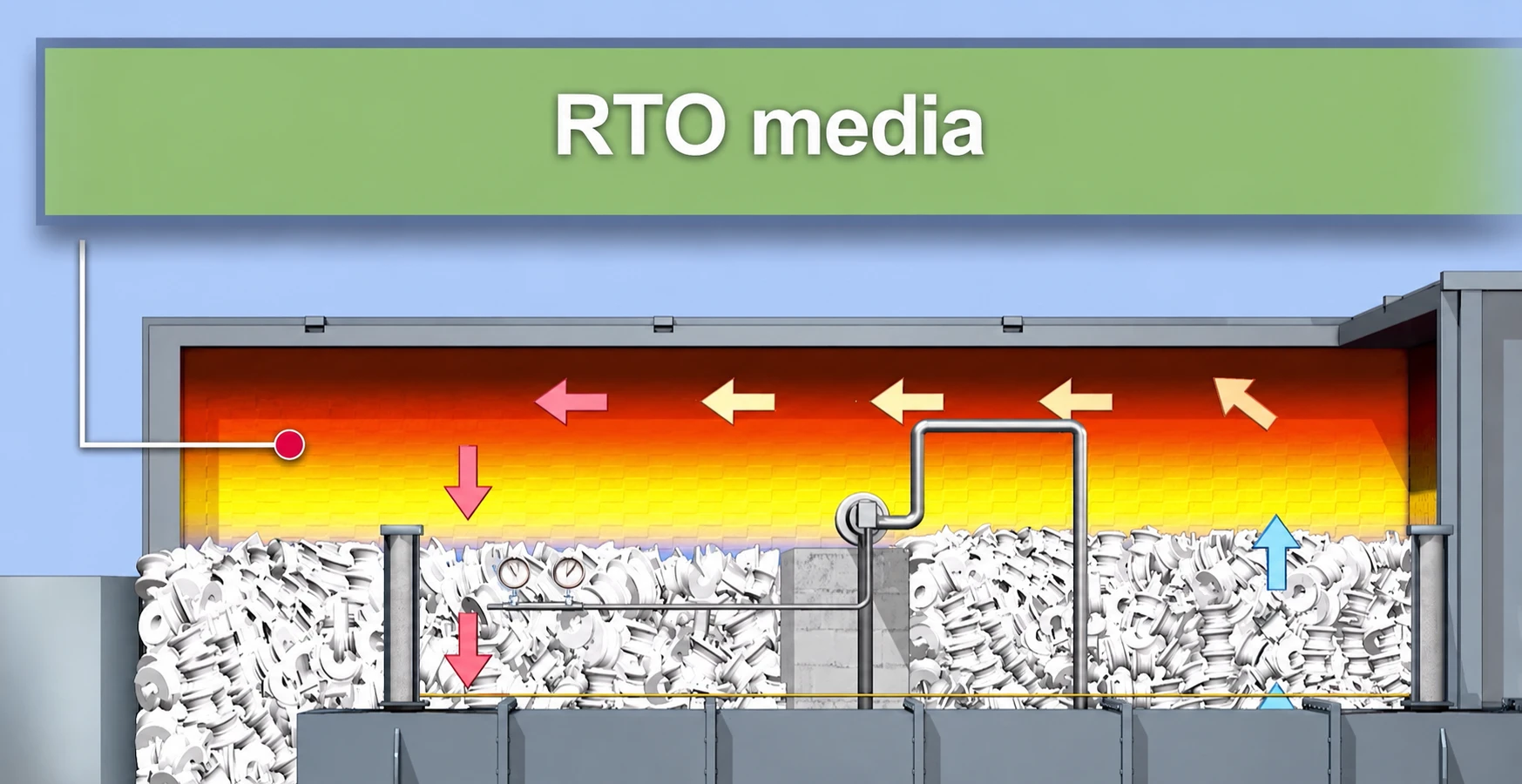 | Stores and recovers heat | Heat recovery efficiency, clogging risk, pressure drop |
| RTO burner | / | Provides startup and supplemental heat | Fuel type, turndown range, flame stability |
| RTO fan | 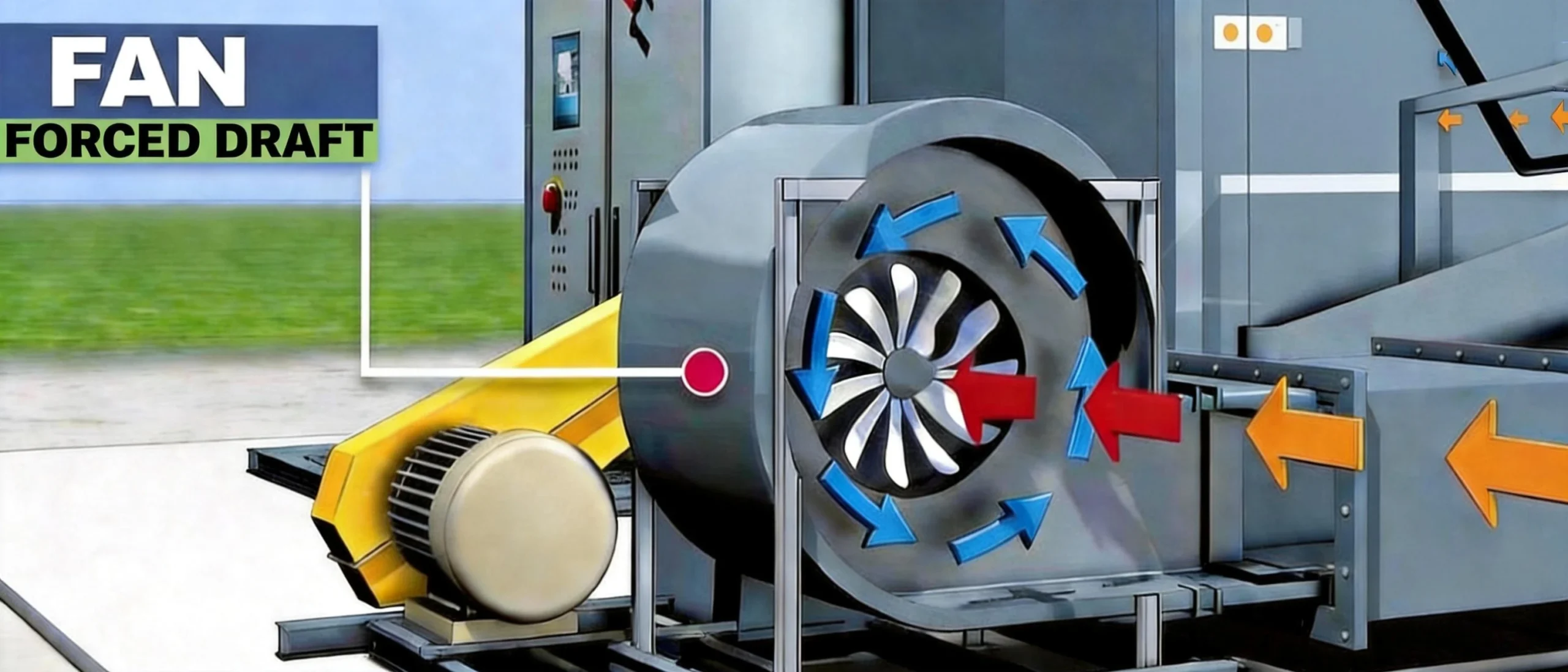 | Moves exhaust gas through the system | Airflow rate, static pressure, vibration control |
| Switching valves | 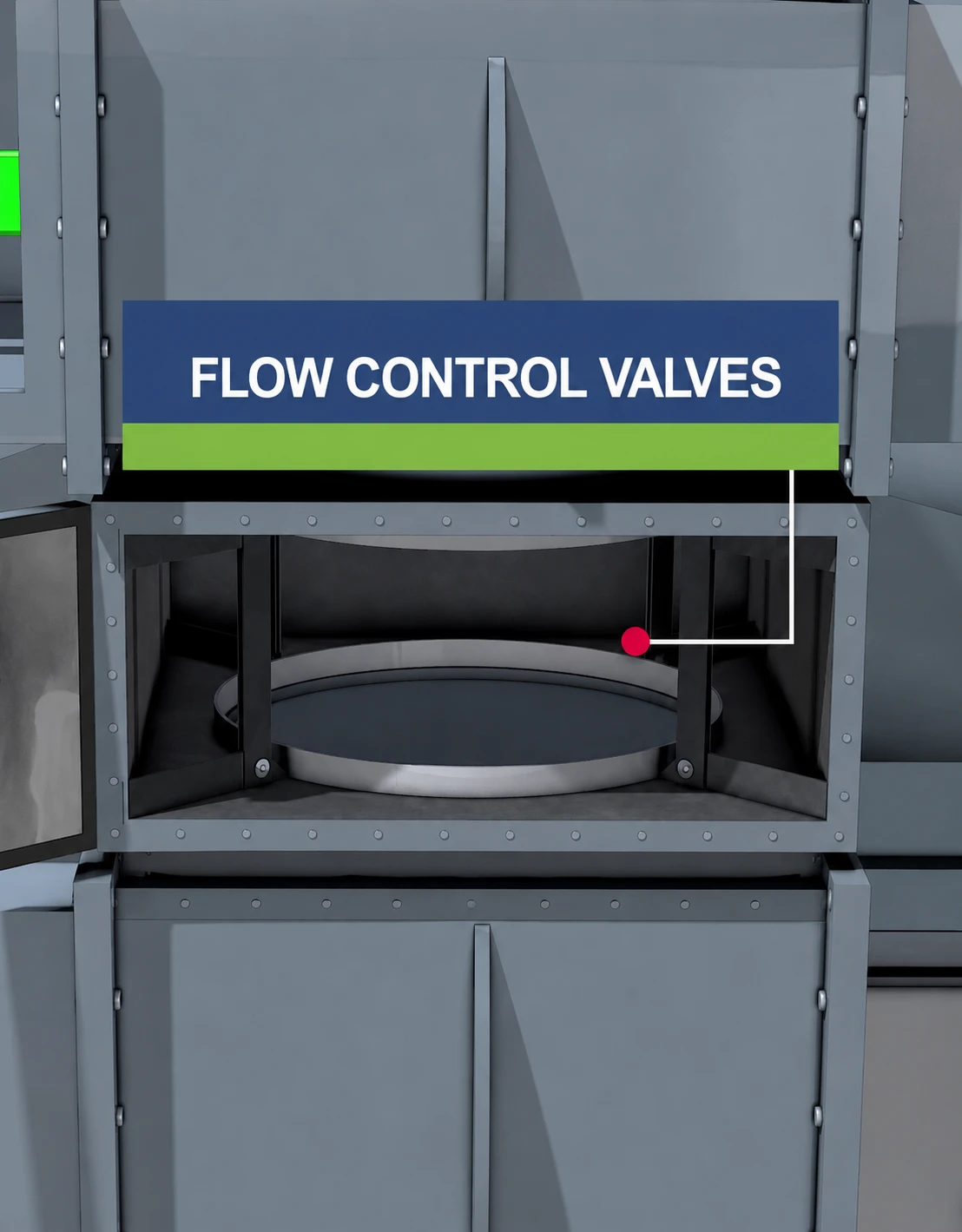 | Reverse airflow direction | Sealing, cycle stability, leakage control |
| Controls | 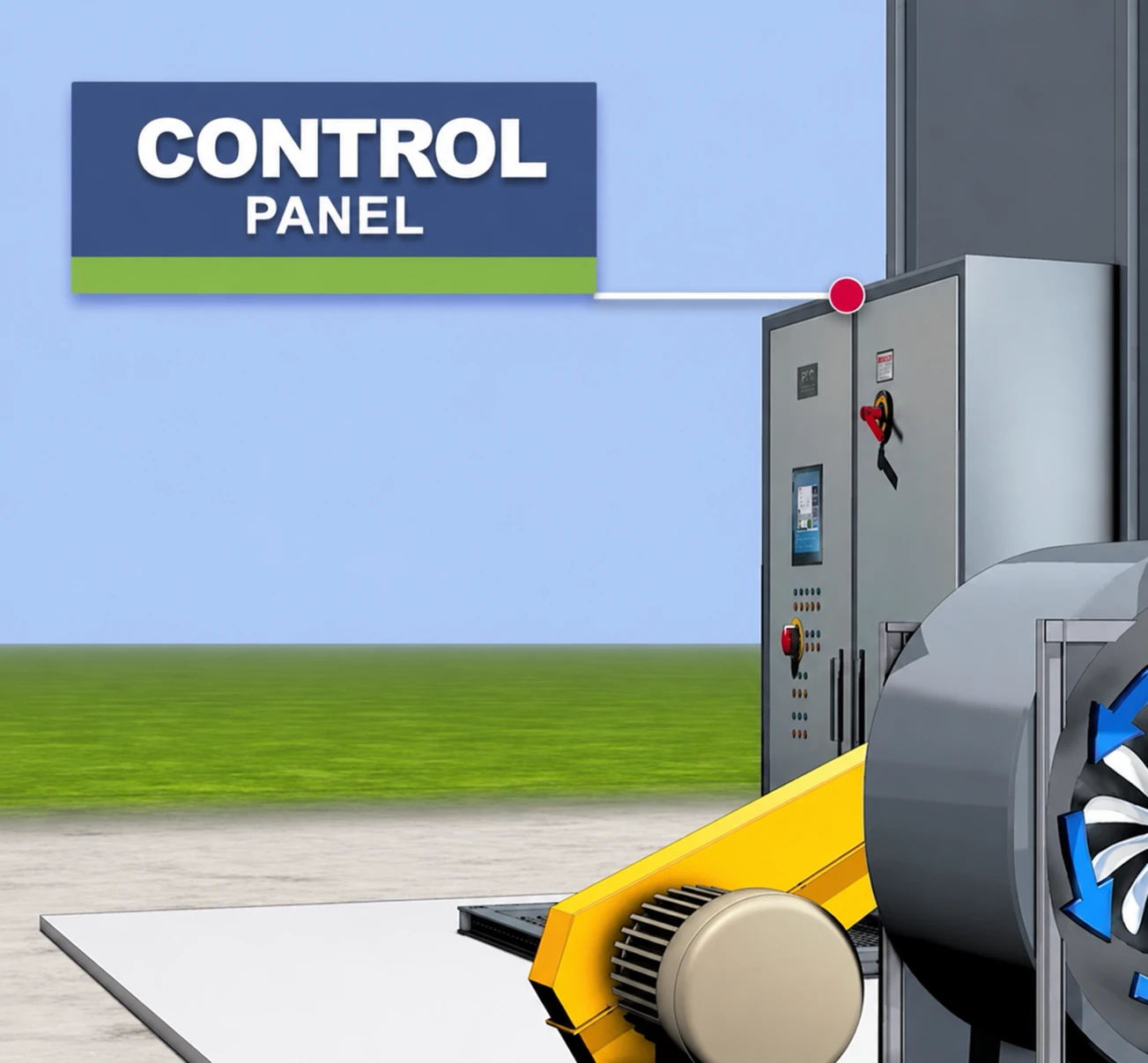 | Monitor temperature, pressure, alarms, and interlocks | PLC logic, safety shutdowns, data logging |
| Outlet duct / exhaust stack | 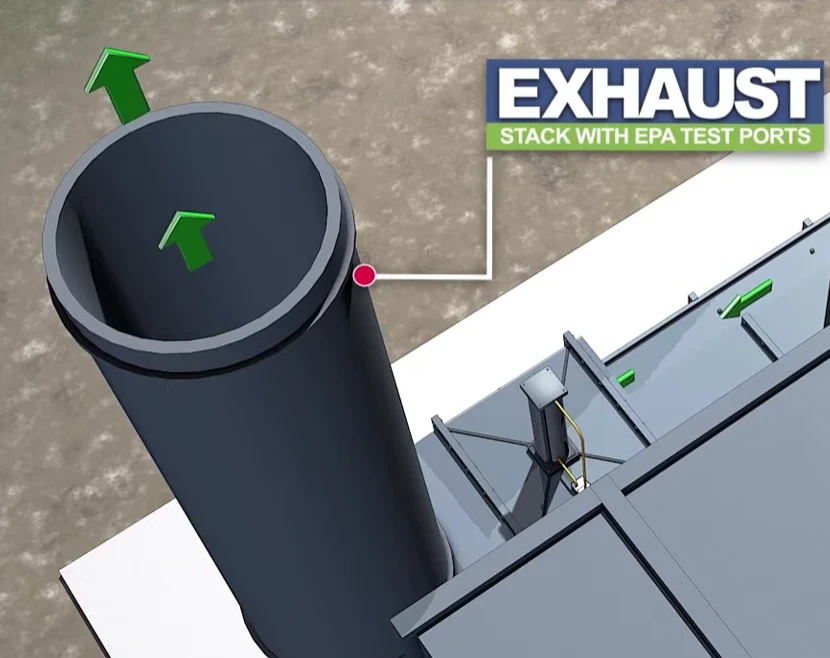 | Releases treated gas after heat recovery | Stack temperature, pressure loss, emission sampling access |
A good thermal oxidizer heat recovery system depends heavily on the media bed and valve sealing. Poor media selection increases pressure drop. Poor valve sealing reduces VOC destruction. Weak refractory design increases heat loss and repair risk.
For projects involving VOC treatment, combustion equipment, or high-temperature exhaust handling, Gelan can support emission control equipment design and fabrication.
For special exhaust data, limited plant space, or non-standard operating conditions, Gelan can also review the system through custom equipment engineering.
Why Are RTO Systems Used for VOC Emission Control?
RTO systems are used because they treat VOC emissions and recover heat at the same time. For continuous industrial exhaust, this can make a regenerative thermal oxidizer a more economical long-term solution than simple exhaust treatment.
| Problem to Solve | Simple Exhaust Treatment | RTO Systems |
|---|---|---|
| VOC destruction target | Moves or dilutes gas, but does not reduce VOC mass | Oxidizes VOCs and can support 95–99% control efficiency under proper design |
| Large airflow | High-volume exhaust still carries VOC load | Can be sized by airflow rate, pressure drop, and residence time |
| Fuel cost | Simple combustion wastes more heat | Ceramic media recovers heat and can reduce auxiliary fuel demand |
| Permit compliance | Limited basis for DRE and operating control | Can be designed around required VOC DRE, temperature, residence time, and mixing |
| Odor control | Dilution only spreads odor-causing compounds | A VOC thermal oxidizer destroys many organic odor sources before stack discharge |
| Revamp or capacity increase | Existing ducting or fans may not match new exhaust load | Gelan can review updated airflow, VOC data, moisture, particulates, and layout before design |
EPA data lists typical regenerative thermal oxidizer design efficiencies at 95–99%, depending on system requirements and exhaust characteristics. For real projects, the final performance still depends on the gas composition, temperature, residence time, mixing, and system sealing.
For Gelan customers, this means the first question is not only “How much is an RTO?” The better question is: “What exhaust data should be confirmed before the RTO is sized?”
RTO vs Other Thermal Oxidizer Types: Which One Fits Your Process?
A thermal oxidizer is a VOC destruction system. Different types use different heat-recovery methods, so they fit different exhaust conditions.
| Thermal Oxidizer Type | Best-Fit Exhaust Condition | Main Value | Main Risk |
|---|---|---|---|
| Direct thermal oxidizer | High VOC concentration or high-heating-value waste gas | Simple structure; strong direct destruction | High fuel use if airflow is large or VOC concentration is low |
| Recuperative thermal oxidizer | Smaller, steady exhaust streams | Uses a heat exchanger to recover part of the heat | Heat exchanger fouling and lower heat recovery than RTO |
| Regenerative thermal oxidizer | Large airflow, continuous operation, low-to-medium VOC concentration | Ceramic media can recover high levels of heat and reduce fuel demand | Media fouling, valve sealing, and fan sizing affect stability |
| Regenerative catalytic oxidizer | Clean VOC gas suitable for catalyst reaction | Lower operating temperature than thermal oxidation | Catalyst poisoning from sulfur, halogens, silicon, particulates, or heavy compounds |
Catalytic oxidizers generally operate at lower temperatures than thermal oxidizers, but catalyst life must be checked carefully. Sulfur, halogens, silicon, particulates, and heavy compounds can reduce catalyst performance or shorten catalyst life.
For Gelan projects, the selection starts with exhaust data: airflow rate, VOC composition, VOC concentration, moisture, particulates, operating hours, emission target, and site layout.
These data decide whether the project should use a regenerative thermal oxidizer, a direct thermal oxidizer, a recuperative thermal oxidizer, or a regenerative catalytic oxidizer.
Where Are Regenerative Thermal Oxidizers Used?
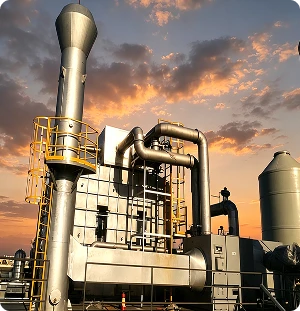
A regenerative thermal oxidizer is used in industries where VOCs, odors, or organic process emissions are released from continuous exhaust streams.
Common RTO system applications include:
- Petrochemical Processing: VOC vents from polymer units, resin production, solvent storage, loading areas, and process off-gas collection.
- Chemical Manufacturing: VOCs and HAPs from reactors, mixers, distillation vents, dryers, and solvent evaporation processes.
- Oil Refining & Downstream Facilities: Hydrocarbon vapor exhaust from tank farms, wastewater treatment units, vent collection systems, and emission upgrade projects.
- Coating & Converting: Solvent vapors from adhesive coating, laminating, film coating, foil converting, and drying ovens.
- Printing & Packaging: Ink and solvent emissions from gravure printing, flexographic printing, web offset presses, laminating, and drying tunnels.
- Pharmaceutical & Fine Chemicals: Batch reactor vents, solvent handling exhaust, dryer emissions, and process room VOC collection.
- Food & Beverage Processing: Odors and organic emissions from flavoring, edible oil processing, roasting, snack production, and beverage manufacturing.
- Plant Revamp & Emission Upgrade Projects: Older exhaust systems, undersized fans, outdated stacks, new emission limits, or expanded production capacity.
For refinery and petrochemical projects, an RTO should not be selected as an isolated equipment item. It should be reviewed together with process vents, ducting, fan sizing, safety interlocks, maintenance access, and stack monitoring requirements.
How Much Does a Regenerative Thermal Oxidizer Cost in 2026?
For 2026 budgeting, a new industrial regenerative thermal oxidizer cost can vary widely depending on size and application. Smaller equipment-only RTOs may start much lower than large installed systems, while large customized systems can move into the million-dollar range.
EPA cost references also show that RTO capital cost can vary widely by airflow. For buyer-side budgeting, the most important point is simple: final RTO price depends on project-specific exhaust data, not only the equipment name.
What Factors Affect RTO Cost?
The final thermal oxidizer cost depends on the real exhaust data, installation scope, and required control performance.
- Exhaust flow rate: Larger airflow needs a larger chamber, fan, ducting, media volume, and support structure.
- VOC concentration: Higher VOC loading affects burner design, safety controls, and possible self-sustaining operation.
- Required destruction efficiency: Higher VOC DRE may require a three-chamber design, better sealing, or tighter control logic.
- Number of chambers: Two-chamber systems are simpler; three-chamber systems cost more but can reduce untreated gas carryover.
- Ceramic media type: Media selection affects heat recovery, pressure drop, fouling risk, and maintenance cost.
- Burner and fuel system: Fuel type, burner turndown, flame safety, and control range affect both capital cost and operation.
- Material selection: Carbon steel, stainless steel, alloys, insulation, and refractory depend on gas temperature and chemistry.
- Corrosion risk: Halogenated, acidic, sulfur-containing, or wet exhaust may require upgraded materials and special design.
- Heat recovery requirement: Higher thermal efficiency can raise upfront cost but reduce long-term fuel demand.
- Controls and safety system: PLC, alarms, interlocks, LEL protection, pressure monitoring, and data logging affect system price.
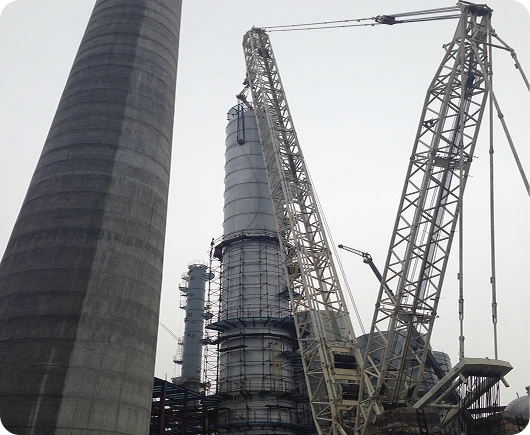
- Installation and commissioning scope: Ductwork, stack, foundation, crane work, wiring, gas piping, startup, and testing can add major cost.
Need an RTO cost estimate?
Send your airflow rate, VOC data, operating hours, emission target, and site layout. Gelan can review the project and suggest a suitable regenerative thermal oxidizer configuration.
How Do You Maintain or Repair a Regenerative Thermal Oxidizer?
Good regenerative thermal oxidizer maintenance checks one thing first: whether the system still holds the right oxidation conditions.
EPA lists outlet VOC concentration and combustion chamber temperature as primary performance indicators for thermal oxidizer maintenance. Other useful signals include CO, exhaust flow rate, fan current, O₂, CO₂, and auxiliary fuel pressure.
| Maintenance Item | What to Check | Warning Sign |
|---|---|---|
| RTO media | Fouling, plugging, cracking, settling, pressure drop | Higher fan load, lower airflow, higher fuel use |
| Switching valves | Seal wear, leakage, actuator response | VOC bypass, odor at stack, unstable destruction efficiency |
| Burner / fuel train | Flame stability, nozzle condition, fuel pressure, ignition, interlocks | Unstable chamber temperature or frequent trips |
| Fan and motor | Fan current, vibration, bearings, airflow | Low flow, high pressure drop, short residence time |
| Refractory / insulation | Cracks, hot spots, shell discoloration | Heat loss, shell damage, higher repair risk |
| Sensors and controls | Temperature, pressure, O₂ / CO signals, alarms, PLC logic | Poor compliance data or missed operating problems |
VOC destruction depends on chamber temperature, residence time, inlet VOC concentration, compound type, and mixing. EPA also gives typical design conditions of about 1,600°F, 0.75 second residence time, and proper mixing for 98% or greater control of many non-halogenated VOC streams. These same points should be checked during RTO maintenance, not only during initial design.
| Common Problem | Likely Cause | Repair Direction |
|---|---|---|
| Rising pressure drop | Fouled or plugged RTO media | Media cleaning, controlled bake-out, wash-down, or replacement |
| Higher fuel use | Poor heat recovery, media fouling, valve leakage | Check media bed, valve seals, burner control |
| Unstable VOC emissions | Low temperature, short residence time, poor mixing | Review burner, fan, airflow distribution, controls |
| Odor at stack | Valve leakage or incomplete oxidation | Inspect valve sealing and chamber temperature |
| Shell hot spots | Damaged refractory or insulation | Repair lining before shell damage expands |
| Frequent shutdowns | Fan, actuator, burner, sensor, or PLC fault | Check mechanical parts and control logic together |
For thermal oxidizer repair, media condition is often the first area to review. Built-up residue can reduce airflow, increase fuel demand, and affect destruction efficiency. Common cleaning options include bake-out and wash-down, depending on residue type and media condition.
FAQ About Regenerative Thermal Oxidizers
Is an RTO the same as an incinerator?
Yes. An RTO incinerator usually refers to a regenerative thermal oxidizer. “Thermal oxidizer” is the more common engineering term. “Incinerator” is more common in older documents or some regulatory contexts.
Is an RTO unit the same as a complete thermal oxidizer system?
No. An RTO unit usually means the main oxidizer body. A complete thermal oxidizer system may also include ducting, fan, stack, platforms, controls, safety systems, installation, and commissioning.
Can an RTO be electric?
Yes. An electric thermal oxidizer or electric RTO uses electric heating instead of a fuel-fired burner. It may fit small-flow or special sites, but electricity cost, airflow, VOC load, and required operating temperature must be checked.
What affects regenerative thermal oxidizer design?
Regenerative thermal oxidizer design depends on airflow rate, VOC type, VOC concentration, moisture, particulates, required VOC DRE, chamber temperature, residence time, media type, valve sealing, and site layout. Weak process data usually leads to poor sizing.
How should I compare regenerative thermal oxidizer manufacturers?
Compare regenerative thermal oxidizer manufacturers by engineering review quality, fabrication ability, burner integration, material selection, control logic, documentation, and after-sales support. A reliable thermal oxidizer manufacturer should ask for process data before giving a final proposal.
What is thermal oxidizer PM?
Thermal oxidizer PM means preventive maintenance for the oxidizer system. It includes RTO media checks, valve inspection, burner service, fan vibration checks, sensor calibration, refractory inspection, and safety-system testing.
Conclusion
A regenerative thermal oxidizer treats industrial VOC emissions by combining high-temperature oxidation with heat recovery.
It is useful for continuous exhaust streams, but the right choice still depends on airflow, VOC concentration, gas composition, operating hours, and emission targets.
Gelan can help review these process conditions and support the right thermal oxidizer design, fabrication, or revamp solution. If you are evaluating an RTO project, VOC treatment system, emission upgrade, or thermal oxidizer maintenance issue, contact Gelan to discuss your equipment requirements.