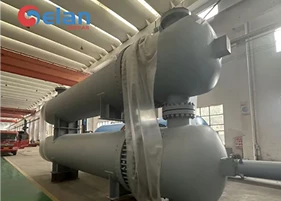
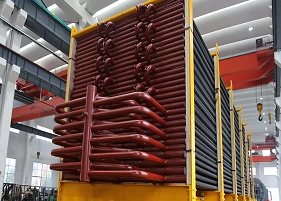
Cracking Furnace for Petrochemical and Fluorochemical Production
Cracking furnaces are critical to petrochemical and fluorochemical production. They directly affect output, energy efficiency, and operating cost.
At Gelan, we design cracking furnaces based on real process conditions, helping you achieve stable operation, better efficiency, and longer service life.
Supports production of TFE, VDF, HFP and other high-value products
table operation under 800–950°C high-temperature conditions
Engineered for long tube life and uniform heat distribution
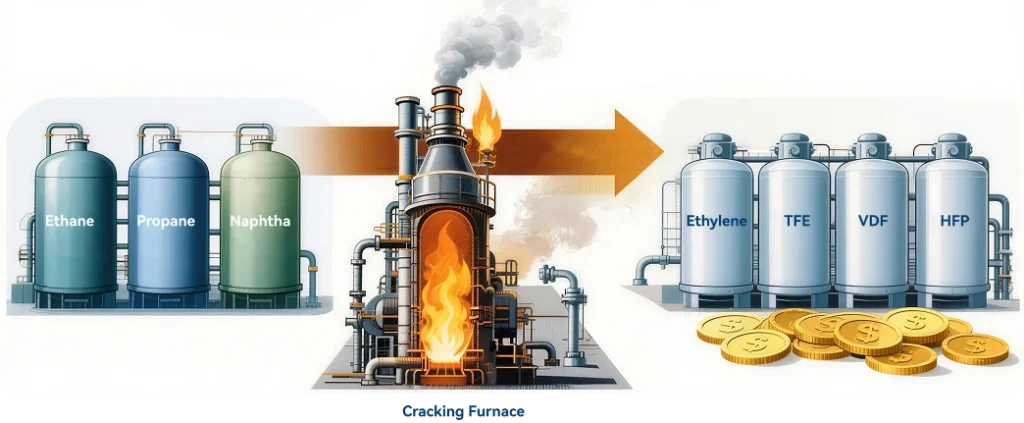
A cracking furnace is core equipment that converts heavy hydrocarbons into lighter, high-value chemical products under high temperatures. In simple terms, it turns lower-value oil or gas into key feedstocks such as ethylene and fluorochemical products like TFE, VDF, and HFP. For your plant, this means higher product value, better feedstock utilization, and more stable operation.
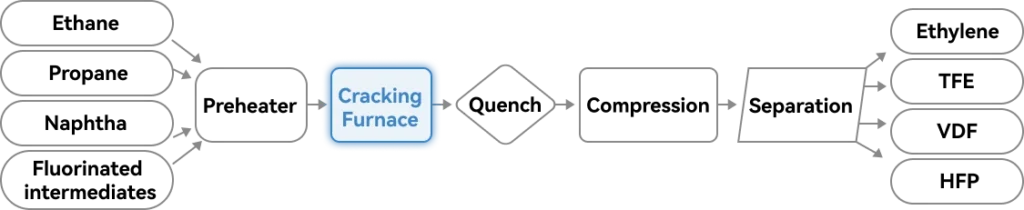
Industrial Cracking Process Flow
Different cracking processes use different feedstocks and produce different end products. In a typical ethylene cracker process, the furnace is the core reaction unit. Similar process routes are also used in fluorochemical production.
At Gelan, we design cracking furnaces for these demanding processes, with configurations tailored to different feedstocks, reaction conditions, and product targets.
A cracking furnace is used to convert hydrocarbons into lighter, high-value products under high temperatures. It is widely used in ethylene production and fluorochemical processes.
What is the difference between an ethylene furnace and a cracking furnace?
An ethylene furnace is a type of cracking furnace specifically designed for ethylene production. Cracking furnaces can also be designed for other processes such as fluorochemical production.
How does an ethylene cracker process work?
In a typical ethylene cracker process, feedstock such as ethane or naphtha is heated and cracked at high temperatures. The products are then cooled, compressed, and separated into final outputs like ethylene.
What factors affect cracking furnace design?
Cracking furnace design depends on several key factors:
Feedstock type (ethane, propane, naphtha, fluorinated intermediates)
Target products (ethylene, TFE, VDF, HFP)
Operating temperature and reaction conditions
Required capacity and operating cycle
At Gelan, we design cracking furnaces based on these real process conditions rather than standard configurations.
What is steam cracking in ethylene production?
Steam cracking is the main process used in ethylene production. It uses high temperatures to break down hydrocarbons into smaller molecules such as ethylene.
How do you choose the right cracking furnace for your plant?
The right cracking furnace depends on your process conditions, feedstock, and product targets. You should consider temperature requirements, material selection, energy efficiency, and expected operating cycle. Working with an experienced supplier like Gelan can help you match furnace design to your specific process and avoid unnecessary risk.
Start Your Cracking Furnace Project with Gelan
Tell us your feedstock, product targets, and operating conditions. We will help you define the right cracking furnace design for your process.
Send Your Requirements
Share your project needs, drawings, or specifications. Our team will review your request and reply within 8 hours.