
Waste Tyre/Rubber Pyrolysis Plant for Oil Production
- Feeding Method: For batch operation, a hydraulic feeder loads waste tyres and rubber. Steel wires, dirt, and moisture do not need to be removed beforehand. For continuous operation, screen out impurities larger than 5 cm before the material is fed automatically.
- Ouputs: industrial fuel oil (45%), steel wire (15%)and carbon black(35%)
- Processing Capacity: 10–20 t per batch, with batch cycles of 24–30 h.
- Plant Options: Batch and continuous
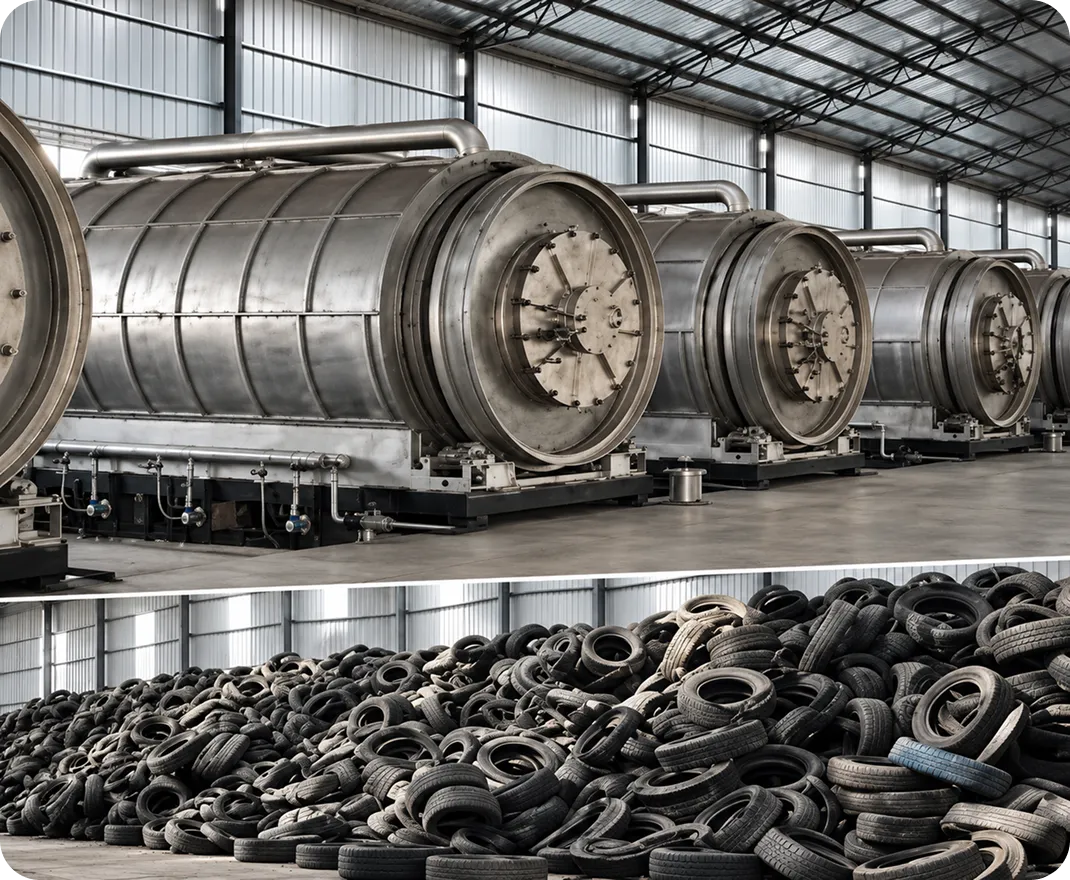
Tyre/Rubber Pyrolysis Plant Types
GELAN supplies batch and continuous pyrolysis plants to meet different waste tyre and rubber processing needs.
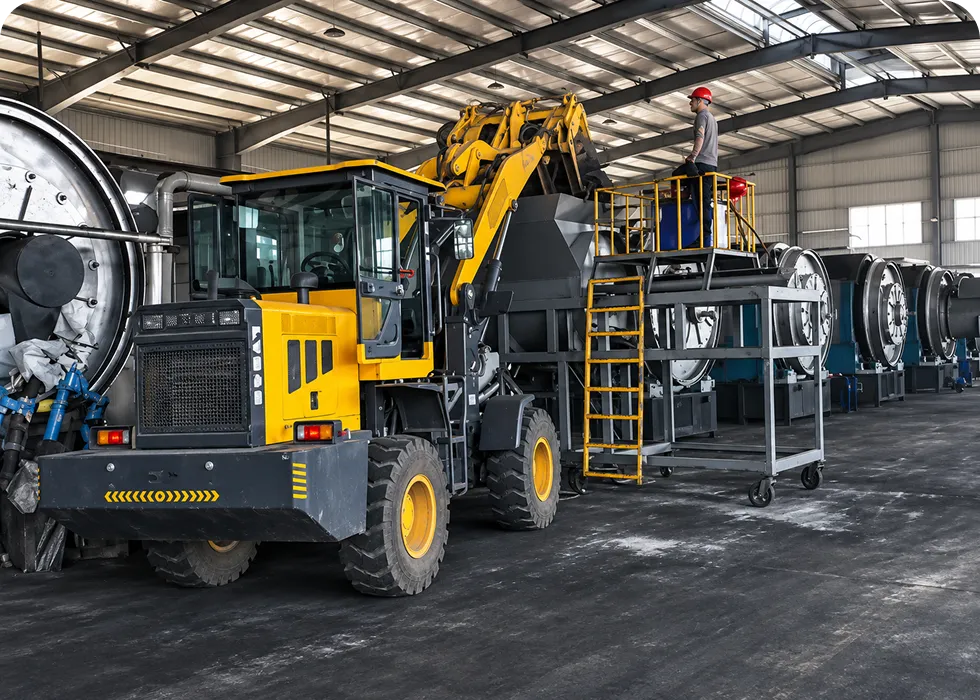
Batch Tyre/Rubber Pyrolysis Plant
- Feedstock & Preparation: Waste tyres and waste rubber. No need to remove steel wires, dirt, or moisture before feeding.
- Feeding & Operation: A hydraulic feeder loads the material before each batch.
- Processing Capacity: 10 t per 24 h, 12 t per 26 h, 18 t per 28 h, or 20 t per 30 h, depending on the model.
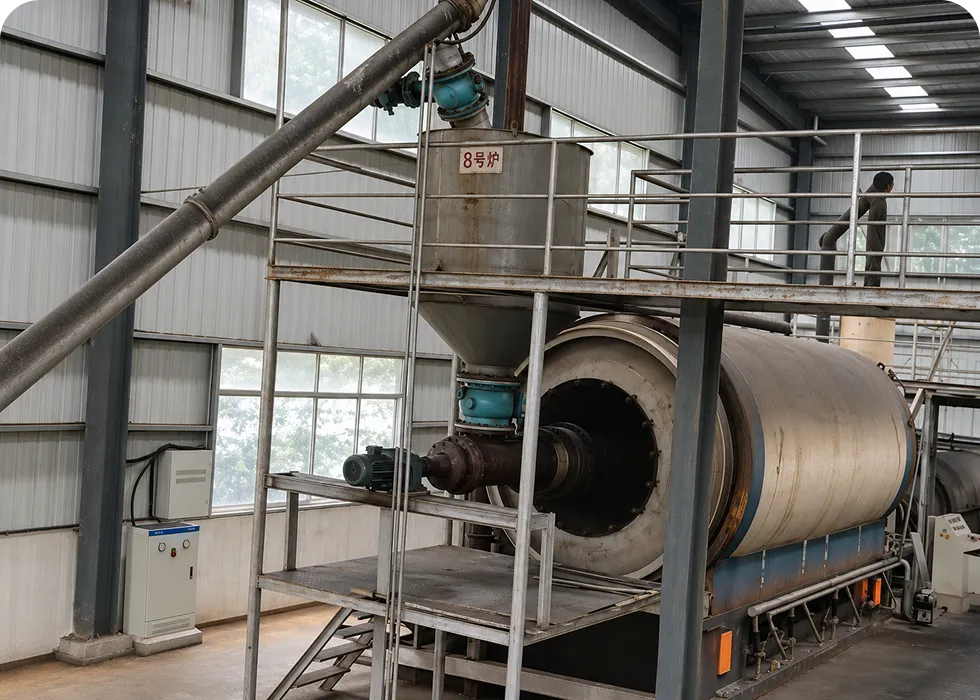
Continuous Tyre/Rubber Pyrolysis Plant
- Feedstock & Preparation: Waste tyres and waste rubber. Screen out impurities larger than 5 cm before feeding.
- Feeding & Operation: A sealed screw feeder supplies material continuously while the plant is running.
- Processing Capacity: 25–30 t per 24 h.
Waste Tyre & Rubber Pyrolysis Plant Specifications
GELAN offers a range of batch and continuous pyrolysis plant models with different processing capacities, reactor sizes, and reactor drive power ratings.
| Item | SH-LJ-12 | SH-LJ-15 | SH-LJ-18 | SH-LJ-20 | SH-LJ-30 |
|---|---|---|---|---|---|
| Batch / Continuous | Batch | Batch | Batch | Batch | Continuous |
| Processing capacity | 10 t / 24 h | 12 t / 26 h | 18 t / 28 h | 20 t / 30 h | 25–30 t / 24 h |
| Weight | 40–45 t | 45–50 t | 50 t | 50–55 t | — |
| Reactor capacity (m³) | 40 | 50 | 60 | 75 | — |
| Reactor size (mm) | 2800 × 6600 | 2800 × 8000 | 3000 × 9000 | 3300 × 9000 | — |
| Reactor structure | Horizontal rotation | Horizontal rotation | Horizontal rotation | Horizontal rotation | Horizontal rotation |
| Working pressure | Atmospheric | Atmospheric | Atmospheric | Atmospheric | Normal pressure |
| Reactor rotation speed (r/min) | 0.4 | 0.4 | 0.4 | 0.4 | — |
| Reactor rotation power (kW) | 7.5 | 7.5 | 11 | 11 | — |
| Cooling method | Circulating water cooling | Circulating water cooling | Circulating water cooling | Circulating water cooling | Water-cooled |
| Fuel consumption | 200–260 kg fuel oil | 200–260 kg fuel oil | 200–260 kg fuel oil | 200–260 kg fuel oil | — |
| Circulating water quantity (t/h) | 30 | 30 | 30 | 30 | — |
| Reactor drive / transmission | Outer gears | Outer gears | Outer gears | Outer gears | Gear |
| Installation method | Foundation | Foundation | Foundation | Foundation | — |
| Noise | ≤ 80 dB | ≤ 80 dB | ≤ 80 dB | ≤ 80 dB | ≤ 85 dB(A) |
| Feeding method | Mechanical feeding | Mechanical feeding | Mechanical feeding | Mechanical feeding | — |
| Discharging method | Automatic discharging | Automatic discharging | Automatic discharging | Automatic discharging | — |
| Heating method | — | — | — | — | Direct heat |
| Heating fuel | — | — | — | — | Oil, natural gas |
| Electrical supply | — | — | — | — | 380 V, 50 Hz |
| Electricity (source wording) | — | — | — | — | Total power 50 kW, 30 kW/H when running, average use 20 hours a day. |
| Water consumption | — | — | — | — | 3 t / 24 h |
| Operating platform | — | — | — | — | Steel structure |
| Site area | — | — | — | — | 10 × 50 m including production site |
| Labour | — | — | — | — | 3 shifts, 6 persons in total |
*The table provides selected data for reference. Please contact GELAN directly for detailed specifications or information on items not listed here.*
Where Can Tyre and Rubber Pyrolysis Oil Be Used?
Pyrolysis of waste tyres and rubber produces raw pyrolysis oil with a reported density of 0.85–0.91 and a calorific value of 10,400 kcal. The oil can be used in a range of industrial applications.
Steam boilers burn tyre pyrolysis oil to produce steam that drives turbines.
Power Plants
In a glass-melting furnace, the oil provides the heat needed to melt raw materials and recycled glass.
Glass Plants
Cement plants can use the oil as an alternative fuel in rotary kilns or precalciners during clinker production.
Cement Plants
Oil-fired dryers remove moisture from shaped ceramic pieces before firing, while kiln burners provide the heat for firing.
Ceramic Plants
The oil can fuel melting furnaces that turn scrap aluminium into molten metal or holding furnaces that keep it molten until casting.
Aluminium Plants
Steelworks can use the oil in furnaces to supply process heat or in boilers to generate steam for plant operations.
Steel Plants
An oil-fired boiler can supply heat for bathing pools, guest showers, and indoor spaces.
Hot Spring Resorts
Why Gelan Stand Out in Pyrolysis Tire/Rubber Recycling System?
GELAN’s tyre and rubber pyrolysis plants simplify feed preparation, reuse process gas and cooling water, and use a 360° rotating reactor to speed up pyrolysis. The plants include emissions controls and operating safeguards, and GELAN supports international projects with equipment delivery, on-site installation and commissioning, and operator training.
Less Work Before Loading, More Reuse During Operation
Feed waste tyres without first removing steel wire, dirt, or moisture, saving time and effort. The plant reuses non-condensable gas to heat the reactor and recirculates water through the condensers and coolers, reducing the need for purchased fuel and fresh water.
Faster Pyrolysis with a 360° Rotating Reactor
The reactor rotates through 360° to distribute heat more evenly, helping tyres and rubber break down faster.
Emissions Control and Operational Safety
GELAN’s spray scrubber reduces SO₂ and removes over 95% of flue-gas dust. The scrubber reuses 50 kg of treated wastewater per 4 tonnes of pyrolysis oil produced. Reactor seals exclude oxygen. A water seal tank, flame arrestor and burner safeguard non-condensable gas reuse.
Global Experience in Pyrolysis Equipment Supply
GELAN has supplied pyrolysis equipment to customers in Russia, Thailand, the Philippines, India, Malaysia, Myanmar, Afghanistan, and other 50+ countries.
Our experience with international projects helps us quickly understand your requirements, recommend a suitable equipment configuration, and coordinate overseas shipping and delivery documentation.
On-Site Support from Installation to Start-Up
GELAN engineers support installation, commissioning, and initial production on site. They train your team to run the plant and provide an operating manual and maintenance guide for day-to-day operation and routine servicing.
FAQs About Waste Tyre & Rubber Pyrolysis Plan
Q1. Can I mix waste tyres with rubber hoses, shoe soles, or rubber mats in one run?
Yes, these materials can generally be processed together. Share the approximate proportion of each material, and GELAN can confirm whether the mix is suitable for your chosen model.
Q2. How many operators does each model typically need per shift?
A typical shift requires 2–3 operators. Confirm the staffing requirement for your selected model and feeding setup by contacting Gelan.
Q3. How much pyrolysis oil can I expect from my specific mix of tyres and rubber?
Oil yields are 40–50% for steel-reinforced car tyres, about 30% for standard rubber hoses, and 27–33% for sports shoe soles. You can use these figures to estimate your oil output, or share the weight of each material in your mix and GELAN can calculate an estimate for you.
Q4. What information does GELAN need to recommend a model and prepare a quotation?
Share your feedstock types, approximate mix, feedstock size, and target processing capacity in tonnes per day. Let GELAN know whether you prefer batch or continuous operation, if you’ve already decided, and include the installation country and any additional equipment you need quoted.
Individual Equipment for Your Tyre and Rubber Pyrolysis Line
Alongside complete tyre and rubber pyrolysis systems, GELAN supplies individual units for condensation, oil–gas separation, and oil storage.
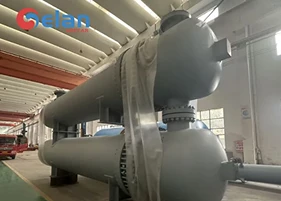
Shell & Tube Heat Exchanger
Serves as a pyrolysis vapour condenser, cooling the vapours from the reactor to recover liquid pyrolysis oil.
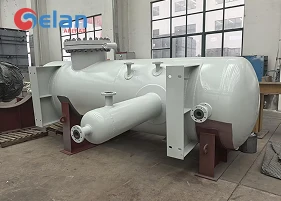
Separator Vessel
The oil–gas separator directs condensed oil to storage and routes non-condensable gas to the furnace for reuse as fuel.
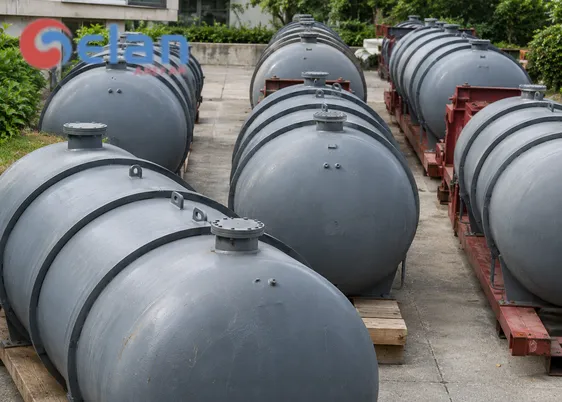
Storage Tank
Recovered oil is held in a pyrolysis oil storage tank until it is shipped or transferred to a refining unit.
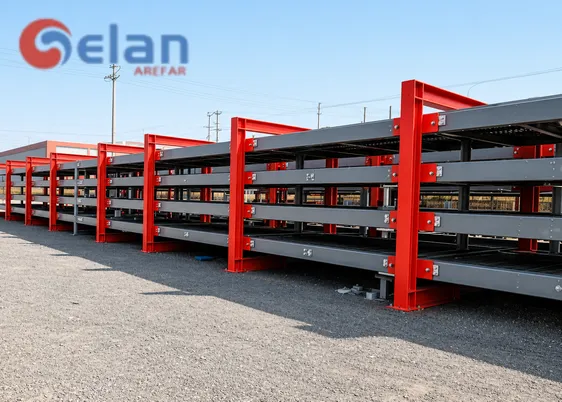
Structural Steel
Forms the operating platform for the continuous pyrolysis plant, giving operators access to equipment above ground level.
More Pyrolysis and Oil Distillation Solutions from GELAN
The Waste Tyre and Rubber Pyrolysis Plant is one of several solutions GELAN offers. Our range also includes other types of pyrolysis plants and related processing equipment.
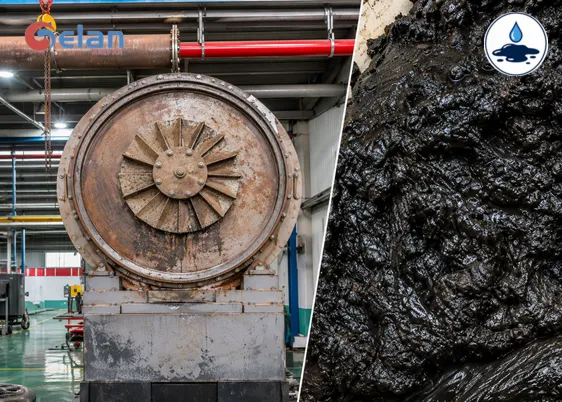
Oil Sludge Pyrolysis Plant
Recovers heavy oil from sludge generated during oil extraction, transport, refining, and storage. Additional outputs include combustible gas and treated solids.
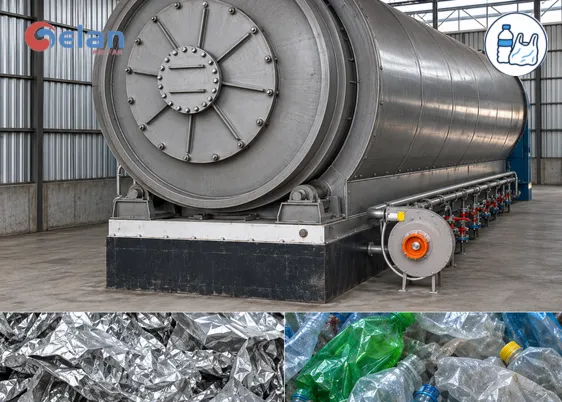
Plastic Pyrolysis Plant
Produces pyrolysis oil from waste plastics and aluminum-bearing packaging, including aluminum foil packaging and aluminum-plastic laminates. Aluminum-bearing feedstocks can also yield aluminum powder.
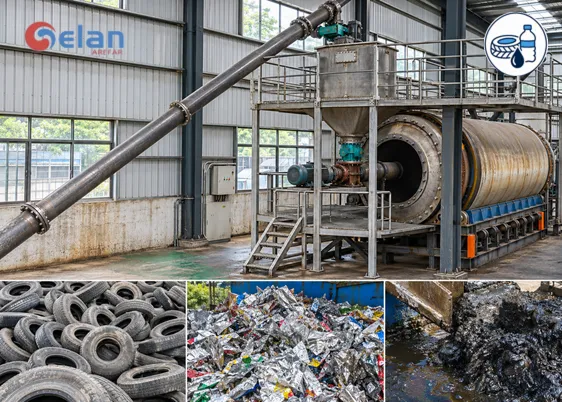
Continuous Pyrolysis Plant
Designed for projects that need to recover oil as feedstock is supplied during operation. Configurations are available for tyres and rubber, suitable plastics, or oil sludge.
Vacuum Distillation Unit (VDU)
Separates pyrolysis oil into fractions under reduced pressure, allowing higher-boiling components to distill at lower temperatures.
Need a Tyre or Rubber Pyrolysis Plant?
Tell us what types of waste tyres or rubber you plan to process and your target daily capacity. If you have feedstock data or site drawings, share them with GELAN. We’ll review your requirements and recommend a plant configuration for your project.