
Oil Sludge Pyrolysis Plant
- Feedstock Sources: Oily sludge from oil extraction, transport, refining, and storage.
- Feeding Method: Feed oily sludge directly without screening out wire, sand, or other debris.
- Outputs: Recovered heavy oil (40%–45%), oil-free solid residue (including soil), and combustible gas.
- Processing Capacity: Up to 10 t per batch with a 24-hour cycle for the batch model, and 25–30 t per 24 h for the continuous model.
- Plant Options: Batch and continuous.
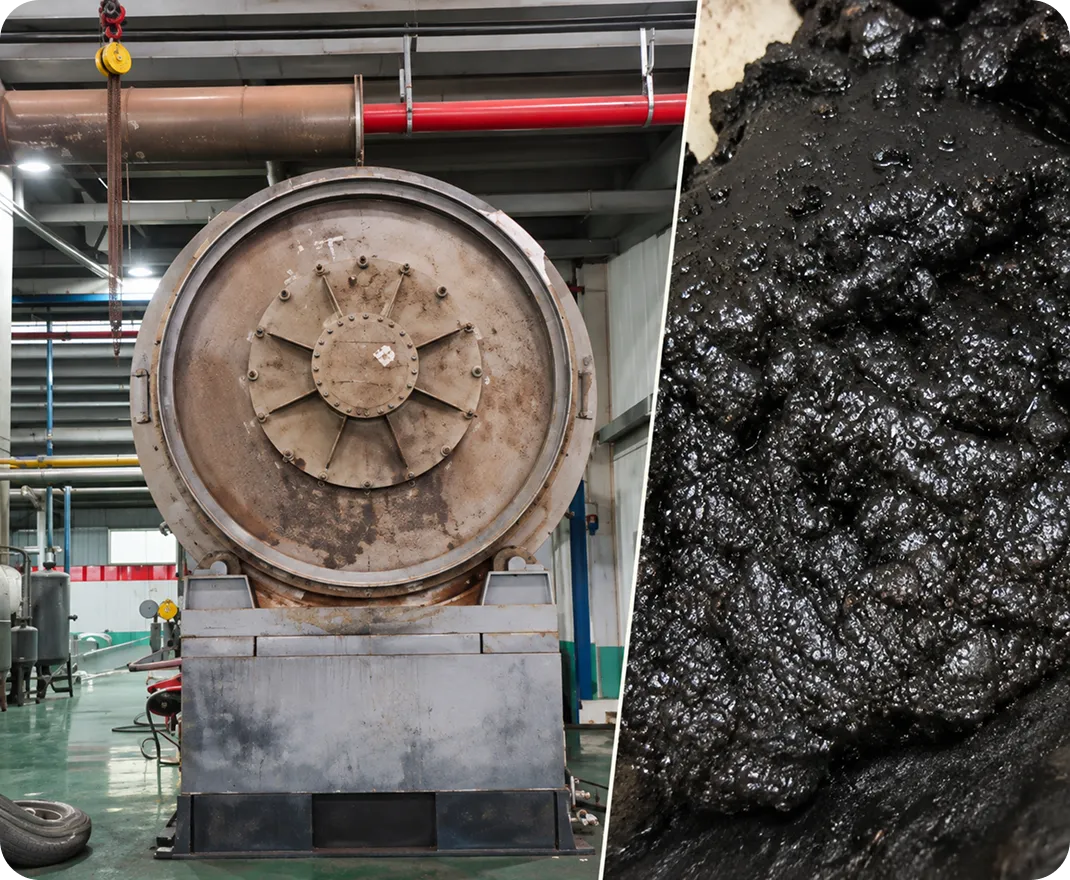
Oil Sludge Pyrolysis Plant Types
GELAN offers batch and continuous pyrolysis plants for treating oily sludge and recovering oil.
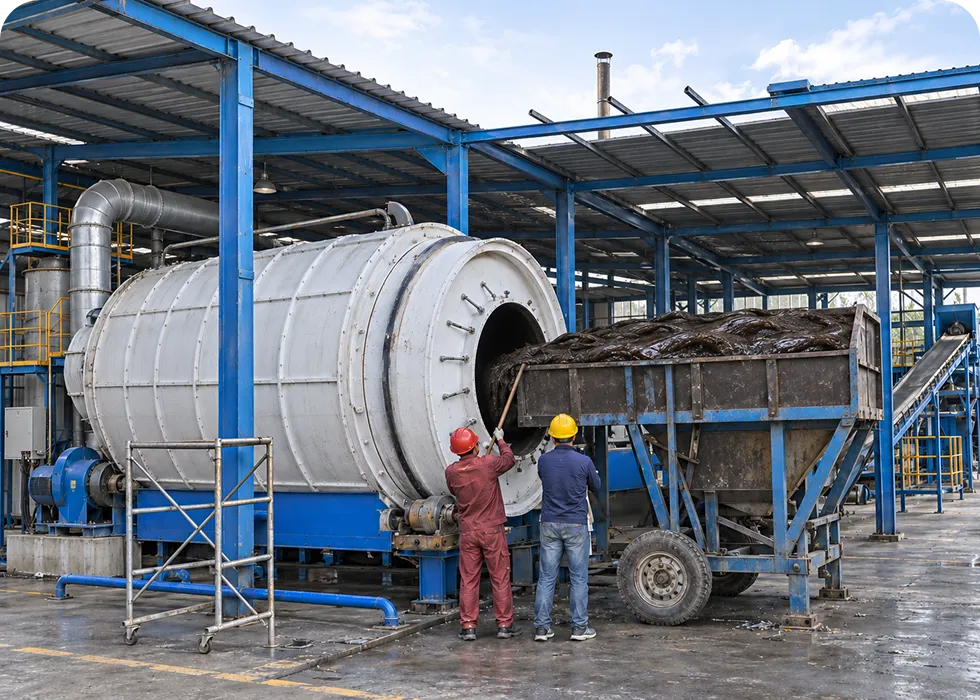
Batch Oil Sludge Pyrolysis Plant
- Feedstock & Preparation: Oily sludge (mineral oil sludge and oily residues). The sludge can be fed without first screening out wire, sand, or other debris.
- Feeding & Operation: The plant is loaded before each batch and discharges the solid residue after processing.
- Processing Capacity: Up to 10 t per batch, with a 24-hour batch cycle.
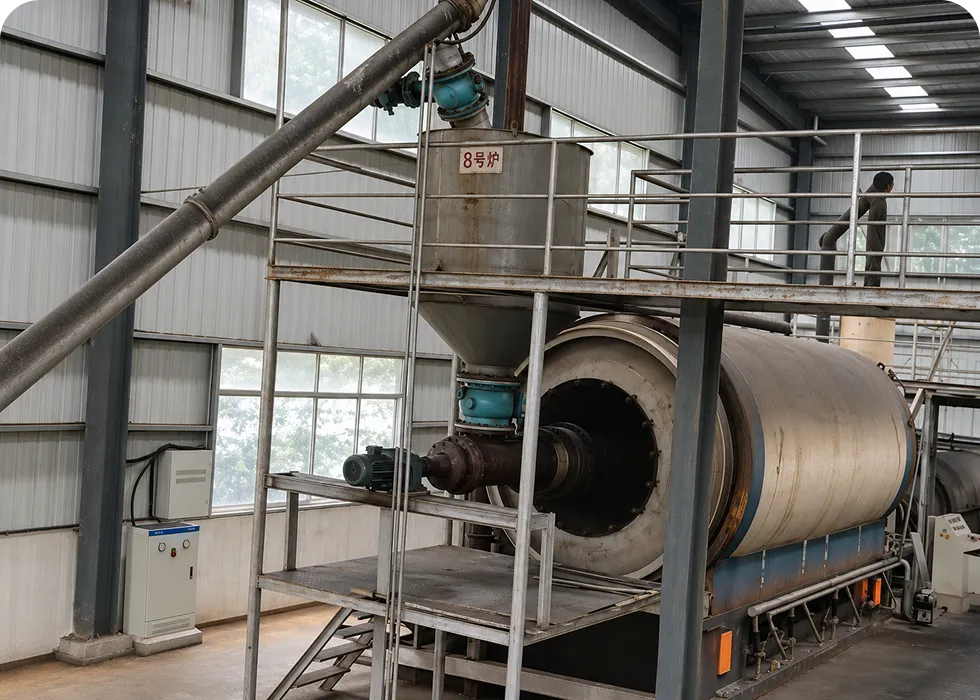
Continuous Oil Sludge Pyrolysis Plant
- Feedstock & Preparation: Oily sludge. Screen out impurities larger than 5 cm from the oily sludge before feeding it into the continuous plant.
- Feeding & Operation: A sealed screw feeder supplies sludge continuously while the plant is running. Solid residue is discharged through a sealed outlet.
- Processing Capacity: 25–30 t per 24 h.
Oil Sludge Pyrolysis Plant Specifications
Technical specifications are essential for determining whether an oil sludge pyrolysis plant meets your throughput, operating, and site requirements. GELAN offers different types of plants with varying specifications to meet your needs. If you need information that isn’t listed, please contact GELAN directly.
| Parameter | SH-LJ-10 | SH-LJ-12 | SH-LJ-15 | SH-LJ-30 |
|---|---|---|---|---|
| Working mode | Batch | Batch | Batch | Continuous |
| Weight | 40 t | 45 t | 50 t | — |
| Reactor volume | 40 m³ | 45 m³ | 50 m³ | — |
| Reactor size (mm) | 2600 × 6600 | 2800 × 6600 | 2800 × 7700 | 2800 × 8000 |
| Reactor structure | Horizontal rotation | Horizontal rotation | Horizontal rotation | Horizontal rotation |
| Working pressure | Normal pressure | Normal pressure | Normal pressure | Normal pressure |
| Rotation speed | 1 r / 2.5 min | 1 r / 2.5 min | 1 r / 2.5 min | — |
| Power | 5.5 kW | 5.5 kW | 7.5 kW | Total power: 50 kW. Running consumption: 30 kW/H (as stated). Average use: 20 hours a day. |
| Electrical supply | — | — | — | 380 V, 50 Hz |
| Cooling method | Water cooling | Water cooling | Water cooling | Water-cooled |
| Heating method | — | — | — | Direct heat |
| Heating fuel | Fuel oil | Fuel oil | Fuel oil | Oil, natural gas |
| Heating oil needed | 200–300 kg fuel oil | 200–300 kg fuel oil | 200–300 kg fuel oil | — |
| Recycling water | 30 t/h | 30 t/h | 30 t/h | — |
| Water consumption | 8 T/N | 8 T/N | 9 T/N | 3 t / 24 h |
| Transmission / rotation method | Exterior gear | Exterior gear | Exterior gear | Gear |
| Foundation | With base | With base | With base | With base |
| Noise (dB(A)) | ≤ 80 | ≤ 80 | ≤ 80 | ≤ 85 |
| Feeding method | Mechanical | Mechanical | Mechanical | A sealed screw feeder supplies sludge continuously |
| Discharge method | Central discharge | Central discharge | Central discharge | Central discharge |
| Processing capacity | 10 t/batch | 12 t/batch | 15 t/batch | 25–30 t / 24 h |
| Operation platform | Steel structure | Steel structure | Steel structure | Steel structure |
| Footprint | 30 × 10 × 6 m (site requirement) | 30 × 10 × 6 m (site requirement) | 30 × 10 × 6 m (site requirement) | 10 × 50 m including production site |
| Labour | 2–3 workers per unit | 2–3 workers per unit | 2–3 workers per unit | 3 shifts, 6 persons in total |
*The table provides selected data for reference. Please contact GELAN directly for detailed specifications or information on items not listed here.*
Where Can Oil Recovered from Oil Sludge Be Used?
Oil recovered from sludge can provide heat in compatible industrial equipment or be sent for further refining, depending on its properties.
Recovered oil can fuel compatible boilers and furnaces to generate steam or supply process heat.
Industrial Fuel
Depending on its composition, recovered oil can be distilled into gasoline-, kerosene-, and diesel-range fractions for further refining.
Feedstock for Further Refining
What Sets GELAN’s Oil Sludge Pyrolysis Plants Apart?
GELAN helps you simplify feed preparation, shorten batch turnaround, and reduce external fuel use. Its plants also include operating safeguards and flue gas treatment.
Less Preparation and Faster Loading
- Fewer screening steps: The batch plant can accept oily sludge without first screening out wire, sand, or debris.
- 10 tonnes loaded in 30 minutes: The mechanical feeder can load 10 tonnes of oily sludge in 30 minutes.
Faster Turnaround Between Batches
- 24-hour production cycle: The batch plant can complete a production cycle in 24 hours.
- 60-minute residue discharge: Solid residue exits through a central gravity outlet, allowing discharge to finish in 60 minutes.
Better Use of Heat and Recovered Gas
- Heat retention during continuous operation: Sealed feeding and residue discharge help retain heat while the reactor runs at high temperatures.
- Up to 80% reported fuel savings: The plant burns combustible pyrolysis gas in a dedicated burner to provide process heat and reduce external fuel demand.
Hot Gas Containment and Operating Safeguards
- Sealed reactor connections: Dynamic and static seals help prevent hot pyrolysis gas from escaping at reactor-to-pipe joints.
- Protection against abnormal operating conditions: Pressure and temperature alarms alert operators to abnormal conditions. The plant also includes an emergency stop and active and passive explosion relief.
Environmental Protection with Flue Gas Treatment
- Over 95% Dust Removal: A water-film dust collector removes over 95% of dust from the flue gas.
- Reduced Sulphur Emissions: A chemical desulphurisation system reduces sulphur compounds in the exhaust before discharge.
FAQs About Oil Sludge Pyrolysis Plants
Q1. What moisture content can the oil sludge pyrolysis plant accept?
The oil sludge types listed have water contents ranging from 5% to 90%. Share your sludge type and measured water content with GELAN to confirm whether it can be fed directly or needs dewatering first.
Q2. How much oil could I recover from one tonne of my sludge?
If your sludge contains 40% oil and 30% water by weight as received, one tonne contains about 400 kg of oil before processing. The amount you can recover depends on the recovery rate for your feedstock. For example, if testing shows that 80% of the original oil can be recovered, the estimated output is 320 kg of recovered oil per tonne of sludge.
Q3. What information should I send GELAN for a model recommendation and an itemised quotation?
Send your sludge source, measured oil, water, and solids content, target daily throughput, and installation location. If available, include a lab report and details on sludge consistency, debris, and any existing pretreatment equipment. Let GELAN know which equipment and services you want priced separately, such as dewatering, oil storage, or installation and commissioning.
Q4. What certifications do you have for your oil sludge pyrolysis plants?
We can provide CE documentation for applicable oil sludge pyrolysis plant models, along with ISO 9001 quality management and ISO 14001 environmental management certificates.
Individual Equipment for Oil Sludge Pyrolysis Plants
Alongside complete oil sludge pyrolysis systems, GELAN supplies individual units for condensation, oil–gas separation, and oil storage.
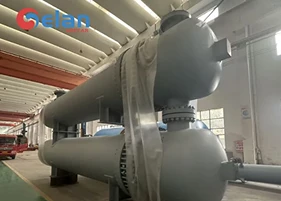
Shell & Tube Heat Exchanger
Serves as a pyrolysis vapour condenser, cooling the vapours from the reactor to recover liquid pyrolysis oil.
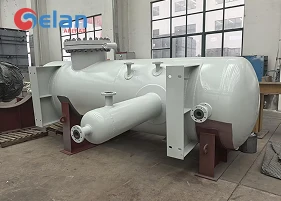
Separator Vessel
The oil–gas separator directs condensed oil to storage and routes non-condensable gas to the furnace for reuse as fuel.
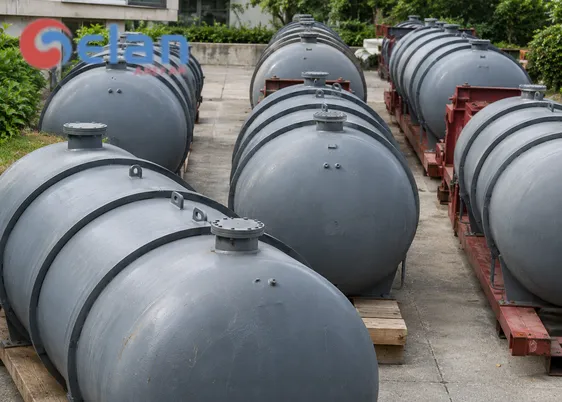
Storage Tank
Recovered oil is held in a pyrolysis oil storage tank until it is shipped or transferred to a refining unit.
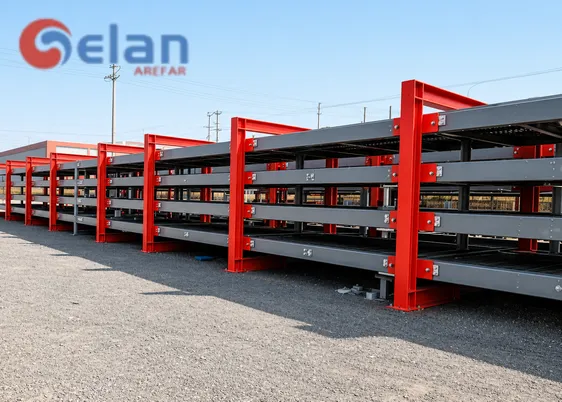
Structural Steel
Forms the operating platform for the continuous pyrolysis plant, giving operators access to equipment above ground level.
More Pyrolysis and Oil Distillation Solutions from GELAN
The Oil Sludger Pyrolysis Plant is one of several solutions GELAN offers. Our range also includes other types of pyrolysis plants and related processing equipment.
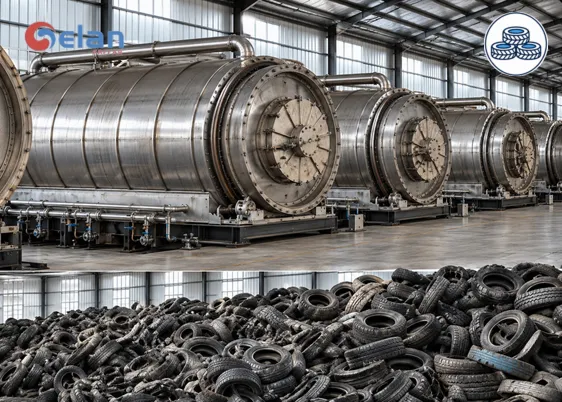
Tyre Pyrolysis plant
Turns waste tyres and rubber into pyrolysis oil, carbon black, and combustible gas. Steel-reinforced tyres also yield recoverable steel wire.
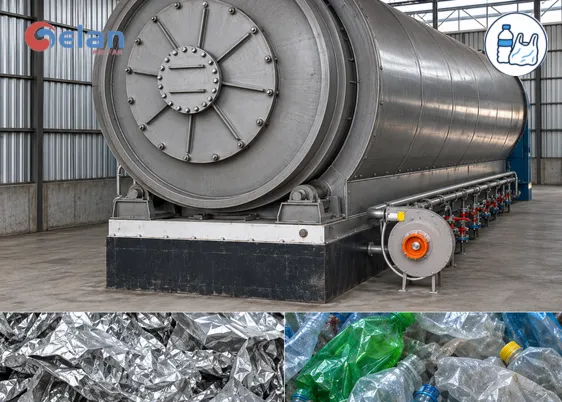
Plastic Pyrolysis Plant
Produces pyrolysis oil from waste plastics and aluminum-bearing packaging, including aluminum foil packaging and aluminum-plastic laminates. Aluminum-bearing feedstocks can also yield aluminum powder.
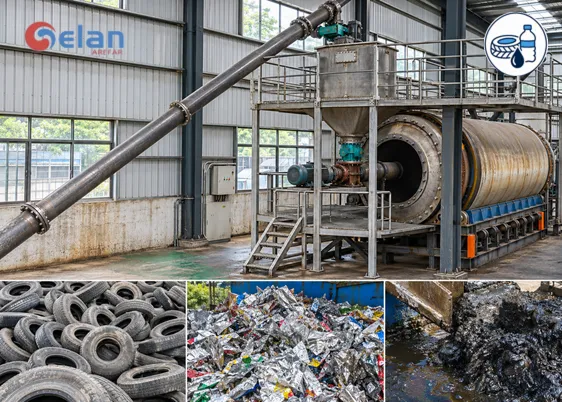
Continuous Pyrolysis Plant
Designed for projects that need to recover oil as feedstock is supplied during operation. Configurations are available for tyres and rubber, suitable plastics, or oil sludge.
Vacuum Distillation Unit (VDU)
Separates pyrolysis oil into fractions under reduced pressure, allowing higher-boiling components to distill at lower temperatures.
Get a Quote for an Oil Sludge Pyrolysis Plant
To get a quote, share your sludge source, how many tonnes you need to process per day, and any available lab report showing the oil, water, and solids content. GELAN will use these details to recommend a plant configuration and prepare your quotation.