

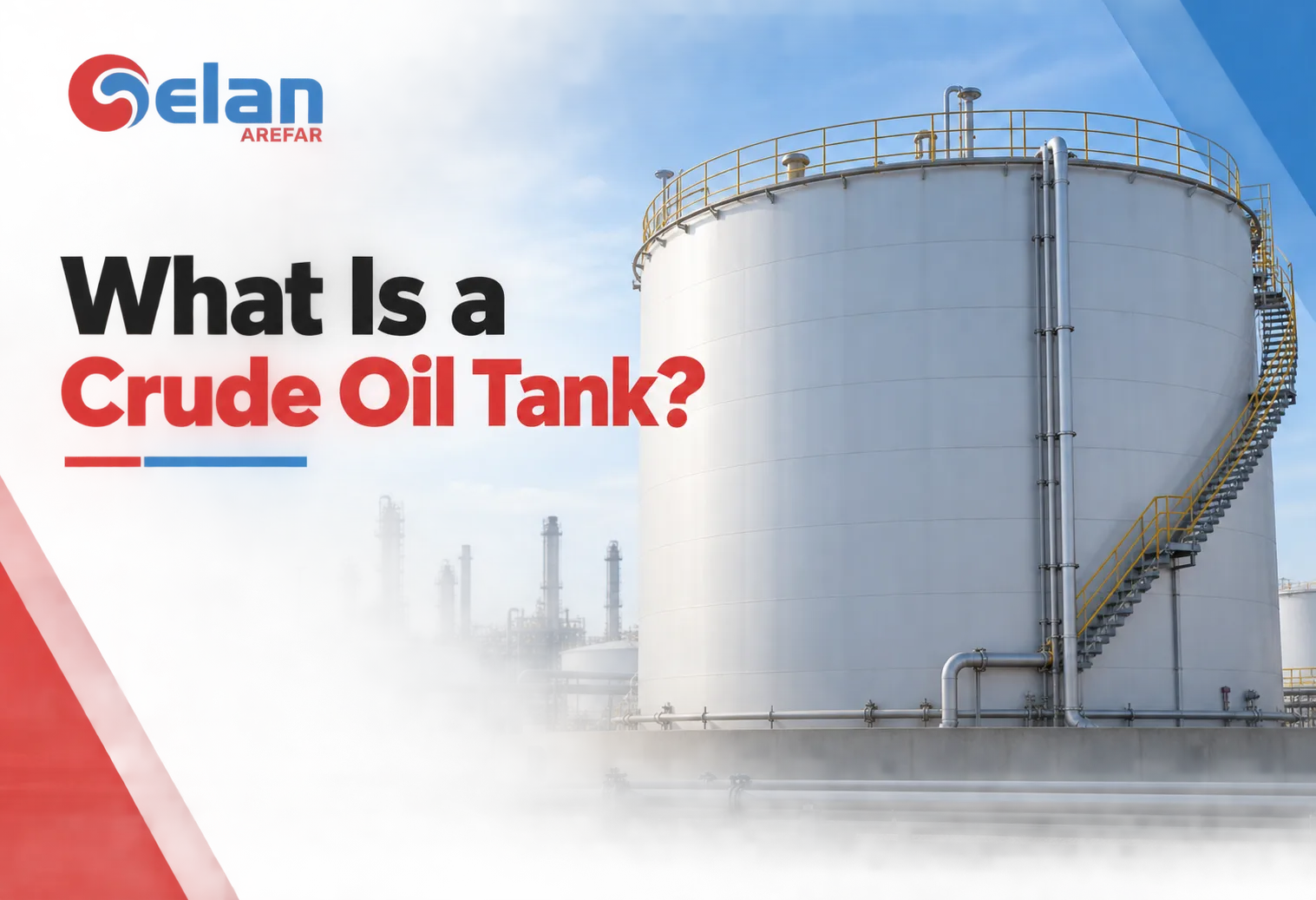
Crude oil storage tanks are very important in the oil industry. When selecting one for your application, you need to understand what it is, how it works, where it is installed, what functions it performs, and what types, and standards are available. In this guide, I will explain everything you need to know about crude oil storage tanks.
After reading this guide, if you decide to buy a custom crude oil storage tank, you can contact Gelan. Gelan has manufactured process equipment for the oil and gas, refining and petrochemical industries since 2016. In addition to storage tanks, Gelan can also manufacture pressure vessels, heat exchangers, fired heaters and other custom process equipment. With a large manufacturing facility, professional engineering and customization capabilities, and in-house quality inspection and NDT capabilities, Gelan can provide the crude oil storage tank required for your project.
Part 1. What Is a Crude Oil Tank?
First, let’s see what a crude oil storage tank is. It is a tank used to receive, store and transfer unrefined crude oil which may contain water, salts, sediment, wax, sulfur compounds and other impurities.
Crude oil storage tanks are generally installed at oilfields, crude oil terminals, pipeline stations and refinery tank farms. In most cases, crude oil tanks are atmospheric or low-pressure tanks operating at or close to atmospheric pressure.
Functions of a Crude Oil Storage Tank
A crude oil storage tank can perform the following functions:
1. Receive crude oil
2. Store crude oil safely
3. Support crude oil transfer between facilities
4. Buffer fluctuations in the crude oil supply
5. Allow water and sediment to settle
6. Blend different types or grades of crude oil
7. Supply crude oil to refinery processing units
Characteristics of a Crude Oil Tank
In general, crude oil storage tanks have the following characteristics:
● Large capacity: Many crude oil tanks have capacities of tens of thousands of cubic meters, while some exceed 100,000 m³.
● Atmospheric or low-pressure operation: Most crude oil tanks operate at or near atmospheric pressure.
● Multiple safety systems: They may include sealing and venting systems, fire-protection equipment, leak-detection systems, and secondary containment. Depending on the crude oil properties and climate, heating coils or insulation may also be required.
● Designed for complex crude oil properties: The design must consider water and sediment accumulation, corrosion, wax deposition, heating requirements, and tank cleaning. Agitators or jet mixers may be used to improve blending and reduce localized sediment accumulation.
Differences Between Crude Oil Tanks and Refined Petroleum and Intermediate Oil Tanks
Now that you understand what a crude oil storage tank is and what it does, you may also want to know how it differs from tanks used for refined petroleum products and intermediate oil products. The following table shows their key differences.
| Comparison | Crude Oil Storage Tank | Refined Petroleum and Intermediate Oil Tank |
|---|---|---|
| Oil Type | Unrefined crude oil that may contain water, salts, sediment, wax and other impurities | Gasoline, diesel, kerosene, lubricating oil, fuel oil and intermediate refinery streams |
| Properties | Complex and variable composition; may contain water, salts, sediment, wax, sulfur compounds and light hydrocarbons | Properties vary by product but are generally more clearly specified and controlled |
| Major Functions | Receiving, storage, buffering, settling, blending and supplying crude oil to refinery units | Storage, handling, buffering and distribution of specific petroleum products or intermediate streams |
| Location | Oilfields, crude oil terminals, pipeline stations and refinery crude oil tank farms | Refineries, oil depots, terminals, industrial facilities and gas stations |
| Design Considerations | Crude oil properties, vapor emissions, sediment, water, viscosity, heating, mixing and corrosion | Product volatility, cleanliness, storage temperature, contamination control and product quality requirements |
| Major Problems to Consider | Sludge deposition, water accumulation, wax formation, evaporation losses and tank-bottom corrosion | Evaporation losses, product contamination, quality degradation, corrosion and temperature control, depending on the stored product |
From the table, you can see that crude oil storage tanks differ from refined petroleum and intermediate oil tanks because they store oils with different properties. Therefore, different design factors and materials need to be considered when designing these tanks.
Part 2. What Are the Different Types of Crude Oil Storage Tanks?
When selecting a crude oil storage tank, you may find that there are several different types. Here, I will classify them by roof structure, installation method and orientation, and explain their characteristics, advantages and limitations to help you choose the right type.
Based on Roof Structure
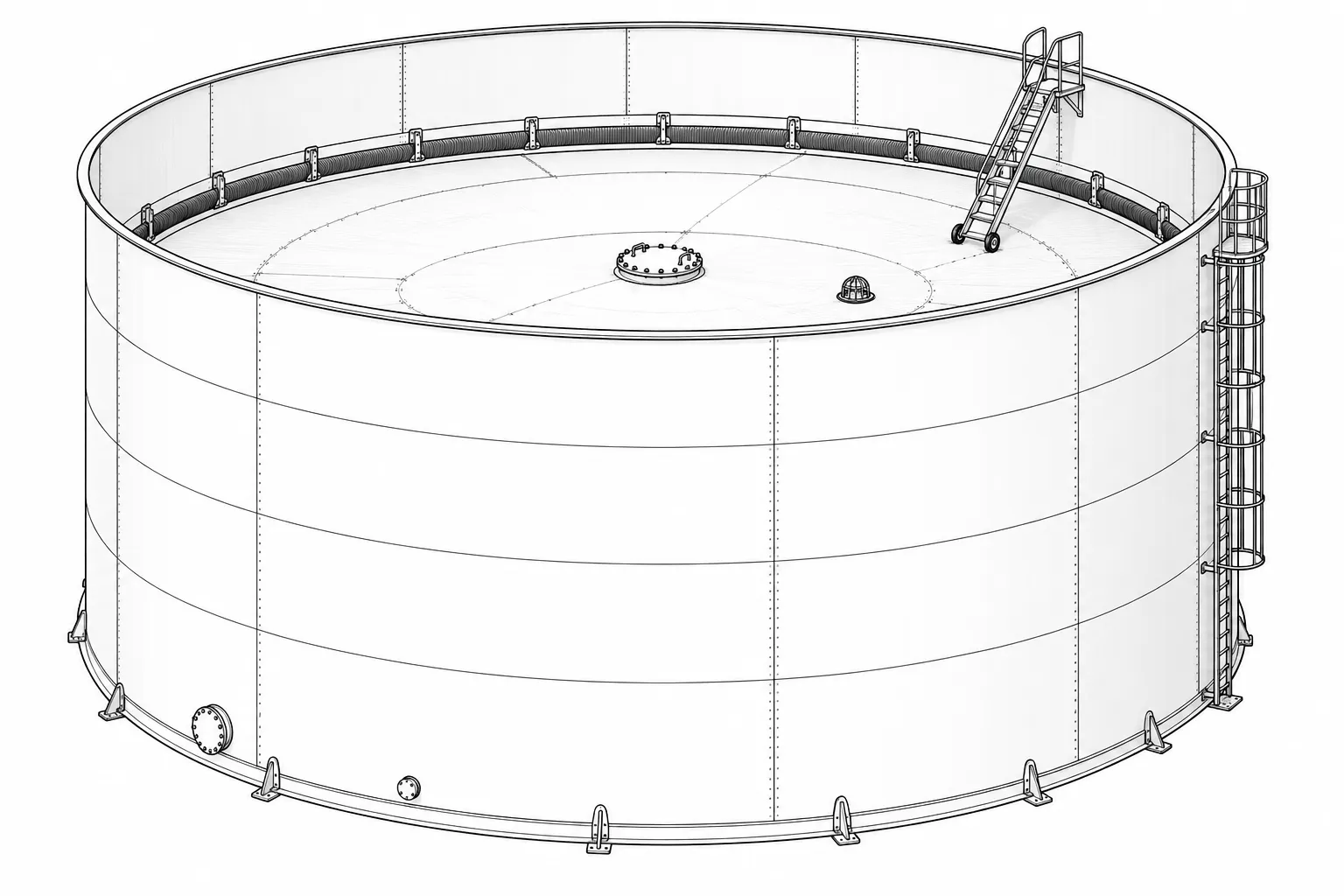
External floating-roof crude oil storage tank: This type is widely used for large crude oil storage tanks. Its roof is directly exposed to the atmosphere and floats on the crude oil surface. This design reduces the vapor space and evaporation losses. However, the roof and sealing system are exposed to rain, wind and other weather conditions.
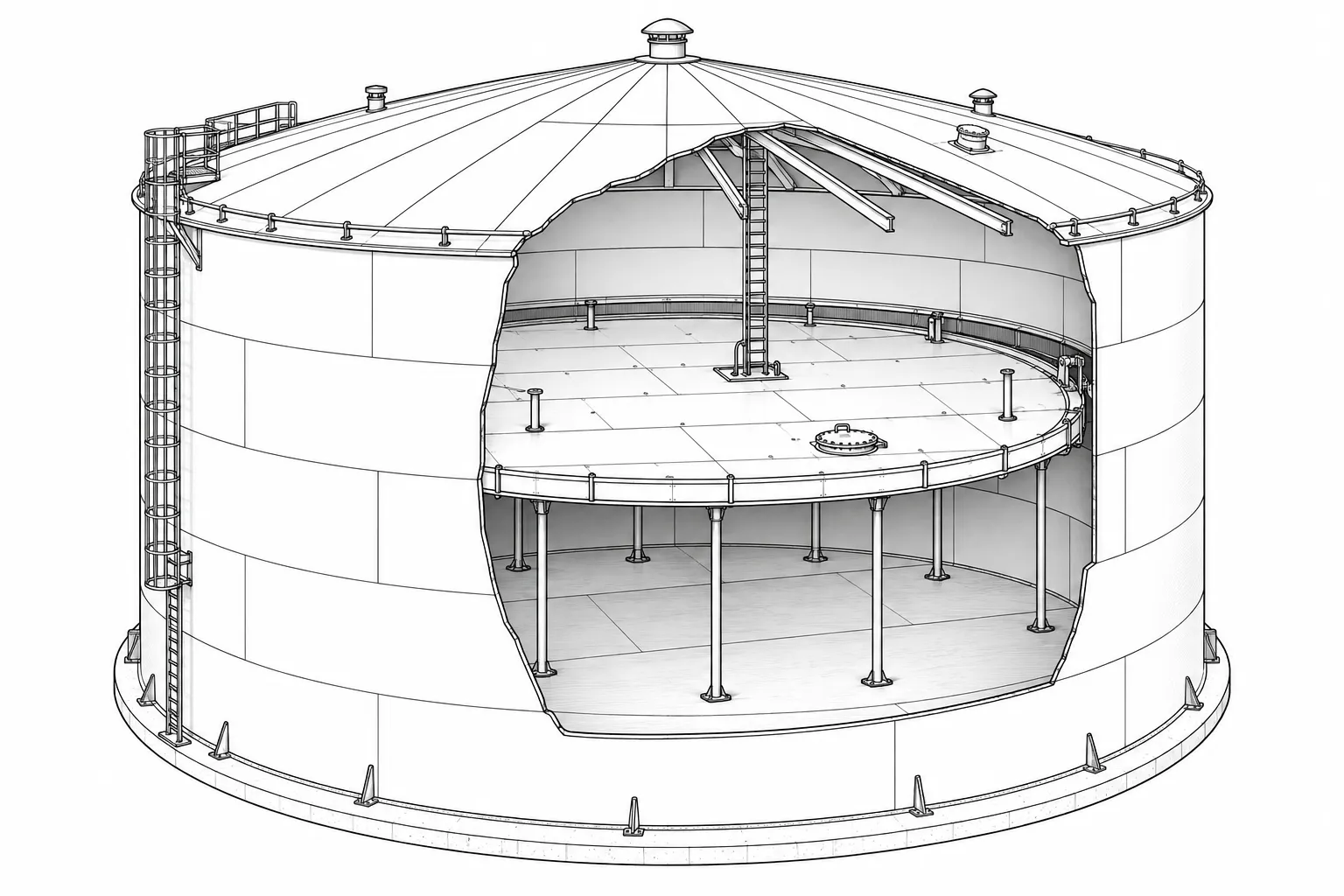
Internal floating-roof crude oil storage tank: This type has a fixed outer roof and an internal floating roof that floats on the crude oil surface. It combines the weather protection of a fixed roof with the evaporation-reducing effect of a floating roof. However, inspection and maintenance of the internal floating roof are relatively complex.
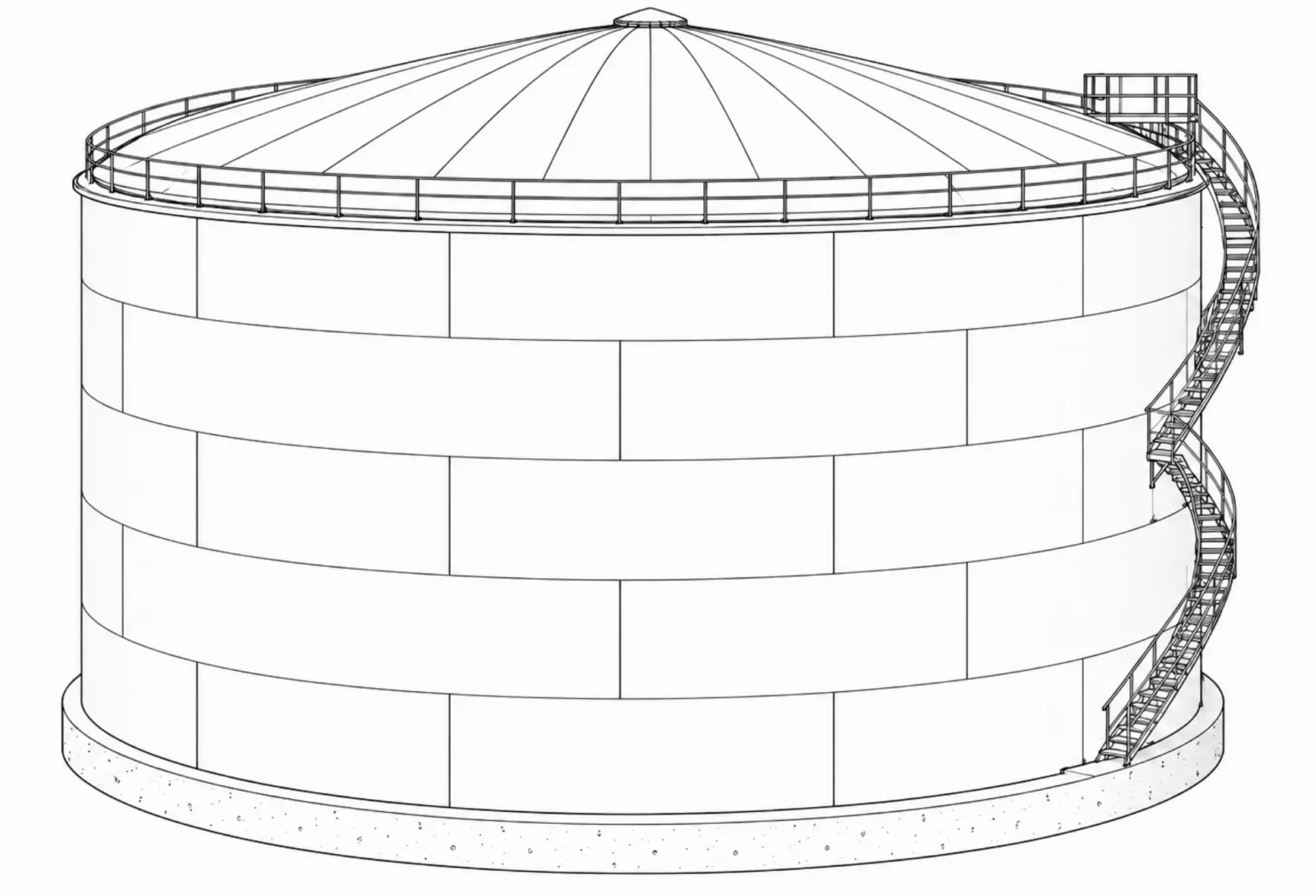
Fixed-roof crude oil storage tank: This type has a roof permanently attached to the tank shell and a venting system that protects the tank against excessive pressure and vacuum. Its structure is relatively simple, and its cost is generally lower. However, it has a larger vapor space, so evaporation losses are typically higher than those of floating-roof tanks. Common fixed-roof shapes include cone, dome and umbrella roofs.
Based on Installation Method
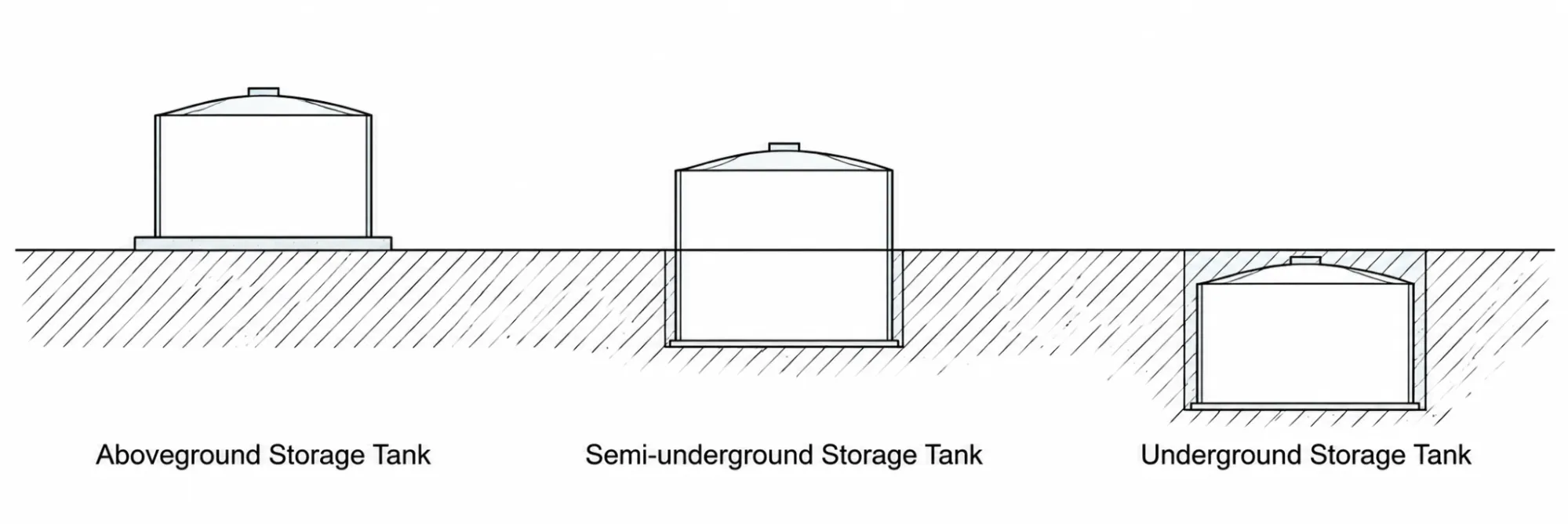
Aboveground storage tank: Most conventional crude oil storage tanks are installed aboveground because they are easier to construct, inspect, operate, maintain and repair. Leaks are also easier to detect, and construction costs are generally lower. However, these tanks are exposed to wind, rain, sunlight, temperature changes, external fires and impact risks.
Semi-underground storage tank: This type is installed partly below ground level and partly above it. It has less exposure to wind and external impact and may maintain a more stable storage temperature than an aboveground tank. However, inspection and maintenance are more difficult. It also has a higher risk of external corrosion and requires proper waterproofing, drainage and groundwater protection.
Underground storage tank: This type is installed completely below ground level and is less exposed to weather and some external fire hazards. However, underground tanks are less commonly used for large-scale crude oil storage because inspection, maintenance, repair and leak detection are more difficult.
Based on Orientation
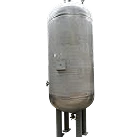
Vertical crude oil storage tank: This type has a vertical cylindrical axis. It provides a large storage capacity within a relatively small footprint. Therefore, most large aboveground crude oil storage tanks use a vertical design.
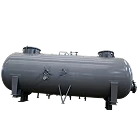
Horizontal crude oil storage tank: This type has a horizontal cylindrical axis. It is generally used for smaller storage capacities and usually requires a larger footprint than a vertical tank of the same storage capacity.
Part 3. What Standard Applies to Crude Oil Tanks?
Now that you understand the different types of crude oil storage tanks, you may want to know which standard should be used for their design and construction. The applicable standard depends on the tank structure, design pressure, installation location and project requirements. For large, field-built, welded steel crude oil tanks, the main standards include:
1. API 650: This is one of the most commonly used standards for aboveground, vertical, cylindrical, welded steel oil storage tanks. It specifies requirements for materials, design, fabrication, erection, welding, inspection and testing. It also covers important design factors such as shell thickness, liquid level, wind loads, seismic loads, foundations and settlement. Following API 650 helps reduce risks related to insufficient structural strength, leakage, wind or seismic damage, welding defects and uneven settlement.
2. API 620: This standard applies to large, welded, low-pressure storage tanks. It may be selected when the required design pressure is outside the applicable range of API 650.
3. EN 14015: This European standard applies to site-built, vertical, cylindrical, flat-bottomed, aboveground, welded steel tanks used to store liquids at ambient temperatures and above. It specifies requirements for materials, design, fabrication, erection, testing and inspection. In European-standard projects, it performs a role similar to API 650, although their technical requirements are not identical.
These are three of the main standards used for crude oil storage tanks. However, they do not apply to every crude oil tank. The final standard must be selected according to the tank type, design conditions, project specifications and local regulations.
Part 4. How to Select a Crude Oil Storage Tank?
Now that you understand the types and standards of crude oil storage tanks, you may want to know how to select the right tank for your application. Here are the main steps and factors you need to consider.
1. Confirm the Operating Conditions and Design Requirements
First, list all the required operating and design data. The main information includes:
1. Crude oil properties: Confirm the crude oil type, source, API gravity, normal storage temperature, water content, salt content, sulfur and hydrogen sulfide content, acid value, wax content and other relevant properties. These factors influence the tank type, materials, corrosion allowance, sealing system, heating, insulation and agitation requirements.
2. Required capacity: Consider the daily or hourly crude oil flow rate, required storage time, receiving and discharge methods, operating level limits, unusable volume and reserve capacity.
3. Operating and design pressures and temperatures
4. Tank roof structure
5. Installation method
6. Tank orientation
7. Corrosion risks
8. Heating and insulation requirements
9. Agitation or circulation requirements
10. Inlet, outlet and drainage systems
11. Venting and pressure-protection requirements
12. Liquid-level measurement and overfill-prevention systems
All these factors will influence the materials, structure, accessories and auxiliary systems of the crude oil storage tank.
2. Consider Safety and Maintenance
Next, consider the safety requirements and whether the tank can be inspected and maintained conveniently. The main factors include:
● Fire and explosion protection
● Lightning protection, grounding and electrostatic protection
● Environmental protection
● Inspection and maintenance conditions
3. Select the Applicable Standards
Then, select the applicable design, fabrication, inspection, fire-protection, environmental and safety standards. The final selection should be based on the tank type, design conditions, project location, local regulations and the owner’s requirements.
4. Consider the Life-Cycle Cost
Finally, do not consider only the initial purchase cost. You should also consider the costs of engineering, materials, fabrication, transportation, installation, operation, energy consumption, inspection, maintenance and repair throughout the expected service life of the tank.
Part 5. Where to Buy Crude Oil Storage Tank?
Now, with a clear understanding of crude oil storage tanks, you can choose a suitable manufacturer for your project. Here, I recommend Gelan. The reasons are listed below:
1. Engineering and Customization Capabilities: Gelan has professional capabilities in engineering calculations, 3D modelling, and structural analysis. It can design and customize crude oil storage tanks based on the required capacity, crude oil properties, operating conditions, installation site, and applicable standards.
2. Large Manufacturing Capacity: Gelan has 28,994 m² of manufacturing space, approximately 724,160 production working hours per year, and 248 employees, including 132 production personnel.
3. Quality Inspection and NDT Capabilities: Gelan has in-house RT, UT, MT, and PT inspection capabilities to inspect welds and control manufacturing quality.
4. Process Equipment Manufacturing Experience: In addition to storage tanks, Gelan manufactures pressure vessels, heat exchangers, fired heaters, air coolers, and waste heat recovery systems. This enables it to better understand how crude oil storage tanks connect with other equipment in oil refining projects.
5. International Project Experience: Gelan has international project experience in refining, petrochemical, and hydrogen applications, allowing it to support overseas projects with different technical and project requirements.
If you need a custom crude oil storage tank, you can send Gelan your required capacity, crude oil properties, design conditions, applicable standards, installation location, and project specifications. Gelan can then provide a suitable tank solution for your application.
FAQS
Q1. What Are Large Oil Tanks Called?
They are generally called large oil storage tanks or large crude oil storage tanks.
Q2. Can a Crude Oil Tank Be Used for Refined Petroleum Products or Intermediate Oil Products?
Yes, it may be possible, but the tank cannot be used for another oil product without evaluation. The stored product’s volatility, density, temperature, corrosiveness, cleanliness requirements, and compatibility with the tank materials, roof, seals, vents, and fire-protection system must be checked.
Q3. What Is a Crude Oil Reservoir?
A crude oil reservoir is an underground rock formation that contains crude oil within its pores or fractures. It is a natural geological formation from which crude oil is extracted, not a manufactured crude oil storage tank.
Ending Note
Now, you know that a crude oil storage tank is used to receive, store and supply unrefined crude oil. It can also support buffering, settling and blending operations. Its roof type, installation method, orientation and auxiliary systems should be selected based on the crude oil properties, operating conditions, applicable standards and project requirements.
If you need a custom crude oil storage tank, send Gelan your crude oil properties, required capacity, design conditions, applicable standards and installation location. Gelan can provide the engineering, manufacturing, inspection and project support you need.