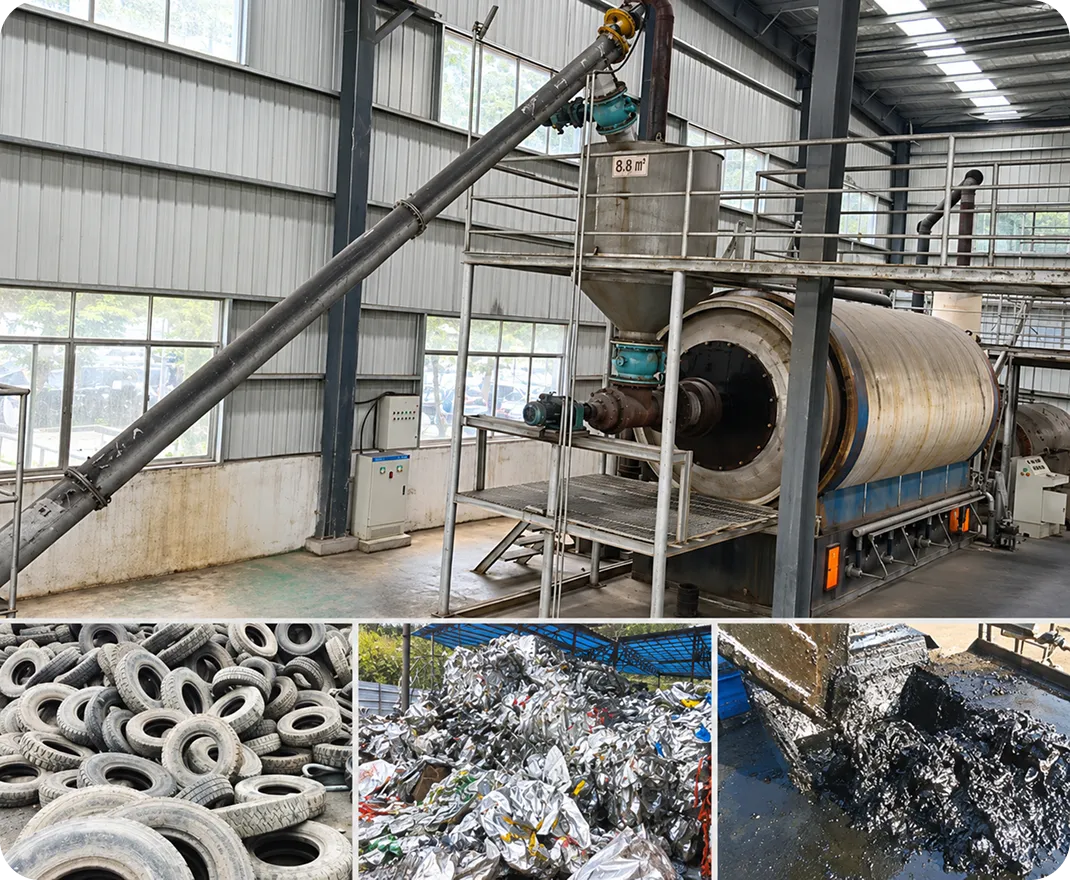
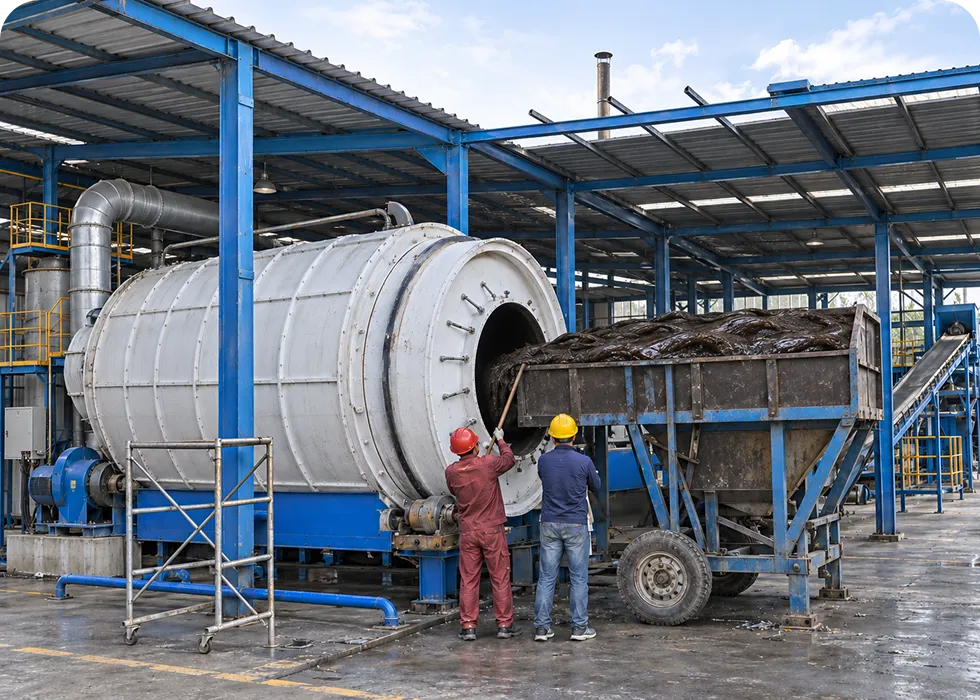
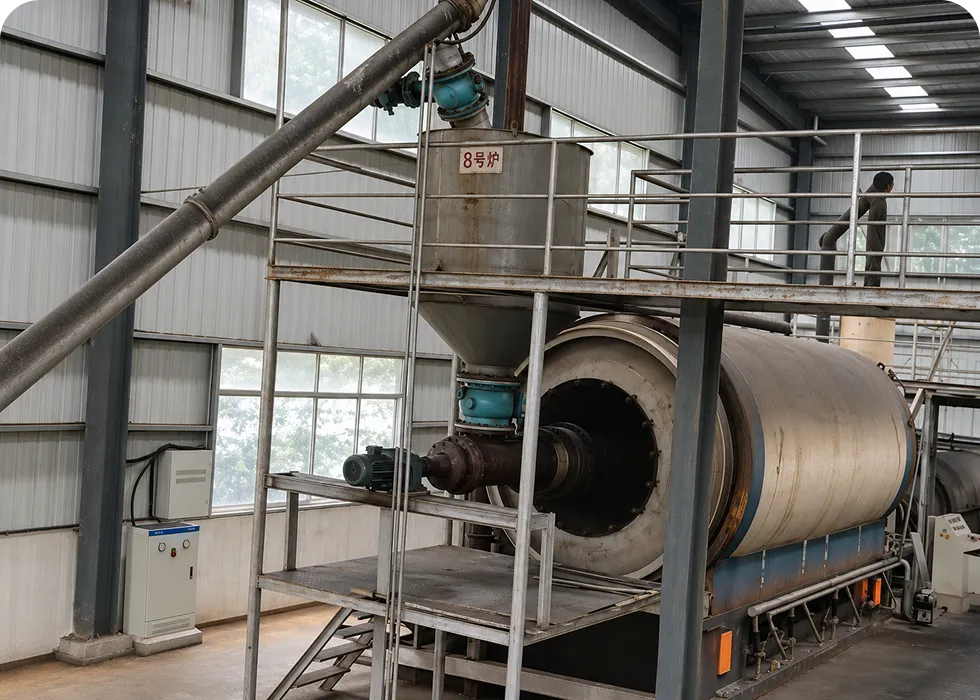
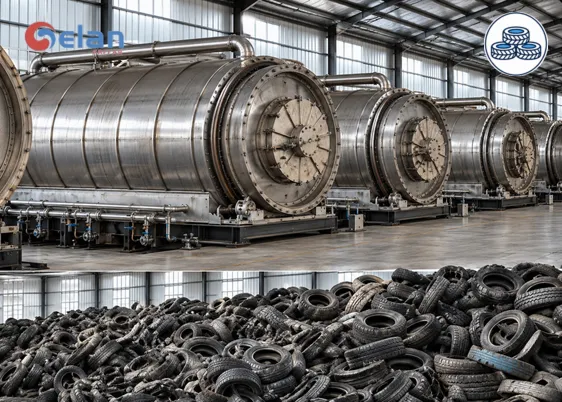
Start with your target throughput, then review the fuel, power, water, and space requirements for GELAN’s continuous pyrolysis plant. For any details not listed here, contact GELAN directly.
Model
SH-LJ-30
Reactor structure
Horizontal rotation
Working mode
Continuous
Working pressure
Normal pressure
Heating method
Direct heating
Heating fuel
Oil, natural gas
Condensation and cooling
Water-cooled
Transmission mode
Gear drive
Electrical supply
380 V, 50 Hz
Power and operating hours
Total power: 50 kW. Running consumption: 30 kW/H (as stated). Average operation: 20 hours per day.
Processing capacity
25–30 t / 24 h
Noise level
≤ 85 dB(A)
Water consumption
3 t / 24 h
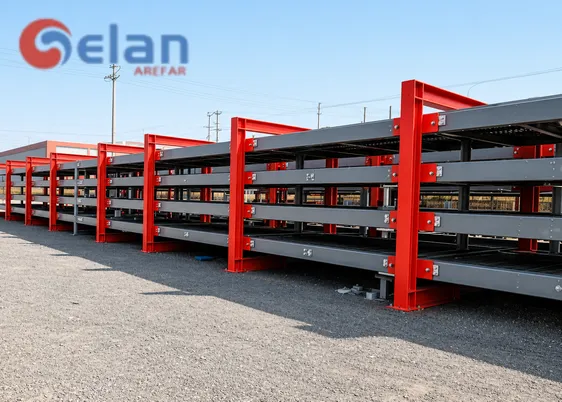
Operating platform
Steel structure
Site footprint
10 × 50 m, including the production area
Labour
3 shifts, 6 people in total
*The table provides selected data for reference. Please contact GELAN directly for detailed specifications or information on items not listed here.*
The outputs from GELAN’s continuous pyrolysis plant vary by feedstock, and each has different potential uses.
Can fuel industrial boilers and furnaces or be distilled and refined to produce diesel and gasoline.
Pyrolysis Oil
Can be processed into a filler for rubber mats and moulded rubber products.
Carbon Black
Can be melted down and recycled into new steel products.
Steel Wire
Can fuel the pyrolysis furnace and reduce external fuel use.
Combustible Gas
Can be processed and remelted to make recycled aluminium.
Aluminum Powder
Advantages of GELAN’s Continuous Pyrolysis Plant
GELAN’s continuous pyrolysis plant handles up to 30 tonnes per day with fast feeding and residue discharge. Heat recovery and process gas reuse reduce external fuel demand. Built-in safeguards help protect operators, and flue gas treatment cuts dust and sulfur emissions.
01
Faster Feeding and Residue Discharge
The sealed screw feeder can load 15 tonnes of feedstock in 50 minutes. The rear discharge system can remove solid residue in 100 minutes, reducing the time spent on material handling.
02
High Processing Capacity
The plant can process up to 30 tonnes of feedstock per 24 hours, making it suitable for projects that handle large volumes of waste.
03
Better Use of Residual Heat and Lower External Fuel Demand
The plant can accept fresh feedstock while the reactor is still at around 300°C. Sealed feeding and discharge at high temperatures help retain heat and reduce the need to cool and reheat the reactor. The plant also reuses non-condensable pyrolysis gas as furnace fuel. The equipment brochure reports fuel savings of up to 80%.
04
Built-In Operating Safeguards
Pressure and temperature alarms, an emergency stop, and active and passive explosion relief measures help manage operating risks. Dynamic and static seals help contain hot process gases at equipment connections.
05
Flue Gas Dust and Sulfur Control
The wet dust removal system achieves over 95% dust removal. A chemical desulfurization system treats sulfur compounds in the flue gas.
FAQs About Continuous Pyrolysis Plant
Q1. What is the difference between a batch and a continuous pyrolysis plant?
A batch plant loads and processes one batch at a time. A continuous plant uses a sealed screw feeder to supply material during operation. Choose continuous if you have a steady feedstock supply and need to process 25–30 tonnes per 24 hours.
Q2. Where does the feedstock go before it enters the screw feeder in a continuous pyrolysis plant?
The feedstock is conveyed to a storage bin, then passes through a feed switching valve before entering the screw feeder.
Q3. Does the continuous pyrolysis plant use one or two stages of sealed screw conveying?
It uses two stages of sealed screw conveying to transfer feedstock into the pyrolysis reactor.
Q4. What type of condenser does the continuous plant use?
It uses a box-type, two-stage condenser designed for easy inspection and maintenance.
Q5. Is solid residue cooled before packaging?
Yes. The solid residue passes through a switching valve and a transfer unit into a cooling bin, where it cools before packaging.
Individual Equipment for Your Continuous Pyrolysis Plant
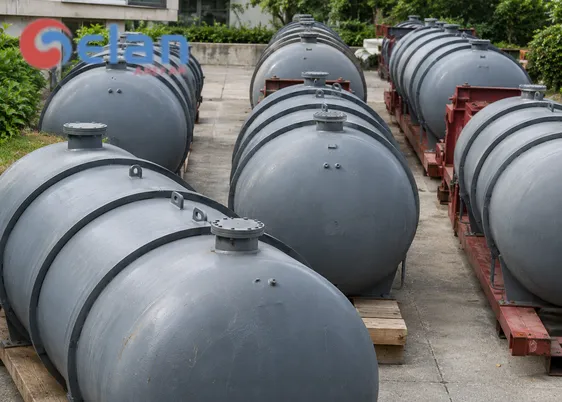
Alongside complete pyrolysis systems, GELAN supplies individual units for condensation, oil–gas separation, and oil storage.
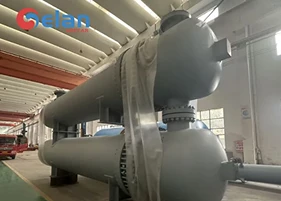
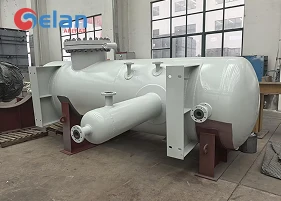
Shell & Tube Heat Exchanger
Serves as a pyrolysis vapour condenser, cooling the vapours from the reactor to recover liquid pyrolysis oil.
Pyrolysis plants are one of several solutions GELAN offers. GELAN also supplies vacuum distillation units for distilling pyrolysis oil, along with other process solutions.
Tyre Pyrolysis plant
Turns waste tyres and rubber into pyrolysis oil, carbon black, and combustible gas. Steel-reinforced tyres also yield recoverable steel wire.
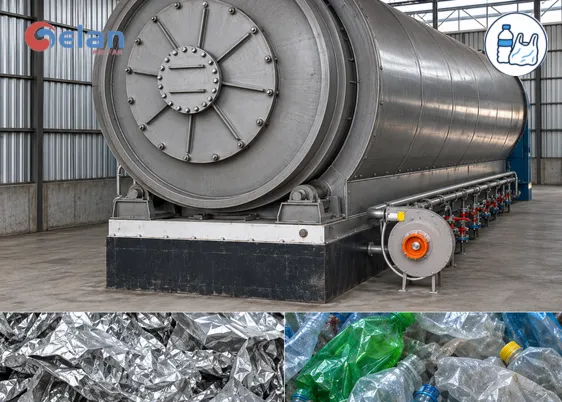
Produces pyrolysis oil from waste plastics and aluminum-bearing packaging, including aluminum foil packaging and aluminum-plastic laminates. Aluminum-bearing feedstocks can also yield aluminum powder.
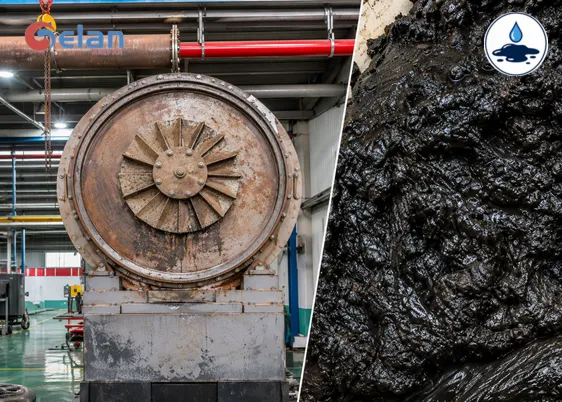
Recovers heavy oil from sludge generated during oil extraction, transport, refining, and storage. Additional outputs include combustible gas and treated solids.
Discuss Your Continuous Pyrolysis Project with GELAN
What will your plant process, and how many tonnes need to go through it every 24 hours? Include the feedstock size and any site drawings you have. GELAN will use these details to recommend a continuous pyrolysis plant and prepare a quote.
Send Your Requirements
Share your project needs, drawings, or specifications. Our team will review your request and reply within 8 hours.