

TL;DR
- •PE or PO is often practical for large, moderate-temperature chemical tanks, while a PTFE liner may suit more aggressive chemicals or higher temperatures.
- •Final material selection must consider chemical composition, concentration, temperature, pressure, vacuum, tank duty, and configuration.
- •Tank reliability depends on the complete system—not only the liner—including shell design, nozzle details, fabrication control, and factory inspection.
Industrial chemical storage tanks often handle acids, alkalis, salts, and other corrosive media. A suitable liner separates the chemical from the steel shell. This helps control storage tank corrosion and leakage risk.
PE, PO, and PTFE offer different levels of chemical resistance, temperature tolerance, and cost. The right choice depends on the medium, concentration, temperature, pressure, and tank duty. This guide explains how to select suitable corrosion resistant tanks and improve tank corrosion protection.
CONTENT:
- What Is a Lined Steel Chemical Storage Tank?
- PE, PO or PTFE Lining: What Is the Difference?
- What Project Data Determines Materials Selection for Chemical Storage Tanks?
- How Do You Select the Right Lining for an Industrial Chemical Storage Tank?
- What Causes Corrosion-Resistant Tank Liners to Blister, Delaminate or Leak?
- How Can Custom Design and Factory Inspection Extend Tank Service Life?
- FAQ About PE, PO and PTFE-Lined Tanks
- Conclusion
What Is a Lined Steel Chemical Storage Tank?
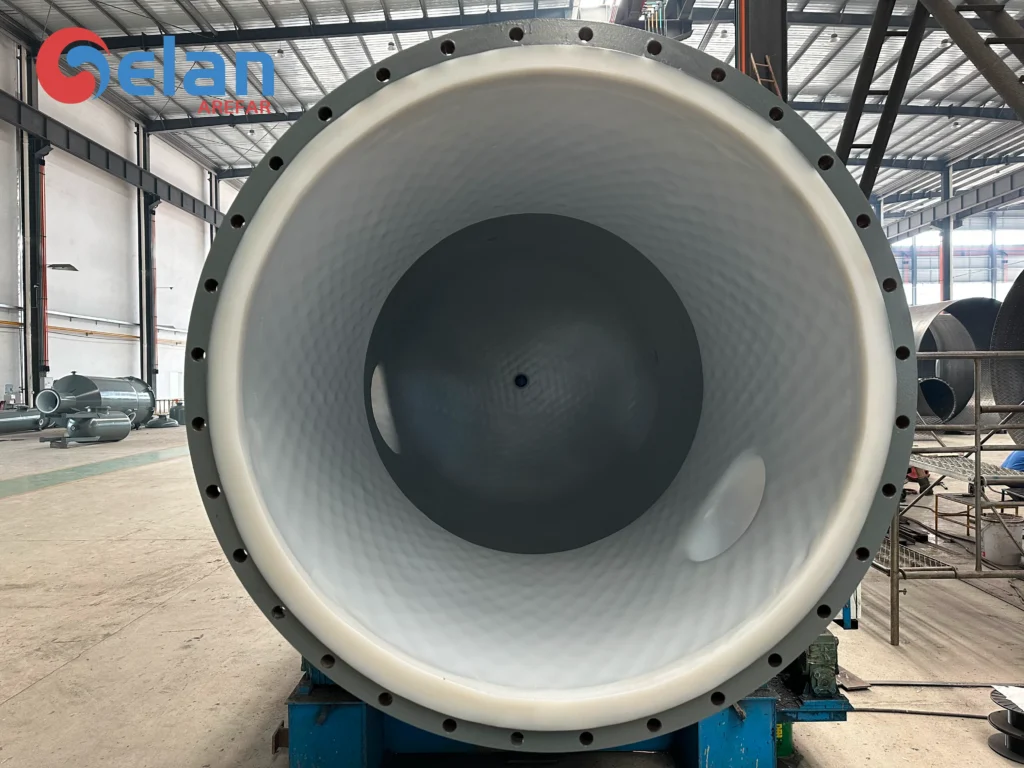
A lined steel tank is a two-layer chemical tank. The outer steel shell carries the liquid weight. It also supports the nozzles, roof, base, and external loads. The inner plastic layer keeps the stored chemical away from the steel.
The two layers have different jobs. Steel offers high structural strength. However, many acids and alkalis can corrode exposed steel. A corrosion-resistant tank liner provides the chemical barrier. PE, PO, PTFE, and other plastics may be used for this layer.
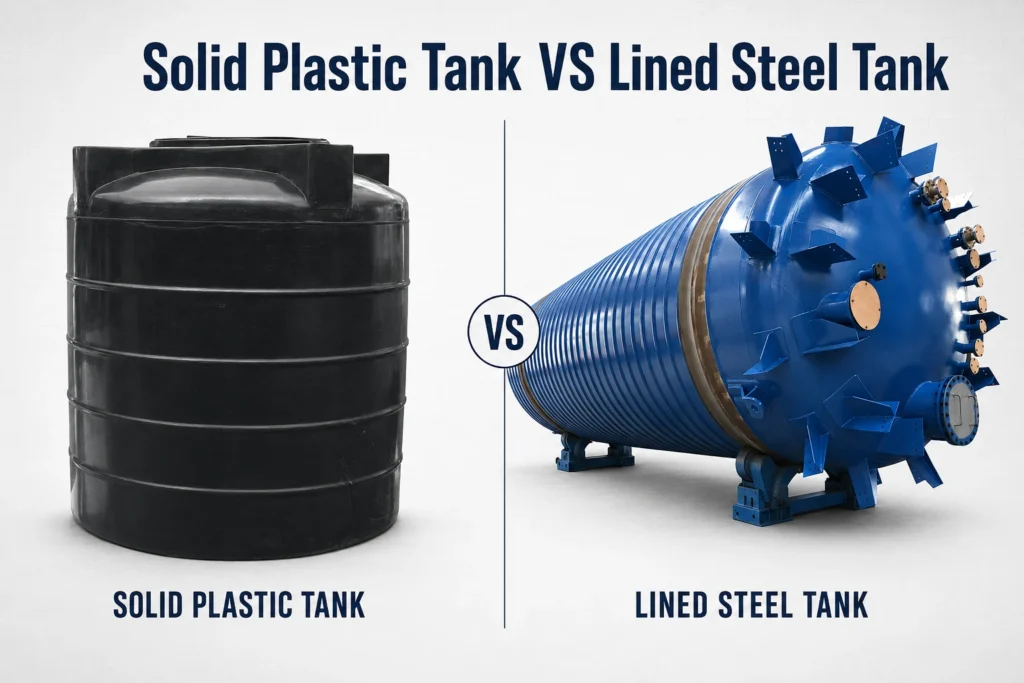
A lined steel tank is not the same as a solid plastic tank. A solid plastic tank uses the plastic wall for both strength and corrosion resistance. A lined tank separates these functions. The steel shell carries the main loads. The liner only needs to isolate the chemical from the steel. This structure can support larger tanks and more complex connections.
A liner is also more than a thin paint layer. It may use bonded sheets, mechanically fixed sheets, welded thermoplastic sections, or a formed plastic layer. The selected method affects liner movement, vacuum resistance, repair, and inspection. It must match the material and tank duty.
The basic structure is therefore simple:
Stored chemical
↓
PE, PO, PTFE, or another liner
↓
Steel shell
↓
Supports and foundation
This design is used for storage tanks. It can also be used for reactors and other chemical process tanks, where lining condition and integrity are important parts of reactor maintenance. However, the correct lining material and attachment method must be selected for the actual chemical, temperature, pressure, and operating conditions.
PE, PO or PTFE Lining: What Is the Difference?
A lined tank needs a material that can resist the stored chemical. PE, PO, and PTFE are common options, but they are not three grades of the same plastic. Their chemical resistance, temperature limits, fabrication methods, and costs are different.
| Material | What It Is | Typical Project Value | Main Limit to Check |
|---|---|---|---|
| PE | Polyethylene | Economical for many large tanks | Temperature and chemical concentration |
| PO | Polyolefin material family | Suitable for several thermoplastic lining processes | Exact polymer and resin grade |
| PTFE | Fluoropolymer | Wider chemical resistance and higher temperature capability | Fabrication, vacuum, permeation, and cost |
This comparison is only a starting point. The final choice still depends on the medium, concentration, temperature, pressure, and tank function.
What Is PE Lining?
PE lining uses polyethylene as the corrosion barrier. High-density grades are widely used in chemical tank construction. PE offers good toughness, practical fabrication, and relatively low cost.
It may suit caustic soda, salt solutions, acidic wastewater, and other moderate-temperature services. These conditions are common in refinery utilities, chemical dosing, and wastewater treatment systems. However, the exact grade must still be checked against temperature and concentration.
What Is PO Lining?
PO means polyolefin. It is a material family rather than one exact resin. PE and PP both belong to this family.
For a Gelan project, “PO lining” must therefore be converted into a clear material specification. The polymer type, resin grade, thickness, and temperature limit must all be confirmed before design.
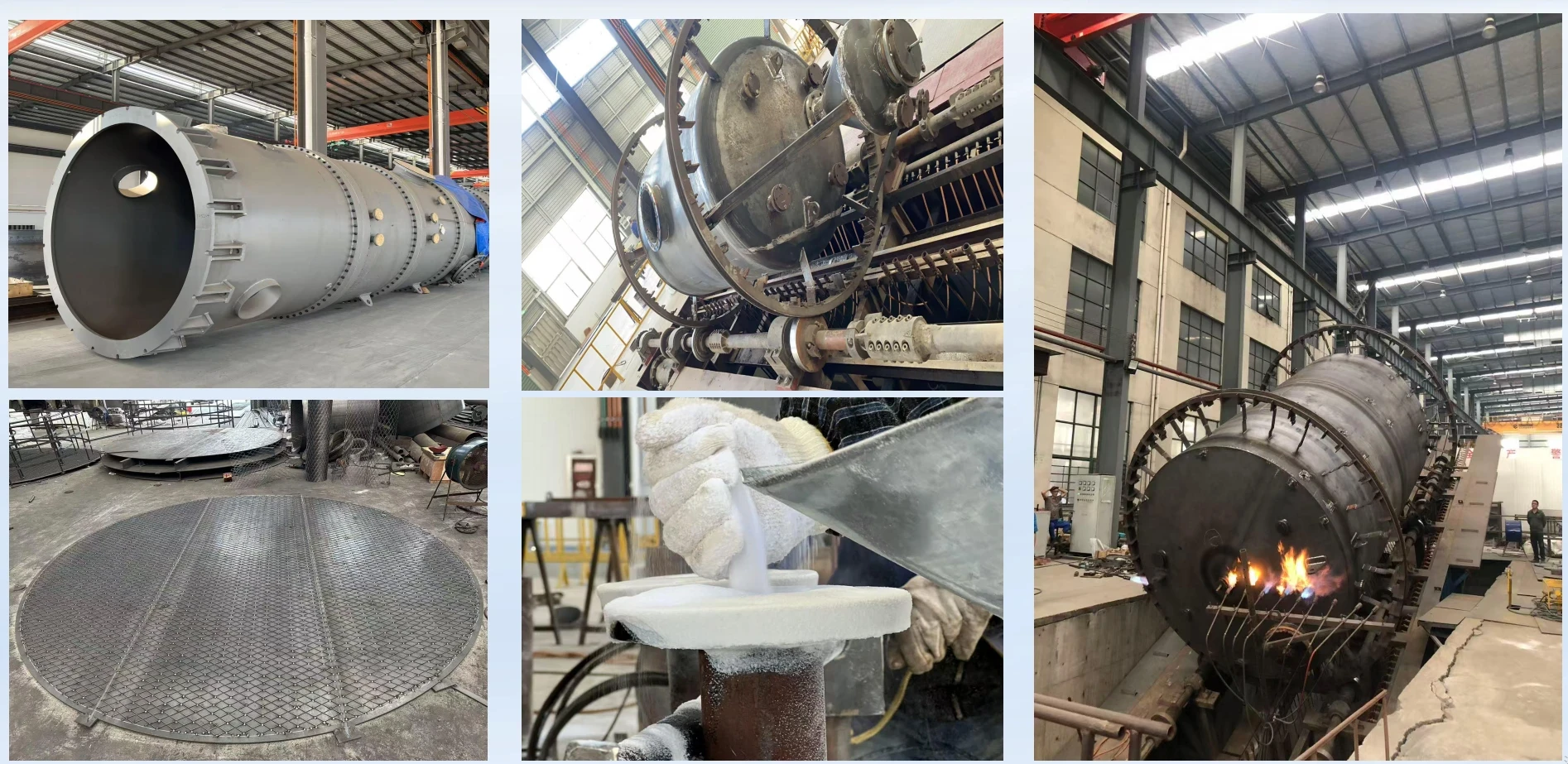
For PO/PE-lined tanks, Gelan forms the plastic layer directly inside the steel shell through a controlled rotational lining process. Lining thickness, surface integrity, and leakage are checked before shipment.
What Is a PTFE Liner?
A PTFE liner uses polytetrafluoroethylene as the corrosion barrier. PTFE is a fluoropolymer, not a polyolefin. It offers broad chemical resistance and higher temperature capability than many PE or PO grades.
This can make PTFE suitable for more aggressive chemicals or stricter process conditions. However, it is not simply a better version of PE. PTFE requires different forming, joining, and support methods.
The PTFE liner material must also match the tank structure. Temperature, pressure, vacuum, permeation, nozzles, and internal parts can all affect liner reliability.
For this reason, Gelan does not select PTFE only because the chemical is corrosive. PE or PO may suit large moderate-temperature storage tanks. PTFE becomes more relevant when the service exceeds their reliable range.
What Project Data Determines Materials Selection for Chemical Storage Tanks?
Knowing the difference between PE, PO, and PTFE is only the first step. Reliable materials selection for chemical storage tanks starts with the actual process conditions. Three groups of data matter most.
1. Chemical Service
| Confirm First | Why It Changes the Lining Choice |
|---|---|
| Full chemical composition | Minor components may attack a material that resists the main chemical |
| Minimum and maximum concentration | Compatibility may change as the solution becomes stronger or more diluted |
| Normal and maximum temperature | Higher temperatures can reduce strength and increase chemical penetration |
For example, an ambient caustic storage tank and a heated acid mixing tank should not use the same selection logic. The second tank adds heat, movement, and more complex contact conditions.
2.Operating Duty
| Confirm Next | Main Risk to Evaluate |
|---|---|
| Storage, mixing, or reaction | Agitators, coils, and internal parts add local lining details |
| Internal pressure | Affects the steel shell and liner support |
| Possible vacuum | May pull or deform an unsupported liner |
| Filling and emptying cycles | Repeated pressure and temperature changes increase liner stress |
| Solids or crystals | May cause wear, deposits, or difficult cleaning |
A simple storage tank has fewer risk areas. Chemical process tanks may include agitators, heating coils, dip pipes, and multiple nozzles. These parts affect both the material choice and the lining structure.
3.Tank Configuration
| Confirm Before Design | What It Controls |
|---|---|
| Capacity and orientation | Shell structure, supports, and manufacturing method |
| Nozzle and manway layout | Lining transitions and potential leakage points |
| Internal components | Local wear, movement, and fabrication difficulty |
| Cleaning method | Additional chemical and temperature exposure |
These inputs lead to two connected decisions: which liner can resist the medium, and how the complete tank should be designed around that liner. A general chemical-resistance chart can support screening, but it cannot replace the full project datasheet.
How Do You Select the Right Lining for an Industrial Chemical Storage Tank?
Once the project data is confirmed, the choice becomes clearer. First, remove materials that cannot handle the chemical or temperature. Then check pressure, vacuum, wear, and tank structure. Cost should only be compared after these technical limits are confirmed.
| Service Condition | Initial Material Direction | Key Risk to Check |
|---|---|---|
| Large tank, moderate temperature, common acid or alkali service | PE or suitable PO | Resin grade, concentration, and stress cracking |
| Aggressive chemical or higher temperature | PTFE or another fluoropolymer | Permeation, vacuum, joints, and support |
| Abrasive slurry or solids | Rubber or wear-resistant lining | Wear rate and chemical compatibility |
| High-purity reaction service | PTFE, PFA, or glass lining | Contamination, cleaning, and thermal cycling |
| High pressure or high temperature | Corrosion-resistant metal or engineered lining system | Shell strength and ASME code requirements |
This table supports initial screening. Final selection must use the actual concentration, temperature, pressure, and tank function.
When Is a PE- or PO-Lined Steel Tank Suitable?
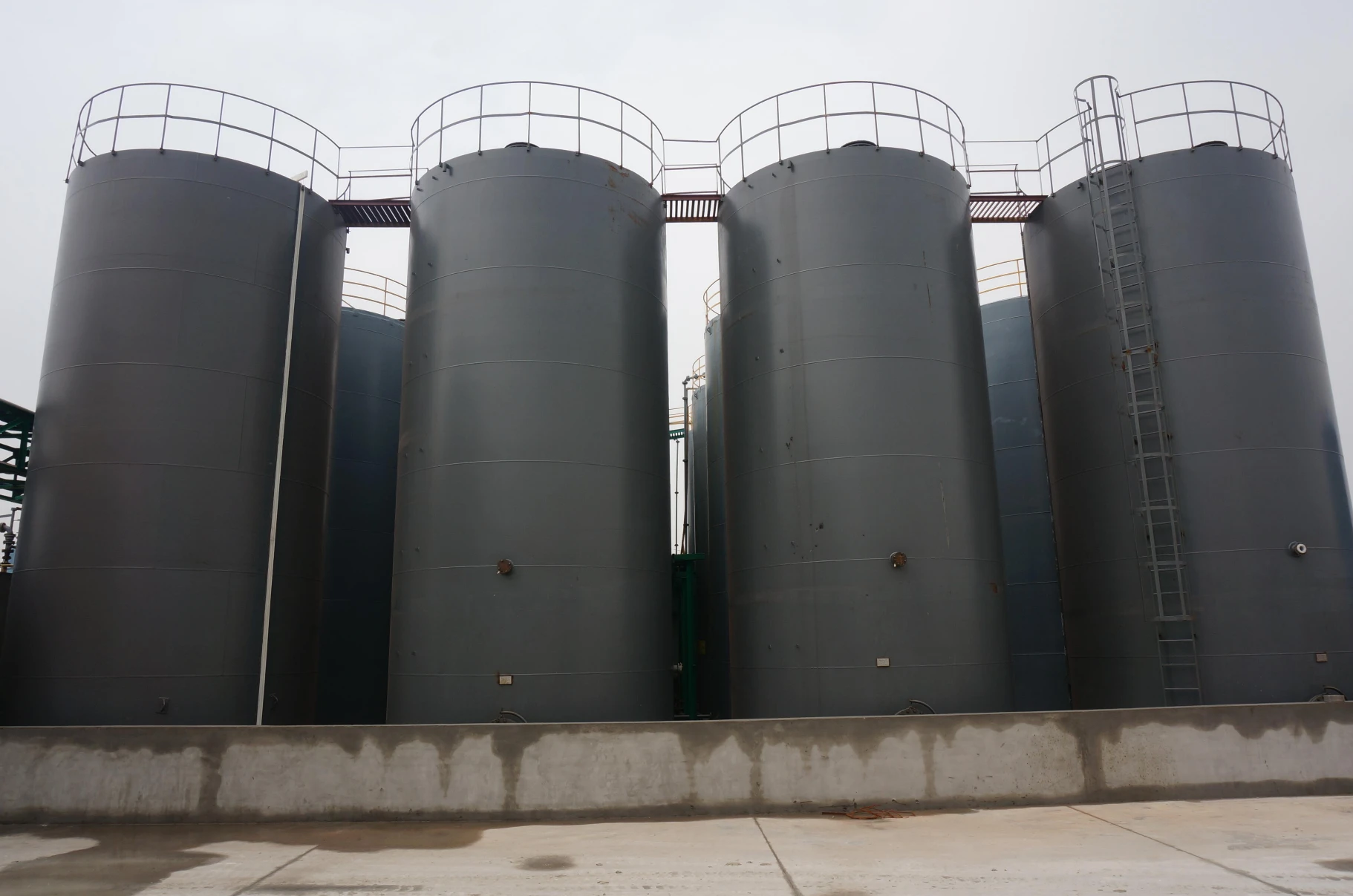
A PE- or PO-lined steel tank is often practical for large storage duties at moderate temperatures. The steel shell provides rigidity, while the plastic layer protects it from direct chemical contact.
PE or PO may be considered for:
- Caustic soda and other alkaline solutions
- Salt solutions and chemical dosing media
- Acidic or alkaline wastewater
- Large atmospheric storage tanks
These materials become less suitable when temperature, permeation, pressure, or vacuum exceeds the verified limits of the resin and lining structure.
When Is a PTFE-Lined Tank the Better Choice?
A PTFE-lined tank becomes more relevant when PE or PO cannot meet the chemical or temperature requirements.
PTFE may be considered when the service involves:
- Highly aggressive chemicals
- Higher operating temperatures
- Strict product-purity requirements
- Low surface adhesion or easier cleaning
However, a PTFE-lined storage tank still needs the correct liner support, joints, nozzles, and vacuum design. Chemical resistance alone cannot prevent deformation or leakage.
When Should Another Corrosion-Protection Material Be Evaluated?
PE, PO, and PTFE do not cover every project condition. Other materials may be more suitable when the tank has additional process demands:
- Rubber lining: chemical service with abrasion or impact
- Glass-lined steel: clean reaction duties and easy cleaning
- PFA or ECTFE: aggressive or high-purity chemical service
- Stainless steel or nickel alloy: high-temperature or pressurized chemical process tanks
What Causes Corrosion-Resistant Tank Liners to Blister, Delaminate or Leak?
Even properly selected corrosion-resistant tank liners can fail when chemicals, pressure, or mechanical stress reach the liner–steel interface.
| Failure Mode | What Happens | Main Causes | Higher-Risk Conditions |
|---|---|---|---|
| Blistering | Bubbles or raised areas form on the liner surface | Chemical permeation, trapped vapour, or pressure behind the liner | Higher temperature, permeable chemicals, poor venting |
| Delamination | The liner separates from the steel shell | Blister growth, weak bonding, poor surface preparation, or thermal cycling | Bonded linings, repeated heating and cooling |
| Deformation or collapse | The liner moves inward or outward | Vacuum, rapid draining, cooling, or trapped gas behind the liner | Unsupported liners, blocked vents, pressure changes |
| Leakage | Chemicals pass through the lining | Pinholes, weak seams, cracks, or damaged nozzle transitions | Poor fabrication, uneven thickness, mechanical damage |
| Local wear | The lining becomes thinner or tears | Solids, agitation, cleaning tools, or internal components | Bottom outlets, nozzles, manways, coils, and agitator openings |
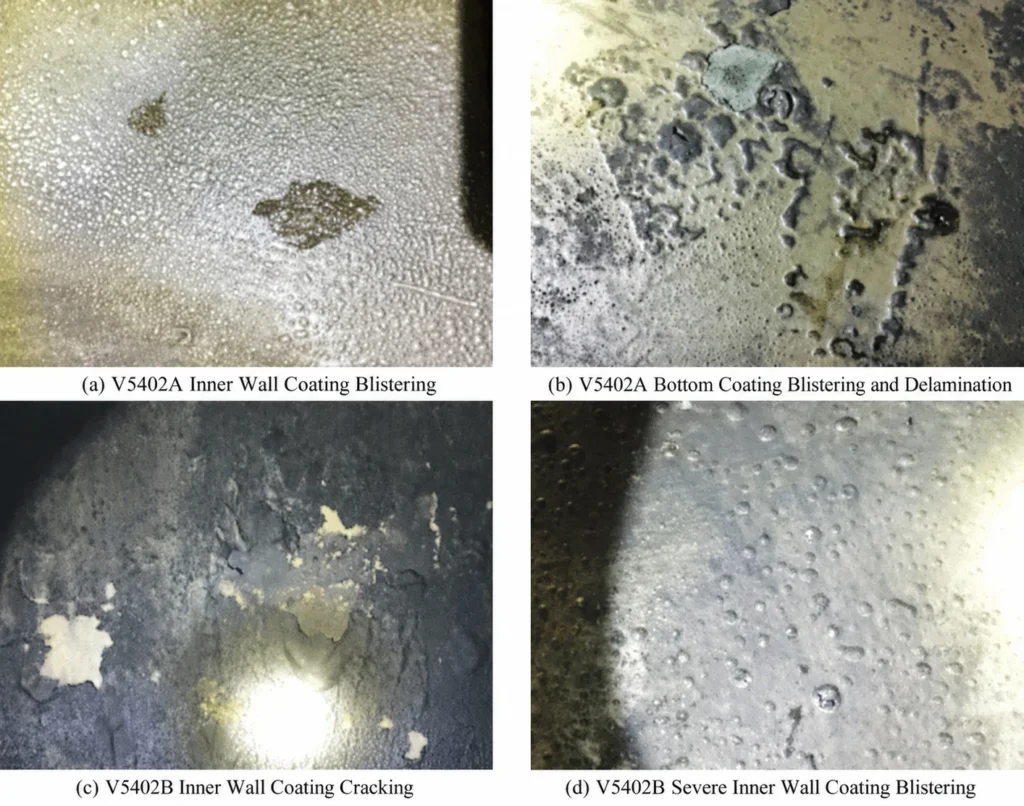
Most liner failures do not begin as a large visible leak. They often start with permeation, a small defect, or local liner movement. Once chemicals reach the space behind the liner, pressure and hidden storage tank corrosion can develop.
The failure may then progress in this order:
Permeation or local defect → trapped chemical or pressure → blistering or separation → leakage
This is why material resistance alone is not enough. The tank also needs suitable liner support, controlled fabrication, detailed nozzle design, and complete inspection before shipment.
How Can Custom Design and Factory Inspection Extend Tank Service Life?
The failure modes above show that liner life depends on more than material resistance. Effective tank corrosion protection requires four linked controls: vessel design, lining fabrication, high-risk area control, and final inspection.
Design the Steel Shell and Liner as One System
A liner needs a stable steel shell. Tank capacity, orientation, supports, pressure, vacuum, and temperature changes can all affect liner movement.
Nozzles, manways, agitator openings, coils, and internal parts should also be defined before fabrication. This reduces later cutting, joining, or repair work on the finished lining.
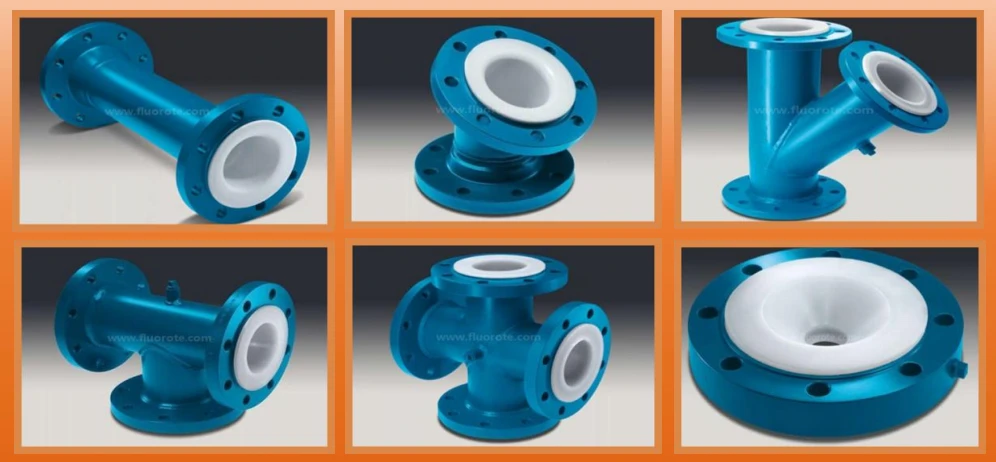
Gelan Steel-Lined PO/PTFE Pipes and Fittings
Match the Fabrication Process to the Lining Material
Different lining materials require different manufacturing methods. For PE/PO-lined tanks, the process may include material loading, controlled heating, rotation, cooling, and finishing. These steps affect lining thickness and surface quality.
PTFE cannot be processed in the same way as PE. Its high melt viscosity requires specialized forming, sintering, joining, or support methods. The fabrication process must therefore match the selected resin and tank structure.
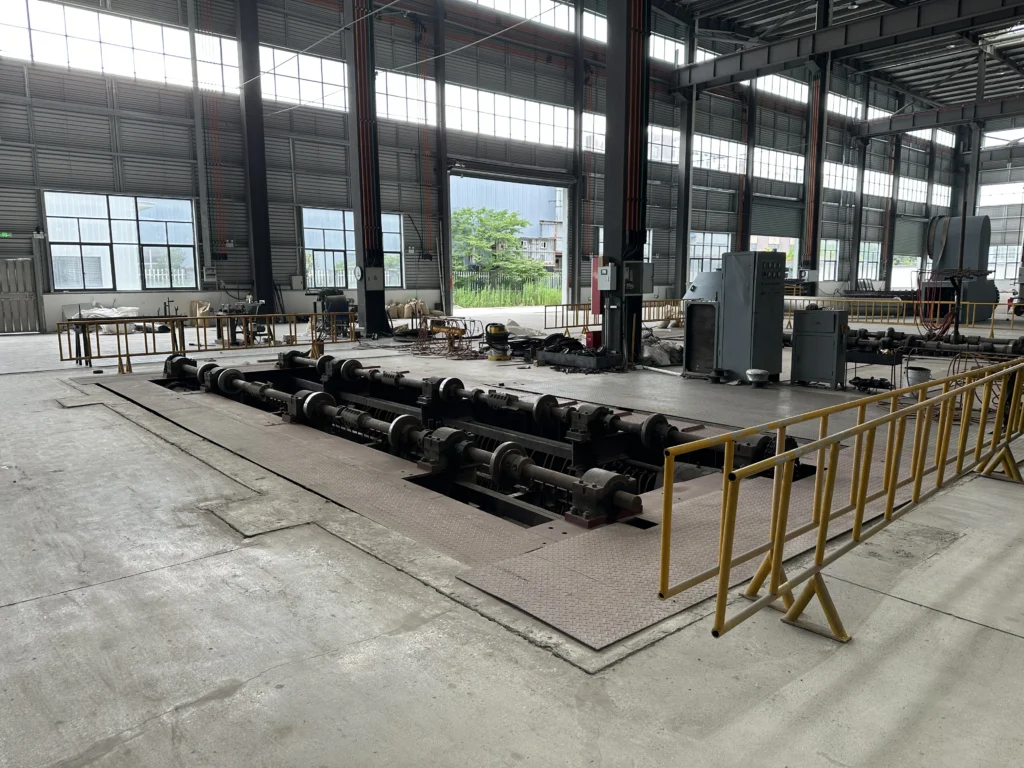
Gelan Corrosion-Resistant Calcination Equipment
Control High-Risk Areas During Fabrication
Liner damage often begins around complex transitions rather than the main tank wall. Key areas include:
- Nozzles and flange faces
- Manways and bottom outlets
- Agitator and coil connections
- Internal supports and sharp changes in shape
The steel surface should also be smooth and free from sharp edges, weld spatter, rust, and loose residue. These defects can create thin spots or local stress in the lining.
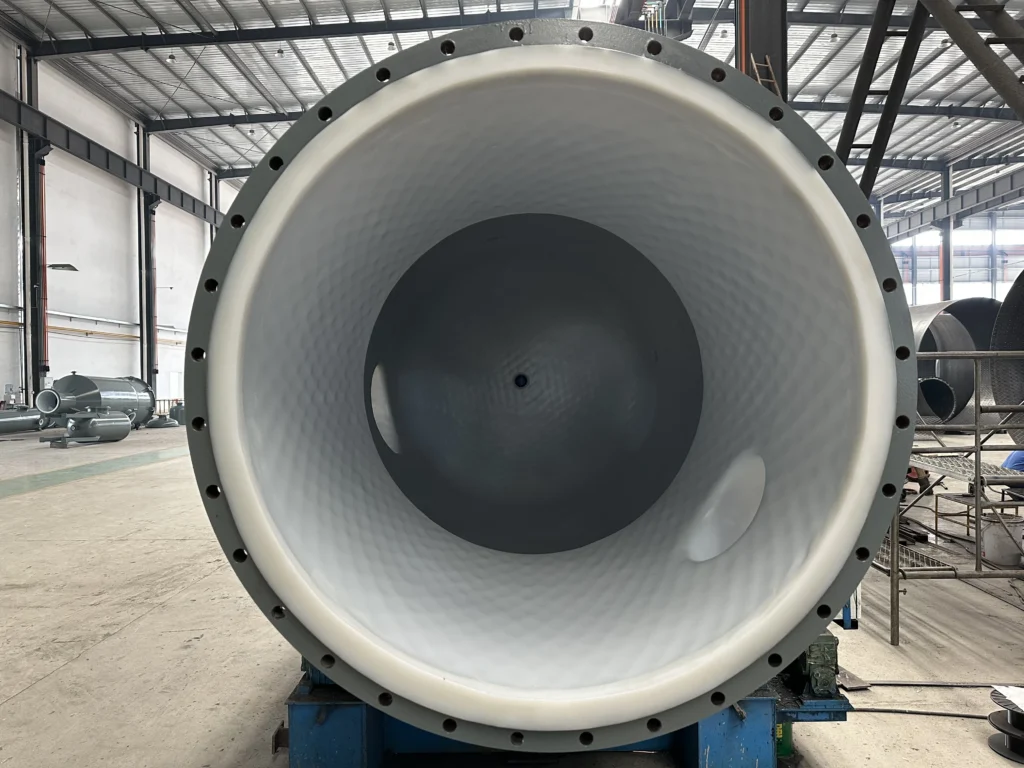
Gelan Internal Corrosion Protection for Atmospheric Tanks
Verify Liner Integrity Before Shipment
Final inspection should confirm both surface quality and barrier continuity:
- Visual inspection for cracks, bubbles, or poor finishing
- Thickness measurement across the lining
- Spark or holiday testing for small discontinuities
- Water, air, or other specified leakage tests
Electrical holiday testing can detect very small defects that may not be visible during normal inspection. The correct test voltage should match the lining thickness and material.
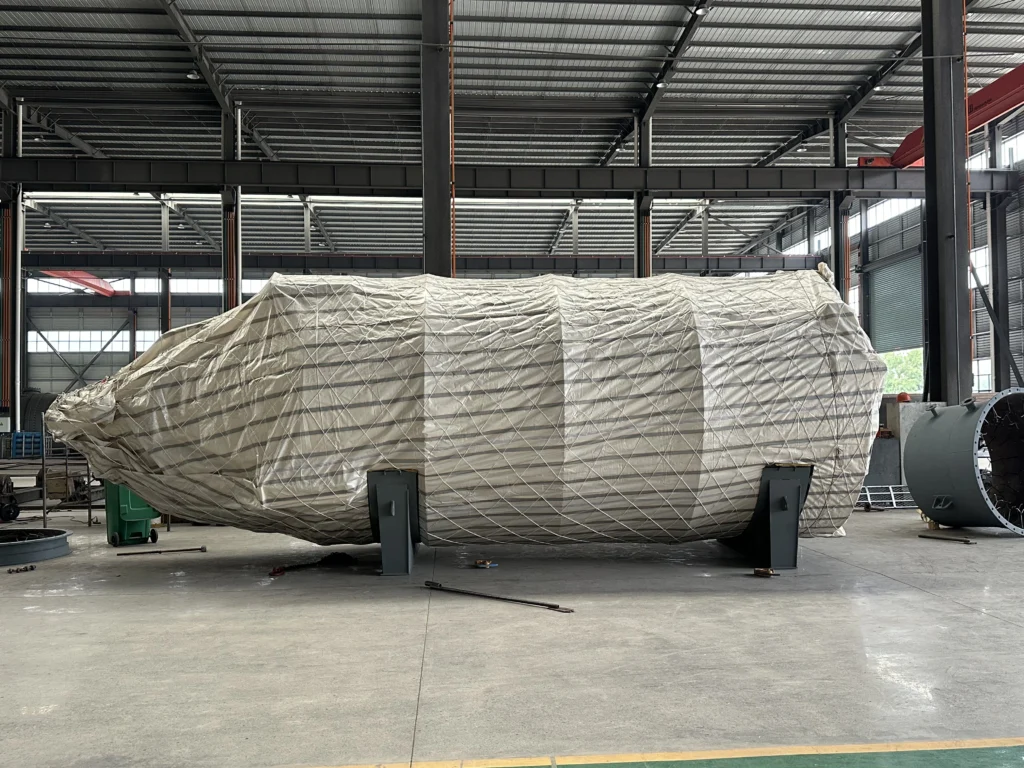
Gelan Export Packaging for Corrosion-Resistant Atmospheric Tanks
Gelan’s lined tank inspection process includes thickness checks, spark testing, and leakage testing before shipment. These controls help reduce early blistering, separation, and leakage.
FAQ About PE, PO and PTFE-Lined Tanks
What Is an Etched PTFE Liner?
An etched PTFE liner has one surface chemically treated for adhesive bonding. It is used when the PTFE sheet must be bonded to steel or another supporting surface. The etching process does not replace correct adhesive selection or surface preparation.
Does a Thicker PTFE Liner Always Provide Better Protection?
Not by itself. Thickness can improve the corrosion barrier, but tank reliability also depends on liner support, permeation control, joints, temperature, and vacuum conditions. These factors should be evaluated together.
Can a Damaged PTFE Liner Be Repaired?
Replacement is usually the safer option when the damage is widespread, recurring, or difficult to assess.
Visible blistering or leakage may indicate permeation, delamination, or hidden steel corrosion behind the liner. A local PTFE liner repair may fix the visible defect without removing the original cause. The new liner should be selected and tested after the failure source is identified.
Can an Existing Acid Tank Be Used for a Different Chemical?
A change in service requires a new compatibility review. The new chemical composition, concentration, temperature, cleaning method, and possible contamination must be checked against the existing liner and steel shell.
How Often Should a Lined Chemical Tank Be Inspected?
The inspection schedule should reflect the stored chemical, temperature, operating cycles, solids, previous damage, and applicable code. Additional inspection is advisable after abnormal pressure, vacuum, overheating, impact, or a change in tank service.
Conclusion
Choosing PE, PO, PTFE, or another lining depends on the chemical, concentration, temperature, pressure, and tank duty. A PTFE liner may suit more demanding service, while PE or PO can be more practical for many large storage tanks.
Reliable performance also depends on shell design, nozzle details, fabrication control, and final inspection. Send Gelan your chemical and operating data to review the lining and tank design before fabrication.